I was walking through a quiet neighborhood last week. Leaf blowers, kids on bikes, someone grilling. Normal life. And I thought about Jean McConville. She was a mother of ten. In 1972, masked men pulled her from her Belfast home. She never came back. Her children never saw her again.
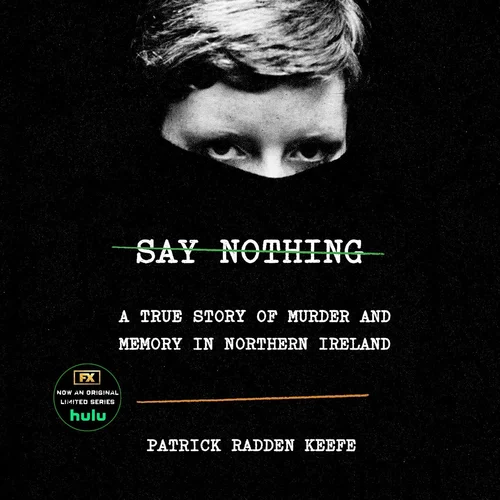
Patrick Radden Keefe’s Say Nothing tells this story. But it is not a murder mystery, exactly. More like a mirror. The book asks a question I could not shake: When everyone around you is taking sides, when silence is safer than speaking, when your neighbor might be the one who comes for you in the night… what would you do? That question followed me for weeks after I closed the book.
Character and Plot
The book has no single protagonist. That is the point. Instead, we get a chorus of ordinary people caught in extraordinary times. There is Dolours Price, a young woman who becomes an IRA bomber. She drives a car filled with explosives into central London. She goes on hunger strike. She lives with the weight of what she did. There is Brendan Hughes, a commander who hides in safe houses and plans operations. And there is Gerry Adams, the politician who smiles for cameras while rumors swirl about his IRA past.
Keefe does not judge them. He presents their choices like a physicist presenting data. You see how small steps lead to big horrors. Dolours starts as a girl angry at British soldiers on her street. Then she is smuggling weapons. Then she is part of an operation that ends a life. The book builds suspense around one question: Who gave the order to take Jean McConville? I will not tell you. But I will say this: the answer is less important than the way the question reveals how people justify terrible things.
The heart of the book is the gap between what people say publicly and what they admit privately. Keefe shows this gap with devastating precision.
Theme and Imagery
The core theme is silence. Not just the silence of the McConville children, who grew up without answers. But the silence of a whole society. Keefe uses one image again and again: the black taxi that pulls up, the masked men who get out, the woman who disappears. This image repeats in different forms throughout the book. A car. A knock. A life erased.
What makes the book powerful is how Keefe connects this historical violence to something universal. He is not just writing about Northern Ireland. He is writing about any place where politics becomes personal. He shows how ordinary people become complicit. They do not pull the trigger. They just look away. They just do not ask questions. They just say nothing.
Keefe’s craft is quiet. He lets the details speak. A mother’s wedding ring found decades later. A child who waits at the window for a mother who will never come home. A former militant who cries in an interview. These moments land hard because Keefe does not underline them. He trusts the reader to feel.
Elevation and Call to Action
I read this book and thought about my own life. I have never lived through a war. But I have been in rooms where someone said something cruel and no one pushed back. I have been in meetings where a bad decision was made and I stayed quiet. Those are small things. They are not the Troubles. But the mechanism is the same. We say nothing because speaking up costs something.
“Say Nothing” is not a comfortable book. It does not offer easy lessons. It does not tell you that love conquers all or that truth will set you free. Sometimes truth stays buried for forty years. Sometimes people who did terrible things live normal lives afterward. Sometimes the victims never get justice.
Here is what I took from it: The question is never hypothetical. It is asked in real time, in small moments, in the choices we make every day. When the person next to you says something that makes your stomach turn. When your boss asks you to go along with something wrong. When staying quiet is easier than speaking up. The book asked me: What will you do? I am still trying to answer. Maybe that is the real value of a book like this. Not that it tells you what to think. But that it makes you ask the question at all.
