I have a confession. There are things I have buried, metaphorically speaking. Old griefs, failed ambitions, a box of love letters I swore I would never open again. I think most of us do this. We press down the painful, the shameful, the inconvenient, and we hope that if we dig deep enough, the earth will swallow it all and forget. But Robert Macfarlane’s Underland made me wonder: what if the ground remembers everything? What if what we bury, we are also keeping?
A Journey Into the Dark
Macfarlane does not write from a desk. He goes underground. He crawls into the dark, cold spaces where most of us would never dare to go. He descends into the blue ice caves of Greenland, where ancient glaciers groan and melt. He follows the tunnels beneath Paris, where the bones of six million people are stacked like cordwood. He visits a nuclear waste storage facility in Finland, designed to last for 100,000 years. The prose is intimate, almost whispered. You feel the cold on your skin, the pressure of stone above your head. The book is not really about geology, though. It is about time. Deep time. The kind of time that makes your own life feel like a single breath. The central figure is the landscape itself, but a landscape that is alive, wounded, and watching. The suspense is not about what will happen to Macfarlane. It is about what we have already done to the earth, and what the earth will do to us in return. The book asks a terrifying question: what are we leaving behind?
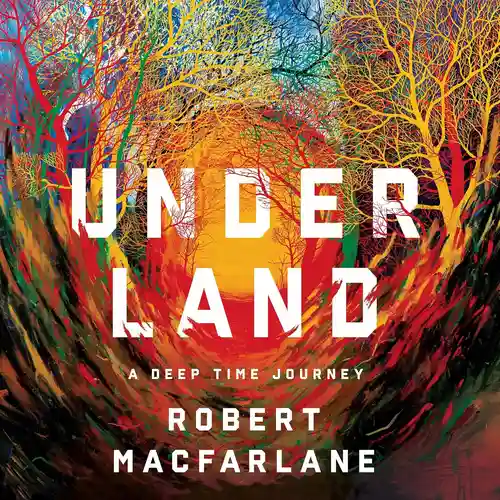
The Art of Seeing the Unseen
The core theme of Underland is memory. Not human memory, exactly. More like planetary memory. Macfarlane shows us that the underground is a vast archive. The layers of soil and ice hold the history of our species, our mistakes, our hopes. The imagery is subtle. He uses light the way a painter uses darkness. In the caves, a single headlamp becomes a fragile thing. In the nuclear bunker, the light is artificial, sterile, a lie. His craft is remarkable. He makes you feel the weight of stone, the silence of deep time. It is a kind of attention that most of us have lost. I realized, reading this, that I had been looking at the world only on the surface. I had been avoiding the depths. The book forces you to confront the uncomfortable truth: that the things we bury do not disappear. They remain, waiting. Sometimes they return as poison. Sometimes they return as a story.
What We Leave for the Strangers of the Future
I finished Underland feeling smaller and larger at the same time. Smaller because my problems, my buried letters, seemed trivial. Larger because I could feel my connection to a story that stretches back thousands of years and forward into an unknown future. Macfarlane does not offer easy comfort. He does not tell you that everything will be okay. But he offers something rarer: a sense of perspective. The book is for anyone who has felt the weight of their own history, anyone who has wondered what comes after. What you get from it is not a solution, but a question that will echo in your mind long after you close the cover. What if the ground beneath our feet is not a place of forgetting, but of witness?
