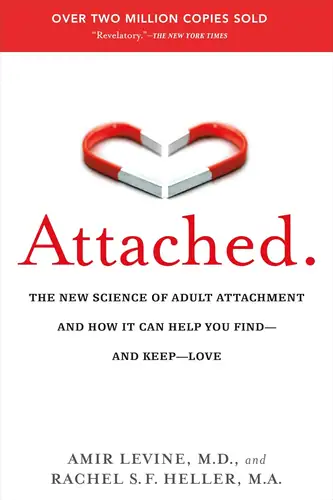
I picked up Attached on a Tuesday night when I should have been working. I was avoiding a text message. The kind you overthink for hours. The kind where you read it five times looking for hidden meaning. I told myself I was just looking for a distraction. But honestly, I was looking for answers.
I had been in one of those relationships where you feel crazy. Not the fun kind. The kind where you check your phone every ten minutes, wondering why they haven’t responded, wondering why you care so much when they seem to care so little. I hated that version of myself. I wanted to understand why I kept ending up in the same painful dynamic.
So when a friend recommended this book by Amir Levine and Rachel Heller, I felt defensive. I don’t read self-help books about love. They feel like they’re designed to make you feel broken. But I was desperate enough to try.
Attachment Theory Explains the Pattern
The book’s central argument is simple, and it hit me hard. Your relationship behavior is not a personality flaw. It is a pattern shaped by something called attachment theory. The authors explain that most people fall into one of three styles: secure, anxious, or avoidant. About 50% of people are secure. They handle intimacy well. They trust easily. The other 50%? That’s where things get messy.
I am anxious. I knew it before I finished the first quiz. The book describes anxious types as people who crave closeness and worry constantly about whether their partner loves them enough. We overanalyze texts. We pull away and then feel guilty. We mistake emotional chaos for passion.
The authors explain that anxious types are often drawn to avoidant types. Avoidant people value independence above everything. They pull away when things get too close. Together, anxious and avoidant form a toxic dance. The more one pursues, the more the other withdraws. Reading this, I thought of my last relationship. I thought of the one before that too. The pattern was embarrassingly clear.
The book does not shame you for being anxious or avoidant. That was the first thing I appreciated. It says these patterns come from real experiences, often from childhood. You learned to behave this way because it helped you survive emotionally. The goal is not to become someone else. It is to understand yourself well enough to make better choices.
What I Gained and What I Still Struggle With
I will be honest. The book has some weaknesses. The writing can feel repetitive. The examples sometimes feel too neat, as if real relationships were that simple. And the authors are very optimistic about change. They make it sound like understanding your attachment style will automatically fix your love life. It won’t. Knowing you are anxious does not stop you from feeling anxious the next time someone doesn’t text back.
But the book also gave me something I did not expect. It gave me permission to stop pretending I did not care. I had spent years acting like I was too cool for serious relationships. I said I liked things casual. I said I was busy. The truth? I was scared of being rejected, so I rejected first. The book helped me see that playing it cool only attracts the wrong people. If you are anxious, pretending not to care will just attract avoidant partners who are fine with distance. That was a hard truth.
The most useful part of the book is the practical advice. The authors teach you how to communicate your needs clearly. They show you how to spot an avoidant partner early on. They explain why you should never chase someone who makes you feel insecure. They do not tell you to play games or act hard to get. They tell you to be honest about what you want. That felt like a relief.
Who Should Read This Book
This book is for anyone who has ever felt confused about why their relationships keep failing. It is for people who have been told they are “too needy” or “too independent” and wondered if something was wrong with them. It is for people who want to stop repeating the same painful patterns.
It is not for people who want easy answers. It will not give you a magic formula to make anyone love you. It will not fix a bad relationship overnight. And if you are currently in a toxic situation, this book is not a substitute for leaving or getting professional help.
What you will get is a framework for understanding yourself. You will learn that your attachment needs are valid. You should not feel guilty for wanting closeness. A good relationship should make you feel more confident, not less. If it does not, that is a sign, not a failure on your part.
I finished the book feeling less alone. I still feel anxious sometimes. I still check my phone too much. But I no longer think I am broken. I just have a pattern. And patterns can change.
