Last fall, I sat on the edge of my bed at 2 a.m., staring at my phone. I’d checked my girlfriend’s online status three times since dinner. She was at a work dinner, she’d told me that. But my chest was tight. I needed to know why she hadn’t texted back. I wasn’t afraid of lies. I was afraid of not knowing. Somewhere in that fog, I whispered the only real question that mattered: why do people crave control in relationships? Maybe you’ve asked that too, in a quieter version, while tracking someone’s location or scripting the “right” way they should respond to you. That night changed how I see every connection I have.
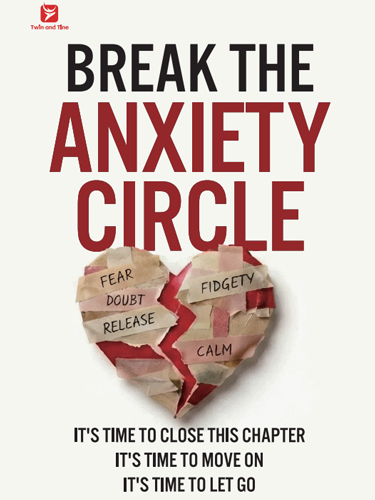
Break the Anxiety Circle
Miles CarterA mental reset for people trapped in the overthinking loop. Understand why your mind won’t stop racing — and how to break free from anxiety, people-pleasing, and emotional exhaustion.
Quick Takeaways If You’re Short on Time
If you recognize the urge to control, start here:
- The urge to control is usually about calming your own panic, not fixing the other person.
- It often grows from seasons of unpredictability early in life or in past relationships.
- Real closeness starts when you learn to sit with discomfort instead of managing someone else’s behavior.
- One simple daily ritual can retrain your brain to tolerate uncertainty without white-knuckling anything.
- Notice the feeling before you act. Name it: “I’m scared right now.”

Why Do We Crave Control Over Others in the First Place?
I used to think I just had high standards. If I reminded my partner enough times about plans, or re-explained how to handle a difficult conversation, I was being “helpful.” But underneath, I was anxious. Every time she made a choice I didn’t participate in, my stomach dropped. That’s the part nobody likes to admit. Five years ago, a very unstable period in my early twenties left me feeling like safety was something I had to manufacture. My dad lost his job without warning, and then Mom’s health collapsed in six months. I coped by organizing everything. Later, that leaked into love.
Some people find that the craving for control comes from an old, unspoken rule: If I can predict exactly what’s going to happen, I won’t get hurt again. It pretends to be about the other person. But it’s really about how unbearable uncertainty feels inside your own body. As one book explains, we try to control our environment when we haven’t yet built the muscle to tolerate messy emotions like shame or fear. The fix is weird: you have to practice feeling unsure and watch how, eventually, the panic fades on its own.
How to Stop Trying to Control Your Partner (Without Losing Yourself)
I remember the first real shift. I wanted to call my girlfriend and ask why she’d been quiet all afternoon. Instead, I wrote in a notebook: “I’m terrified she’s pulling away, and I have zero evidence.” Just naming it loosened something. That’s not therapy-speak. It’s just a pause. When you pause, you notice the urge to text or demand reassurance. You also notice that you’re still breathing. The world didn’t collapse because you waited ten minutes.
Some ideas that worked for me and a few close friends:
- Check your real fear first. Ask: “Am I afraid of losing this person, or am I afraid of the feeling of being out of the loop?”
- Replace one demand with a curiosity. Instead of “Where were you?” try “What was the best part of your day?”
- Let small things go wrong on purpose. I stopped correcting my partner when she loaded the dishwasher “incorrectly.” The dishes still got clean. The sky didn’t fall.
- Use body awareness. When the control impulse hits, feel your feet on the floor. Notice if your jaw is tight. That’s your panic, not a reason to act.
The “Uncertainty Container” That Changed How I Relate
I made up a game last winter, mostly out of desperation. I call it the Uncertainty Container. Every morning, I write down three things I cannot control that day: how my partner will feel, whether my boss will like my idea, what the traffic will be like. Then I draw a circle around them and label it “Not Mine to Hold.” It sounds like a kindergarten craft. But after a week, I noticed I was arguing less. My grip loosened on things that were never mine anyway.
Why this works: It externalizes the fear. Instead of spinning the same anxious thought for hours, you take it out of your head, put it on paper, and physically remind yourself it belongs over there. The key is to do it before you engage with your partner. I did it this morning: “She might be irritable later. She might cancel our date. None of that is something I can steer.” And then I went about my coffee. The craving for control relaxes when you stop treating every unknown like a crisis you have to fix.
When the Need Dates Back to Early Unpredictability
A friend of mine, after her divorce, noticed she’d start an argument every time her new partner went silent. She said, “Silence felt like the pause before disaster.” We talked about how, as a kid, her mother would give her the cold shoulder for days. That old pattern was hijacking her present. She started asking for a two-minute check-in instead of trying to manage his mood. The check-in wasn’t a demand. It was a bridge. He’d say, “I’m just tired, it’s not about us.” That tiny ritual replaced hours of anxious monitoring. Many people who grew up with unpredictable caregivers find that adult relationships trigger a similar alarm. Recognizing that helps.
The Surprising Side Effect: People Open Up When You Stop Pushing
I was convinced that if I stopped steering everything, my relationship would fall apart. The opposite happened. My girlfriend started volunteering more about her day. She’d text unprompted, maybe because there was space. Control is a tight fist. Connection needs an open palm. One night, after I bit my tongue about her travel plans, she said, “You’ve seemed more peaceful lately.” I laughed because I was screaming internally. But that peace, even faked at first, created a different dance. She leaned in. I didn’t have to chase.

What to Do When You Slip Back (Because You Will)
Yesterday, I messed up. I snapped at her for being ten minutes late to a movie. I could feel the old script rising: If you really cared, you’d be on time. I stopped. I said, “I’m sorry. I just got scared that you forgot.” And she said, “I was stuck in line. I’m sorry too.” That repair took thirty seconds. Old me would’ve lectured for twenty minutes. The difference is now I know that control isn’t love. It’s fear wearing a mask. And sometimes love means letting someone be inconveniently, beautifully human.
FAQ: Why People Crave Control in Relationships
Q: Why do I feel the need to control my partner all the time?
A: The urge to control usually isn’t about them—it’s about your own fear of uncertainty. When you’ve experienced unpredictability in the past, your brain learns that control equals safety. The urge is a protective habit, not a sign that you’re a bad partner.
Q: How do I stop trying to control my partner without feeling anxious?
A: Start with small, low-stakes experiments. Let something minor go—how they load the dishwasher, which route they take. Notice that the world doesn’t end. Over time, you build tolerance for uncertainty. The Uncertainty Container ritual can help.
Q: Is wanting control in a relationship always a bad thing?
A: Not always. Healthy control is about setting boundaries for yourself (“I won’t stay in a relationship where I’m disrespected”). Unhealthy control is about managing someone else’s behavior to soothe your anxiety (“You must text me back within ten minutes”). The difference is who it’s really about.
Q: What if my partner actually needs me to take control sometimes?
A: Some relationships have natural dynamics where one person takes the lead in certain areas. That’s different from controlling behavior. The key is consent—are they asking you to take charge? Are you both comfortable with the dynamic? Control that comes from a place of mutual agreement is not the same as control driven by fear.
Q: Can I heal this pattern without therapy?
A: Yes, many people make progress through self-awareness, journaling, and small daily practices. The Uncertainty Container, body awareness, and replacing demands with curiosity are all tools you can start today. That said, therapy can be a helpful support if the pattern feels deeply ingrained.
One Last Thing
That night at 2 a.m., I finally put my phone face-down. My girlfriend came home twenty minutes later, holding leftovers. She said, “You’re still up?” I said, “Just couldn’t sleep.” A month later, I told her about the tracking. She didn’t run. She said, “I always knew when you were freaking out. I just wanted you to trust that I’d come back.” She does. And I’m learning.
References
- Lerner, H. (1985). The Dance of Anger: A Woman’s Guide to Changing the Patterns of Intimate Relationships. Harper Perennial.
- Levine, A., & Heller, R. (2010). Attached: The New Science of Adult Attachment and How It Can Help You Find—and Keep—Love. TarcherPerigee.
- Simpson, J. A., & Rholes, W. S. (2012). Adult attachment orientations and the regulation of proximity in relationships. Journal of Social and Personal Relationships, 29(8), 1079-1093.