My daughter found a half-crushed snail on the walk to school. She crouched down, poked it with a stick, and asked eleven questions in two minutes. Where does the slime come from? Why are the eyes on stalks? If I licked it, would I turn into a snail? That hungry, unfiltered curiosity felt so alive I wanted to bottle it. But by third grade, the questions had slowed to a trickle. She learned that school wanted answers, not more questions. I started to wonder if I had ruined something.
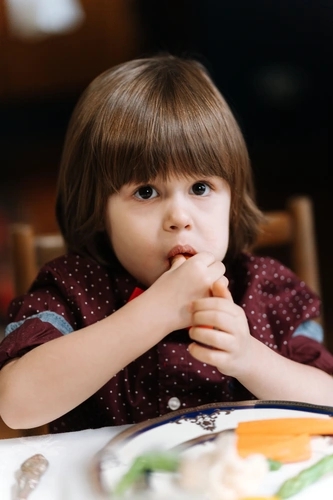
Here is the truth. You have not broken your child’s curiosity. That flicker is not gone. It is just buried under the day’s hurry, the fear of being wrong, the pressure to finish the worksheet. All children are born curious. The challenge is not to plant a new seed. It is to clear the weeds so the old one can breathe again.
These five shifts helped our family, and they might help yours too.
- Stop trying to make them “more curious.” Start creating curiosity moments.
- Model your own not-knowing out loud.
- Let them bump into gaps in what they think they know.
- Make the room safe for unfinished questions.
- Know when to just give them the answer.
Why Do Kids Stop Asking Questions? The Fade of Curiosity in Learning
Curiosity is not a personality trait you can train like a muscle. Cognitive scientist Elizabeth Bonawitz describes it as a sensation much like hunger. It is a filter the brain uses to decide what to pay attention to. So you cannot make a child more curious in the same way you cannot make someone more hungry. But you can set the table with food they want to eat.
When a child senses that only the right answer earns praise, the hunger for exploration dims. When every question must lead quickly to a tidy lesson objective, the mind learns to skip the wondering part. At home, a well-meaning “That’s a silly question” or “We don’t have time for that now” can send the same message. Over time, kids stop voicing the curiosity they still feel inside. They just do not act on it. That is the fade.
So the root of the problem is not a missing trait. It is an environment that values what can be measured over what can be sparked. And that is something we can change.
How Do You Teach Kids Curiosity Learning Without Squashing It?
The shift is subtle. You are not delivering a curriculum. You are shaping the moments in between. I started catching my daughter’s questions like fireflies and placing them in a jar, sometimes literally. Here is what worked.
For Younger Kids (Ages 3–6): The Ambiguity Game
Young children cannot always explain why they are curious. But they often snap to attention when something does not match their prediction. Pour water into a tall, thin glass. Ask, “What do you think will happen if I pour it back into the short fat glass? Will there be more water, less, or the same?” Then do it. The mismatch between what they guessed and what happened triggers that hunger for understanding. Do not rush to explain. Just sit in the confusion with them. Say, “Huh. That is strange. I did not expect that.” That one sentence does more than any science lesson. It gives them permission to stay curious.
For Older Kids (Ages 7+): The Question Trade-Off
Older children sometimes get stuck chasing one question while missing other things they need to learn. Bonawitz points out that the brain’s ability to switch tasks and evaluate when to explore is still developing well into the elementary years. So we practiced a small ritual at homework time. When my daughter was deep into designing a paper catapult for a school project, but a new question about how glue dries popped up, I would say, “Write it on a slip. Put it in the jar. You can pull it out after we finish this part. The question won’t disappear.” This simple delay built executive function without killing the curiosity. It showed her that noticing a question is valuable, even if she does not chase it right away.
The Curiosity Jar: A Simple Ritual to Teach Kids Curiosity Learning
On our kitchen counter sits a glass jar with a label in my daughter’s messy handwriting: “Things I Wonder.” Any family member can drop a scrap of paper with a question on it. No one has to know the answer right then. Twice a week, after dinner, we pull out three slips and pick one to explore together.
This jar did something unexpected. It captured the internal curiosity my daughter was already feeling but often did not speak up about. A note that said “Why do bananas get brown spots?” sat for four days before she decided to investigate. The delay did not matter. What mattered was that the question was safe and visible.
The jar also lowered the cost of wondering. She did not have to interrupt a lesson or risk a classmate’s eye roll. She could just write it down. And when she finally did want to find out, she felt a surge of ownership. The answer was hers because the question was hers.
Sometimes we use the jar for direct instruction too. I might drop in a fact she never wondered about: “Octopuses have three hearts.” Then when she pulls it, we talk about it. That built concrete knowledge, which later gave her more material to be curious about. You do not have to choose between spoon-feeding facts and wild exploration. They feed each other.
FAQ
What if my child never asks questions? Can I still teach them curiosity learning?
Yes, and it is more common than you think. Some kids feel the curiosity internally but do not act on it. The jar helps. You can also model aloud: “I wonder why the sky looks pink tonight. I honestly don’t know. Let’s write it down.” Over time, they see that not-knowing is safe, and they start to join in.
Is direct instruction bad for teaching kids curiosity learning?
Not at all. Quick, clear facts can build a base of knowledge that later sparks more questions. If a child knows that bees dance to communicate, they are far more likely to wonder how fast the dance is or whether other insects do it. Give them a fact, then step back and let them play with it.
How do I know if my child is becoming more curious?
Traditional measures, like counting how many questions they ask, can be misleading. A child might be intensely curious but quiet about it. Watch for small signs: a longer pause at the bug on the leaf, a doodle that explores a new idea, a slip of paper in the jar that you did not prompt. Curiosity does not always show up as a question mark. Sometimes it is just a glint.
We pulled out the snail slip a few weeks ago. It had been in the jar since that morning on the sidewalk. My daughter looked up the answer with me, and then for no reason at all, she laughed and said, “I still wouldn’t lick it.” And just like that, the questions started flowing again, one by one, in their own time.
