Have you ever felt like you were living inside a glass box? You move through the city, you do your work, you smile at strangers. But something is sealed off. I know this feeling well. I spent years in London, walking the same streets, never really touching anything. Then I read Chloe Dalton’s “Raising Hare” and I realized something. The glass box wasn’t the city. It was me.
The book begins with a small, helpless thing. A baby hare, abandoned or orphaned, found by Dalton in a field near her home. She takes it in. She feeds it with an eyedropper. She keeps it warm. She does not know, yet, that this tiny creature will crack her open.
What the Hare Does to Her
Dalton is not a naturalist. She is not a wildlife expert. She is a woman who works in politics, a world of strategy and control. The hare, she names her, is the opposite of all that. Wild. Unpredictable. Silent.
The core conflict here is not about keeping the hare alive. That part is straightforward. The real drama is inside Dalton. She has to learn a new language. The language of waiting. The hare does not come when called. It does not perform affection. It stays because it chooses to stay. And Dalton has to accept that love, real love, might look like sitting in a field for three hours, watching a hare clean its whiskers.
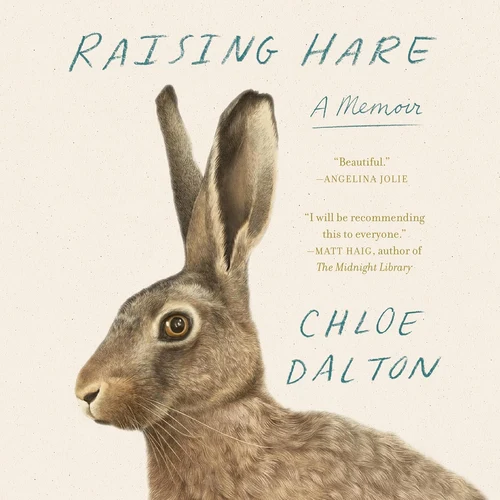
I will not tell you what happens to the hare. That would be cruel. But I will say this: the suspense is not about survival. It is about whether Dalton can let the hare be wild. Whether she can love something without owning it.
Stillness as a Radical Act
The core theme of “Raising Hare” is attention. Pure, patient, boring attention. Dalton describes hours of sitting in grass. The hare sleeps. The sun moves. Nothing happens. And in that nothing, everything happens.
There is a subtle light in this book. Dalton writes about the hare’s fur, how it changes color with the seasons. She writes about dew on spider webs at dawn. She notices things we have trained ourselves to ignore. This is not sentimental nature writing. It is something harder. It is a discipline.
She writes: “The hare taught me that I had been living at the wrong speed.” That sentence hit me. I think many of us live at the wrong speed. We scroll, we rush, we optimize. Dalton shows us a different way. It is not about escaping the city. It is about learning to see what is already there.
The craft here is quiet but precise. Dalton does not use metaphor as a crutch. She lets the hare be a hare. And that is enough. The book trusts the reader to find their own meaning.
A World That Needs Wild Things
This book matters now more than ever. We are drowning in screens. We are starving for connection. Dalton’s memoir is not a manual. It does not tell you to go adopt a wild animal. Please do not do that. It is something more valuable. It is a reminder that the world is still full of small, strange, beautiful things. And that we can still be changed by them.
The limitation of the book, if I am honest, is that Dalton’s life is privileged. She has a house with a garden. She has time. Not everyone can sit in a field for hours. But I think the lesson travels. You can find your hare anywhere. A bird at your window. A tree on your street. A crack in the pavement where moss grows.
I finished this book and I went outside. I sat on my balcony for twenty minutes. I watched a pigeon. It was not a hare. It was not poetic. But I watched it. And for a moment, I was not inside the glass box.
Maybe that is the point. We do not need to find a wild hare. We need to find a way back to attention. Dalton found hers through a creature she did not expect. What if we could find ours too?
I recommend “Raising Hare” to anyone who feels tired of human speed. To anyone who has ever looked at a animal and felt a pang of something they could not name. To anyone who wants to remember how to be still.
Just do not expect a happy ending. Expect something better. Expect a beginning.
