I was talking to a friend the other day about a bookstore I used to love. It was messy and the owner was grumpy and the shelves were stacked in a way that made no sense. But I found things there I never knew I was looking for. It closed five years ago. I still miss it, and I am not sure why.
That is the feeling Tricia Romano’s “The Freaks Came Out to Write” is after. It is a big messy book about the rise and fall of The Village Voice, the legendary alternative weekly in New York City. But it is really about something simpler. It is about a place that made you feel like you belonged even if you were strange. It is about what happens when that place disappears. The central question the book asks is this: what part of ourselves do we lose when the spaces that held us vanish?
The People Who Made the Paper Possible
The book is thick with voices. Romano, a former Voice writer, collected interviews with hundreds of people. You get the famous names, sure. You get rock critics and columnists and cartoonists. But you also get the ad sales guys who drank too much and the editors who chain-smoked in newsrooms that smelled like old pizza and ambition. The protagonist of this book is not one person. It is the whole chaotic ecosystem.
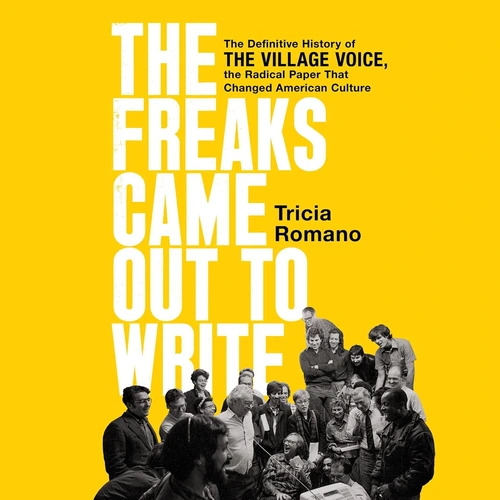
I loved the portrait of the Voice as a kind of beautiful disaster. The paper was broke all the time. The pay was terrible. The staff fought constantly. They had screaming matches and office romances and vendettas that lasted years. Yet they produced work that mattered. They broke stories about police brutality and gentrification and AIDS. They gave a platform to writers who did not fit anywhere else. The core conflict is the slow death of that world. The internet came. Craigslist killed the classified ads. The money dried up. The paper got sold and sold again, each time losing more of its soul. I will not tell you how it ends exactly. But you know the feeling. You have seen a favorite bar or a record store or a community center close. It is that same hollow ache.
The Theme of Belonging in a Disappearing World
The core theme here is belonging. Romano shows us that the Voice was not just a newspaper. It was a tribe. It was a place for freaks and outsiders and people who felt like they did not have a home anywhere else. The writer might be a punk rocker from the suburbs or a queer kid from the Midwest or a poet from the Bronx. At the Voice, they found their people. There is a subtle light in this book too. It is the joy of that discovery. The memory of walking into the office for the first time and realizing you were not alone.
Romano captures this through details. She describes the way the staff would crowd around a desk to read a hot new piece. She talks about the late nights at the bar after the paper went to press. She shows how the paper gave its writers a kind of permission. Permission to be weird, to be angry, to be honest. That is the universal pattern. We all need spaces that let us be our full messy selves. The book is a love letter to that idea. It is also a warning. When those spaces disappear, something in us shrinks.
What We Can Still Do
So what do we do with this book? I think it is for anyone who has ever loved a place that no longer exists. It is for journalists and artists and anyone who works in a field that feels like it is dying. But it is also for people who just want to understand why certain places matter so much. The book has flaws, honestly. It is too long. Some sections drag. The structure is loose and sometimes feels like a transcript of a long rambling night at a bar. But that is also its charm.
What you get from reading it is a reminder. The Village Voice is gone. But the spirit of it can still exist. It exists in the independent bookstores that survive. In the small music venues and the community radio stations and the local papers that refuse to die. It exists in the friendships we build with people who share our weirdness. The question the book leaves you with is a hard one: are we willing to build these spaces again, even if they are messy and broke and difficult? Because the alternative is a world where the freaks have nowhere to go. And that would be a quieter, sadder, less interesting world.
