I was standing in line for coffee last week. A woman in front of me had a toddler on her hip and a plastic bag full of documents. She looked tired in a way that felt permanent, like something had been draining her for years. I didn’t ask where she was from. I wanted to. But I didn’t. Later, I opened Jonathan Blitzer’s new book and realized that woman might as well have stepped out of its pages.
What does it mean to live in a country that spends billions policing its border while simultaneously creating the conditions that force people to cross it? That’s the question Blitzer, a staff writer at The New Yorker, plants in the first chapter. He doesn’t answer it quickly. He doesn’t answer it simply. He answers it by telling stories.
The Faces Behind the Headlines
Blitzer introduces us to people I’d never met before. A teenage boy from Honduras who travels alone through Mexico. A mother in El Salvador whose son joined a gang because it was safer than refusing. An asylum officer in the United States who has to decide in fifteen minutes whether someone’s fear is real enough.
These characters aren’t heroes. They aren’t villains. They are people caught in something larger than themselves. The boy on the train, for instance. He leaves home not because he wants adventure but because the gang in his neighborhood told him he had two choices: join or die. His mother sends him off with a prayer and a phone number written on his arm. I found myself turning pages faster, hoping he would make it. I won’t tell you if he does. That’s not the point.
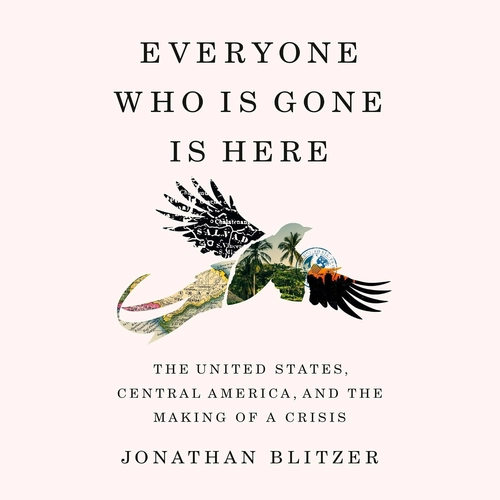
What Blitzer shows is that every person who arrives at the border has a story that started years before. The journey is the climax, not the beginning. The real drama happens in the kitchens, the schoolyards, the police stations of countries we barely think about. And the suspense comes from watching American policy-makers respond to this human flood with laws that treat desperation as a crime.
The Shadows We Refuse to See
The core theme of this book is not migration. It’s blindness. Willful, organized, bipartisan blindness. Blitzer traces how the United States funded anti-communist militias in Central America during the 1980s, which created instability, which created violence, which created refugees. Then we called those refugees illegal aliens.
The subtle light comes from Blitzer’s own reporting. He spent years in El Salvador, Guatemala, Honduras. He interviewed gang members, mothers, judges, diplomats. He doesn’t judge them. He just listens. And what he hears is a pattern: people who want to stay home but can’t. People who don’t want to come to America but have no other option. One woman tells him she cried the day she left. She had a job. She had a house. She had a neighbor who was killed for refusing to pay extortion. So she left.
This is the universal pattern. Not the migrant as invader. The migrant as survivor. Blitzer’s craft is in making you see the policy through the person. He doesn’t lecture. He reports. And the reporting builds an argument you can’t escape.
The Cost of Looking Away
What I keep thinking about, days after finishing the book, is a line Blitzer writes near the end. He describes a detention center in Texas where children are held in chain-link cages. A guard tells him the kids cry at night. The guard is not being cruel. He is being honest. And that honesty is worse than cruelty because it means we have normalized this.
The book was published in 2024, but it feels like it’s about every decade. The names of the laws change. The number of border patrol agents increases. The wall gets taller. But the pattern stays the same. We create chaos. We militarize the response. We call the victims criminals.
I’ll be honest: this book left me unsettled. It didn’t offer a solution. It didn’t tell me what to do. What it did was make it impossible for me to walk past a tired woman with a toddler and a plastic bag without wondering what she left behind. Maybe that is the real value of a book like this. Not answers. But the refusal to let us pretend we don’t know.
