I sat on my porch last week, watching a spider mend its web after a storm. The way it moved, deliberate and unbothered by the damage, reminded me of something. I had just finished Margaret Atwood’s memoir, “Book of Lives.” And I kept thinking about that spider. How it rebuilt without a hint of self-pity. How its work was just a continuation of what it had always been doing. Atwood, in this book, does something similar. She takes the fragments of a long life, the public fame and the private sorrows, and weaves them into something that feels inevitable. But the question that kept nagging at me was this: How does a person who has spent decades imagining other people’s stories finally tell her own without losing herself in the process?
The Girl Who Watched the World
The Atwood who emerges here is not the stern oracle you might expect. She is, first and foremost, a watcher. A girl who grew up in the northern Ontario bush, where her father studied insects. She writes about those early years with a scientist’s eye for detail and a poet’s love for the absurd. She describes the outhouse, the kerosene lamps, the way her mother read aloud by firelight. But she also describes the loneliness of it. The long winters. The sense of being an observer on the edge of things.
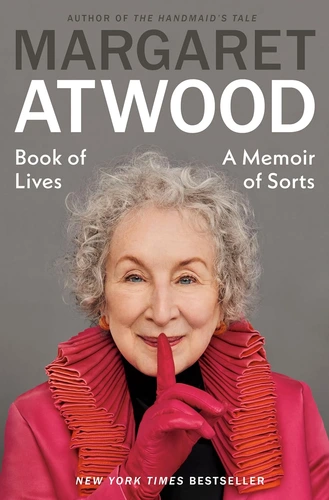
This is the core conflict of the book, I think. It is not a drama of dramatic betrayals or shocking secrets. It is quieter. It is the story of a mind that refuses to be owned. Atwood writes about her early attempts at writing, the rejection letters, the small victories. She writes about her marriages, her friendships, her activism. And she writes about the backlash. The hatred she received after “The Handmaid’s Tale” became a global phenomenon. She does not wallow in it. She reports it, almost clinically. But you feel the weight underneath. The book’s emotional center, for me, was her account of her daughter’s childhood. The way she tried to protect her from the noise. The way she failed, sometimes. She is honest about her own limitations. She does not pretend to be a saint. She is a person who chose her work, and lived with the consequences. The suspense here is not about what happened. It is about how she managed to keep her own voice alive through all of it. I guess that is the real question. How do you stay yourself when the world wants you to be its symbol?
A Mind Made of Light and Shadow
Atwood uses two recurring images that I found haunting. The first is light. She writes about the northern lights she saw as a child, the sudden, silent explosions of color in the black sky. She writes about the light in her study, how it changes with the seasons. Light, for her, is not just illumination. It is a kind of attention. The way a writer focuses on a detail, the way a memory comes into focus. The second image is the shadow. She writes about the dark spaces under the forest canopy. The things that hide there. The things we choose not to see.
This is where her craft shines. She does not lecture about the darkness of human nature. She shows it in small, precise gestures. A casual cruelty in a childhood friend. A betrayal by a trusted editor. The way a political movement can turn on its own artists. She builds the argument of the book through these small moments. The argument, I think, is this: A life is not a straight line. It is a series of choices, each one casting a light and a shadow. Atwood’s genius is that she refuses to choose between them. She holds both. The woman who wrote the terrifying world of Gilead is the same woman who writes about baking bread for her daughter. The activist who fights for free expression is the same woman who admits she sometimes just wants to be left alone. This is not a contradiction. It is the shape of a real life. Her struggle to hold these opposites together is, I realized, a universal pattern. We all have our public selves and our private selves. But few of us are brave enough to show the stitching.
The Art of Staying Alive
So what is the core insight of “Book of Lives”? It is not a how-to guide for writers. It is not a political manifesto. It is something simpler and harder. It is a demonstration of how to remain a person in a world that wants you to become a brand. Atwood is now in her eighties. She has outlived many of her critics, many of her contemporaries. She has seen literary movements rise and fall. She has been celebrated and attacked. And she is still here, writing, watching, weaving.
I finished the book and sat in the dark for a while. I thought about the spider again. How it does not argue with the wind. It just builds. Atwood’s memoir is like that. It does not try to justify her life. It just builds it, thread by thread, from the light and the shadow. She does not ask for your approval. She does not offer easy answers. She offers something more valuable. She offers the sight of a mind at work, a mind that has decided to keep going. Maybe that is the real lesson of this book. Not that a great writer can tell you how to live. But that a great writer can show you what it looks like to keep choosing life, even when it is messy, even when it hurts. That is not a small thing. That is everything.
