I had a conversation with a friend recently. She was standing in a supermarket aisle, phone in hand, staring at twelve different brands of olive oil. Her face looked like she was solving a math problem she hated. “I just want the normal one,” she said. “But I don’t know what normal is anymore.”
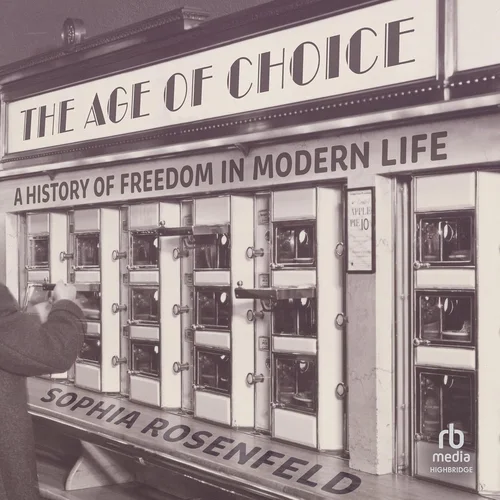
That moment kept coming back to me while reading Sophia Rosenfeld’s The Age of Choice: A History of Freedom in Modern Life. Rosenfeld is a historian, not a self-help guru. She doesn’t offer a five-step plan to stop overthinking. Instead, she asks something more unsettling: What if the modern obsession with choosing everything ourselves is actually a trap we built, not a freedom we won?
What the book actually says
Rosenfeld traces the idea of “choice” back to the 18th century. Before that, most people didn’t expect to choose their spouse, their career, or their religion. These things were inherited, or decided by your community, or simply accepted as fate. The Enlightenment changed that. Philosophers started arguing that individual choice was the foundation of human dignity.
But here is the twist Rosenfeld keeps returning to. This new freedom came with a cost. Once choice became a moral requirement, not having enough options started to feel like a failure. And having too many options started to feel like a burden.
She walks through different domains of modern life. Consumer culture, obviously. But also dating apps, fertility clinics, school selection, even the decision of how to identify your gender. In every case, she shows how the supposed liberation of “more choices” often produces anxiety, guilt, and a strange loneliness.
I’ll be honest. Some parts of the book felt academic in a way that made my eyes glaze over. The chapter on economic theory dragged a bit. But the core argument stuck with me because it answers a question I hadn’t fully articulated: Why do I feel less free even when I have more options?
The image that haunted me
There is one metaphor in the book that I keep thinking about. Rosenfeld describes modern life as standing in front of a giant menu board at a restaurant. Except the menu has hundreds of items. And you are required to order. And someone is watching to see if you make the right choice. And if you don’t, it’s your fault.
That image captures something about our era that I hadn’t been able to name. It’s not that we are forced to choose. It’s that we are forced to feel responsible for every choice. There is no escape hatch. No “I don’t know, just surprise me.” The culture insists that the good life is a life of deliberate, informed, autonomous choices.
But Rosenfeld doesn’t stop at critique. She also points out a subtle, almost invisible light in the darkness. Throughout history, people have found ways to resist the tyranny of choice. Sometimes by embracing tradition. Sometimes by trusting others. Sometimes by simply saying, “I don’t care.”
Who this book is for and what you will gain
This book is for anyone who has ever felt tired after shopping online. Anyone who has experienced decision paralysis. Anyone who has spent an hour scrolling through Netflix and ended up watching nothing.
It is also for people who think they already have this figured out. You know the type. The ones who say “just follow your gut” or “listen to your heart.” Rosenfeld gently exposes how those phrases themselves are products of a specific historical moment. The idea that your gut or your heart has a clear answer is a relatively modern invention.
What you will gain from reading this book is not a solution. Honestly, there isn’t one. But you will gain a kind of relief. The relief of realizing that your exhaustion is not a personal failing. It is structural. It is historical. It is not your fault that you can’t decide between twelve olive oils.
The quiet ending that I needed
Rosenfeld ends the book not with a call to action, but with a reflection on limits. She suggests that real freedom might look less like having infinite options and more like having a bounded space where you can move without vertigo. A garden, not a desert. A small room, not an empty warehouse.
I thought about my friend in the supermarket. I thought about my own habit of refreshing job listings even when I’m happy with my current work. I thought about the way I sometimes wish someone would just tell me what to do.
Maybe that is what real freedom feels like. Not the ability to choose everything. But the permission to stop choosing. The permission to let some things stay as they are. The people who stay in one place, with one person, doing one thing for a long time. They might not be boring. They might be the freest ones among us.
