I was at a dinner party recently, the kind where everyone is smart and loud and opinionated. I found myself watching the women at the table. They spoke with such ease, throwing out references, arguing about politics, laughing at their own clever jokes. And I thought: how long did it take for this to feel natural? How many generations of silence did it take to earn this noise?
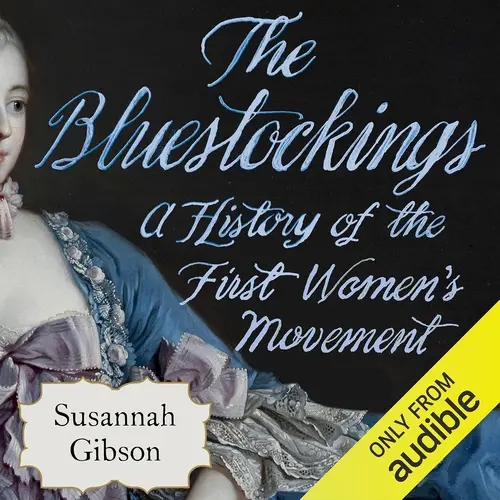
Susannah Gibson’s “The Bluestockings: A History of the First Women’s Movement” answers that question. It tells the story of a group of 18th-century women who decided that intelligence was not a male property. The book is not a dry academic text. It is a living, breathing account of women who were told they could not think, and who thought anyway. The question the book asks, quietly but insistently, is this: what does it cost a woman to claim her own mind?
Elizabeth Montagu and the Art of Being Brilliant in a Room That Hates You
The book’s central figure is Elizabeth Montagu, a woman who essentially invented the intellectual salon in England. She hosted gatherings where men and women could discuss philosophy, literature, and science as equals. It sounds gentle, almost quaint. But Gibson shows us the sharp edges.
Montagu was not simply hosting tea parties. She was building a fortress. Every detail was calculated. The seating arrangements, the topics of conversation, the timing of the evening. She had to be perfect because one mistake would confirm every man’s suspicion that women could not handle serious thought.
I loved the portrait Gibson paints of Montagu. She was not a saint. She was ambitious, sometimes vain, occasionally ruthless. She built a career out of being charming, which is exhausting work. The conflict is not about whether she succeeds. It is about what success costs her. She has to perform intelligence in a way that does not threaten the men around her. She has to be brilliant but not too brilliant. Learned but not pedantic. Witty but never cutting.
This is the core tension. These women are fighting for the right to be smart, but they are also fighting the voice inside themselves that says: maybe they are right. Maybe I am just a woman playing at intellect. Gibson does not flinch from this. She shows us the doubt, the exhaustion, the private tears after a successful evening.
The Cost of Being First: Loneliness and the Fear of Being Wrong
Here is the theme that hit me hardest: the terror of being wrong when no one wants you to be right. The Bluestockings were not just fighting external opposition. They were fighting their own internalized doubt.
Gibson uses a specific image that stayed with me. She describes the inkwells these women used. Small, portable, easy to hide. A woman writing in secret, her hand moving across the page, the ink staining her fingers. It is a physical act of rebellion. But it is also a lonely one.
The book makes clear that these women were not a unified sisterhood. They disagreed. They competed. They judged each other. Hester Thrale, another salon hostess, wrote harshly about Montagu. There was jealousy, there was betrayal. It was messy. It was human.
And this is where Gibson’s craft shows. She does not romanticize them. She lets them be flawed. She lets them be petty. Because the truth is, being a pioneer does not make you a saint. It makes you tired. It makes you defensive. It makes you snap at the people who are supposed to be on your side.
The universal pattern here is one I recognize in my own life. The fear that if I speak up, I will be told I am wrong. And the deeper fear that I might actually be wrong, and then everyone will know that I do not belong here.
What We Inherited: The Unfinished Work of Thinking Freely
I finished this book with a strange feeling. Gratitude, yes. But also a kind of sadness. Because the battle is not over. We have inherited the right to sit at the table. But we have also inherited the anxiety that comes with it.
Gibson ends her book not with a triumphant victory lap, but with a question. What do we do with the freedom these women earned for us? Do we use it? Or do we squander it, scrolling through our phones, letting our minds grow soft?
The Bluestockings believed that thinking was a moral act. That to sharpen your mind was to sharpen your soul. They were not always right. But they were always brave.
I recommend this book to anyone who has ever felt like an impostor in a room full of smart people. To anyone who has ever hesitated before raising their hand. To anyone who has ever wondered if their voice matters.
It does. It always did. It always will.
