I was 16, parked at a deserted intersection with my best friend riding shotgun. The light turned yellow, then red. Midnight. Not a car in sight. She looked at me and laughed, “Just go. Nobody’s watching.” I ran the light. Two blocks later, a police cruiser pulled me over. The officer was kind, let me off with a warning. But the shame didn’t come from the ticket I didn’t get. It came from how easily I handed over my judgment to someone else. That moment stuck with me for decades. Now, as a parent, I watch my son navigate the same invisible currents. And I realize I still don’t fully understand why we bend so easily. The psychology of peer pressure isn’t about weakness. It’s about something much deeper.
Quick Help for Peer Pressure Moments
If your child is facing pressure right now, try these:
- Pause before answering any request that makes your stomach tight.
- Name the feeling silently: “This is pressure.”
- Ask yourself: “Will I respect this choice tomorrow morning?”
- Remember that the crowd rarely cares about your decision five minutes later.
- Give your child a pre-planned exit line, like “My mom would ground me forever.”
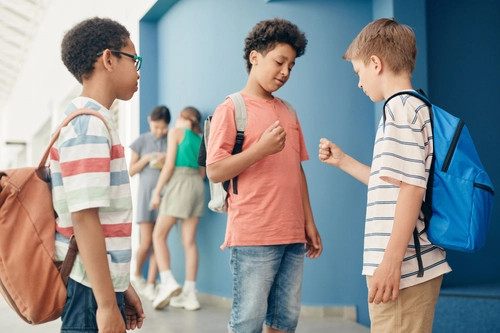
What Is Peer Pressure Psychology and Why Does It Control Us?
Peer pressure psychology is not simply about “saying no.” It’s a social survival instinct. Our brains are wired to seek approval from the group. For most of human history, being rejected by the tribe meant death. That ancient wiring still fires in the school hallway, the cafeteria, the group chat.
I saw this in my son last month. He came home quiet, backpack heavy with something more than textbooks. A kid he admires had dared him to flip a desk during science class. “I didn’t do it,” he told me. “But I almost did. And everyone was watching.” He wasn’t proud of resisting. He was scared of how badly he wanted to go along.
That’s the core of peer pressure. It doesn’t always feel like a demand. Sometimes it feels like a gravitational pull toward belonging. A study from the Journal of Adolescent Health found that teens are more likely to take risks when they believe another teen is watching. Even a silent observer can tilt the balance. The researchers called it “the audience effect.” But on the ground, in real life, it feels less like an effect and more like a tiny voice whispering, “Don’t be the odd one out.”
The tricky part is that peer pressure psychology works even when the crowd isn’t present. My daughter once bought a shirt she hated because all her friends owned the same one. The pressure had already moved inside her head. It had become a habit of checking her own desires against the group’s mirror.
How Can Peer Pressure Psychology Actually Help Kids Push Back?
We usually think of peer pressure as the enemy. But the same psychological need for belonging can be redirected. The solution isn’t building a wall. It’s choosing the right circle.
I started having strange conversations with my son. “Who do you actually trust in your friend group?” I asked. He named two kids. “Do either of them ever pressure you?” Nope. “Would they still like you if you said no?” He thought. “Probably, yeah.”
That simple filter is powerful. Peer pressure psychology works by making rejection feel catastrophic. But if a child can locate one friend who won’t abandon them after a refusal, the whole threat deflates. The audience shrinks from “everyone” to “two people who matter.” So I stopped telling him to ignore the crowd. Instead, I helped him map the crowd. Who matters? Who disappears in a month? Whose respect is actually worth earning?
We practiced a few scripts together. One evening, I pretended to be a classmate pressuring him about cheating on a quiz. “Just slide the paper over,” I said. He fidgeted. Then he used a line we’d rehearsed: “My brain goes blank when I cheat. I’d just mess us both up. Not worth it.” It wasn’t a moral lecture. It was a practical excuse that protected his dignity. And it worked, not because it was noble, but because it didn’t make him look weak.
A Simple Mental Trick to Deflect Pressure
Here’s a tool I borrowed from a parenting workshop years ago. I call it the Spotlight Shift. Most kids (and adults) feel peer pressure as a blinding spotlight. Every eye is on them. The request hangs in the air. Their heartbeat drowns out their thinking.
The Spotlight Shift works like this: in the moment of pressure, silently shift your attention to the other person. Really look at them. Notice the tiny cracks in their confidence. Are they shifting their weight? Are they looking around to see if others are watching? The pressure-giver is often just as anxious as the receiver. They’re performing toughness they don’t own.
I taught this to my daughter after she got pushed into a dare. She was at a sleepover, and a girl dared her to send an embarrassing text to a boy. She did it. Later, when we talked, I asked, “Was the girl who dared you looking at you or at the others to see if they approved?” My daughter paused. “She kept glancing at the other girls. Like she needed them to be impressed.” Bingo.
The next time pressure came—a different friend pushing her to skip study hall—she tried the Spotlight Shift. She told me later, “I just stared at her for a second and realized she looked way more nervous than me. So I said, ‘Nah, my grades are already on life support. You go ahead.’ And she just shrugged and walked off.” The pressure dissolved because my daughter stopped being the performer. She became the observer.

How Peer Pressure Shifts by Age
Understanding peer pressure psychology means recognizing it morphs over time. What works for an 8-year-old won’t work for a 14-year-old.
The Younger Years (6-9): Pressure is often direct and physical—kids daring each other to break rules. The Spotlight Shift is too abstract. So I use the “Reason + Replacement” method. “We don’t throw rocks, but we can roll them into the creek.” Giving an alternative action replaces the forbidden thrill. One sentence blocks the pressure without a power struggle.
The Tween Window (10-12): Belonging pressure sharpens. Kids start policing each other’s clothes, music, lunch choices. Here, I lean into the “circle mapping” I mentioned earlier. I ask my tween daughter, “Who in your class would still sit with you at lunch if you wore the wrong sneakers?” She once named three kids. That was her real social circle. The rest became noise.
The Teen Kingdom (13-17): This is when peer pressure psychology gets loudest under silence. The pressure to be “chill,” to not care about school, to disappear into the group’s mood. My son now uses what I call the “24-Hour Echo Test”: Will this decision echo in a bad way tomorrow? If yes, delay. If no, it’s just noise. It gives the brain time to cool down.
Why Your Own Past Matters More Than You Think
Here’s something I didn’t expect: talking about my own peer pressure wounds helped more than any lecture. One night, I told my son about that red light moment. I admitted I still cringe when I think about it. He was quiet. Then he asked, “Do you think less of yourself because of it?” I said, “I think I learned that my gut is usually right, and I need to listen faster next time.”
Later, when he confessed his near-miss with the desk-flipping dare, I asked the same question back: “Do you think less of yourself for almost doing it?” He thought. “No. I think I almost did it because everyone wanted me to. I stopped because I didn’t want to hurt Mr. Keller. He’s the only teacher who remembers my name.”
That’s peer pressure psychology at work, twisted into something useful. He didn’t resist because he’s strong. He resisted because a real relationship outranked the abstract crowd. That’s the seed. That’s the thing to water.
FAQ: Peer Pressure Psychology
Q: Why do kids give in to peer pressure even when they know better?
A: The brain’s reward system is highly sensitive to social approval during adolescence. When a peer is watching, the brain’s reward circuitry actually lights up, making risky choices feel more compelling. It’s not a lack of character—it’s biology.
Q: What’s the most effective way to help a child resist peer pressure?
A: Give them a pre-planned escape line that doesn’t make them feel weak. A line like “My parents would kill me” or “I’m not in the mood” works because it blames an external factor rather than their own desire to say no. Also, help them identify the friends who would still like them after a refusal.
Q: How can I talk to my teen about peer pressure without sounding like a lecture?
A: Share a story from your own life where you gave in to pressure. Let them see you were imperfect too. Then ask questions instead of giving advice: “What’s the hardest part about saying no in your group?” Their answers will tell you where they need support.
Q: Does peer pressure ever get better with age?
A: Yes. Studies show that resistance to peer influence increases steadily from early adolescence into adulthood. As the brain matures, the drive for social approval becomes more balanced with internal judgment. But the skills they practice now—pausing, mapping their real circle, using escape lines—make that shift easier.
Q: What if my child is the one pressuring others?
A: That’s also a form of peer pressure psychology. Ask them: “What do you feel when someone does what you ask? What do you feel when they say no?” This helps them notice their own need for social power. You can also practice replacement phrases like “That’s not really my thing, but you do you.”
One Last Thing
I still think about that empty intersection sometimes. Not because of the police lights. Because of the tiny surrender it took—a whole person handing over the wheel to a voice in the passenger seat. My kids will face their own quiet intersections. I can’t drive for them. But I can tell them the truth: the pressure fades. The self-respect, if you choose it, stays.
References
- Steinberg, L., & Monahan, K. C. (2007). Age differences in resistance to peer influence. Developmental Psychology, 43(6), 1531-1543.
- Chein, J., Albert, D., O’Brien, L., Uckert, K., & Steinberg, L. (2011). Peers increase adolescent risk taking by enhancing activity in the brain’s reward circuitry. Developmental Science, 14(2), F1-F10.
- American Academy of Pediatrics. (2018). Helping teens resist peer pressure. HealthyChildren.org. Retrieved from https://www.healthychildren.org
