Quick Answer: To help treat anxiety in a child naturally, do not dismiss their fear or force them to “stop worrying.” Instead, help them turn anxiety into something concrete through drawing, writing worries down, or calmly rehearsing the worst-case scenario so their brain can feel safer.
You squat down and ask, “What’s wrong?”
Your child says, “My stomach hurts.”
But you know this is not really about the stomach. Tomorrow, they have to go on stage, take a test, start school, join swimming class, or walk into a room full of people.
You say, “It’s okay.”
They feel dismissed.
You say, “Don’t be scared.”
Now they feel like being scared is somehow wrong.
This is why helping an anxious child can feel so hard. You want to comfort them, but the usual words do not always work.
When parents search for how to treat anxiety in a child naturally, they are often not looking for a perfect cure. They are looking for something gentle, practical, and safe to try at home.
The first thing to understand is this: anxiety is not just “thinking too much.” It is the brain’s alarm system becoming too sensitive.
If you tell a fire alarm to “stop ringing” while it still senses danger, it will not calm down. In the same way, an anxious child usually does not calm down just because we say, “Nothing bad will happen.”
Instead, we need to help the alarm system slowly learn the difference between a real fire and someone lighting a candle.
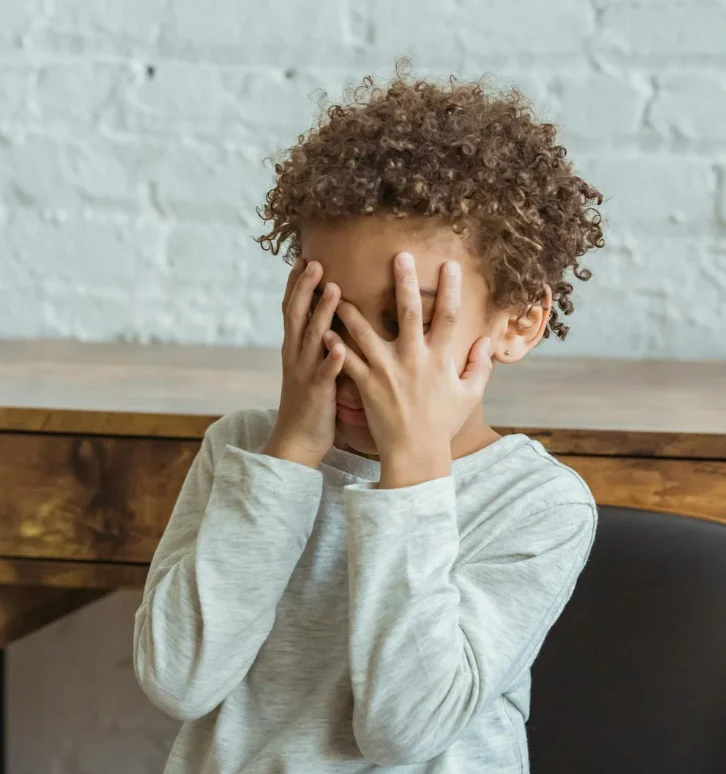
1. Draw the Anxiety Out
My neighbor has a six-year-old daughter. Every morning before kindergarten, the little girl cried and refused to leave the house.
Her mom tried reasoning. She tried rewards. She tried being stricter. Nothing helped for long.
Then one morning, she took out a piece of paper and said, “Sweetheart, can you draw the uncomfortable feeling inside your belly?”
The girl drew a messy black tangle.
“What is it called?” her mom asked.
“The Furry Monster,” the girl said.
“How many eyes does it have?”
The girl drew three eyes.
“What is it doing?”
“Stomping its feet.”
“Can we ask it to sit down for a minute?”
The girl drew a little chair under the black tangle. She wiped her tears. A few minutes later, she went to kindergarten.
For a child, anxiety can feel huge, blurry, and shapeless. When you help them put it on paper, it becomes smaller. It becomes something they can look at instead of something swallowing them from the inside.
How to try it:
When your child says, “I’m scared,” take out paper and say:
“Can you draw the scared feeling?”
“What color is it?”
“Does it have a shape?”
“Is it loud or quiet?”
“What does it need right now?”
You do not need to ask too many questions. A few gentle questions are enough. The goal is not to analyze the drawing. The goal is to help your child feel that anxiety is something they can name, see, and handle.
2. Lock the Worry Inside a Box
My friend’s eight-year-old daughter could not sleep before exams. Every night, the same worries came back.
“What if I do badly?”
“What if I forget everything?”
“What if I run out of time?”
Her mom made a simple worry box from an old shoebox. On the outside, they wrote: “Worry Box.”
At night, whenever her daughter had a worry, her mom said, “Write it down. Let’s lock it in the box until tomorrow.”
The girl wrote each worry on a small piece of paper, placed it inside, and closed the lid.
Then her mom said, “It’s locked in. We can look at it tomorrow.”
After less than two weeks, the girl started asking for the box on her own before bed.
Anxiety loves to spin in circles inside the mind. When a child writes or draws the worry, it stops being an invisible storm and becomes words on paper.
The act of closing the box gives the brain a signal:
This worry has been noticed. It does not need to keep yelling all night.
How to try it:
Prepare a small box, jar, envelope, or notebook.
When your child worries, invite them to write it down. If they cannot write yet, they can draw it.
Then say:
“We are not ignoring the worry. We are putting it somewhere safe for now.”
“It can stay here tonight.”
“We can look at it again tomorrow if we need to.”
This works especially well for bedtime anxiety, school worries, test anxiety, and repeated “what if” thoughts.
3. Rehearse the Worst-Case Scenario Calmly
When my son was eight, he was afraid of swimming class.
One day, I sat with him and asked, “Okay. Let’s say the thing you’re afraid of really happens. What’s the worst part?”
He said, “I’ll run out of energy.”
“And then what?”
“Then I’ll sink.”
“And then what?”
“Then the coach will jump in and save me.”
“And then what?”
“Then he’ll pull me to the edge.”
“And then what?”
“Then I’ll sit there and rest.”
He paused.
“Then nothing. I’ll be fine.”
Then I asked, “Before you get that tired, what could you do?”
He thought for a moment and said, “I could yell, ‘I’m tired!’”
That day, he went to swimming class. He did not sink. But later he told me, “When I got tired, I remembered I could ask for help.”
Sometimes children are not only afraid of the event. They are afraid because the scary story in their head has no ending.
When you calmly walk through the worst-case scenario, you give the story an ending. You also help your child find a plan.
How to try it:
Ask:
“What is the worst thing you are afraid will happen?”
Then gently keep asking:
“And then what?”
Keep going until the fear has nowhere else to grow.
Then ask:
“Before that happens, what could you do?”
“Who could help?”
“What could you say?”
This is not about forcing your child to face fear before they are ready. It is about helping them see that even if something uncomfortable happens, they are not helpless.
What Not to Say to an Anxious Child
When a child is anxious, some common phrases can accidentally make them feel more alone.
Try to avoid:
“Don’t be scared.”
This can make a child feel like fear is wrong.
“There’s nothing to worry about.”
To your child, there is something to worry about. Even if the fear seems small to you, it feels real to them.
“You’re fine.”
They may not feel fine yet.
Instead, try:
“I can see this feels scary.”
“Your body is sounding an alarm.”
“Let’s help the alarm calm down together.”
“You don’t have to handle this by yourself.”
When Should You Get Extra Help?
Natural calming methods can help many children, especially when anxiety is mild or situation-based.
But if your child’s anxiety is intense, lasts for weeks, affects sleep, school, eating, friendships, or daily life, it is a good idea to talk with a pediatrician, school counselor, or child mental health professional.
Getting help does not mean you failed as a parent. It means your child deserves support that fits the size of the struggle.
FAQ: How to Treat Anxiety in a Child Naturally
Q: How can I treat anxiety in my child naturally at home?
A: You can help by naming the anxiety, drawing it, writing worries down, using calming routines, and helping your child make a simple plan for scary situations. For severe or ongoing anxiety, seek professional guidance.
Q: What is the fastest way to calm an anxious child?
A: Start by validating the feeling. Say, “I can see this feels scary.” Then help your child slow their breathing, draw the fear, or focus on one small next step.
Q: Should I tell my child not to be scared?
A: It is usually better not to say “Don’t be scared.” Instead, say, “It makes sense that you feel scared. I’m here with you.” This helps your child feel understood rather than corrected.
Q: Can drawing help child anxiety?
A: Yes, drawing can help some children turn a vague anxious feeling into something concrete. Once the fear has a shape, color, or name, it often feels less overwhelming.
One Last Thing
When it comes to treating anxiety in children naturally, the most important thing is not finding the perfect sentence.
It is sitting beside your child and showing them they do not have to face the fear alone.
Draw it out.
Lock it in a box.
Walk through the worst-case scenario together.
One of these small methods may become the moment your child learns: anxiety can be scary, but it can also be handled.