I was standing in a crowded museum in Washington D.C. last year, staring at a map of the United States from 1890. Something caught my eye. There, in what is now Oklahoma, was a territory labeled “Indian Territory.” But there were no marks for the all-Black settlements that once dotted that land. No mention of the people who tried to build a separate nation. I felt a strange ache. How much history gets erased not by fire, but by silence? That question led me to Caleb Gayle’s “Black Moses: A Saga of Ambition and the Fight for a Black State.”
A leader who carried a nation on his back
The protagonist of this story is a man named E.P. McCabe, a Black lawyer and politician who moved to Oklahoma Territory in the 1880s. He had a radical idea. Instead of fighting for integration in a country that despised them, Black Americans should build their own state. A place where they could govern themselves. Own land freely. Raise families without the constant threat of lynching. Gayle paints McCabe not as a saint, but as a deeply ambitious, complicated man. He was charming, relentless, and maybe a little naive. He believed that land ownership equaled power. That a Black governor could command respect from white America.
The core conflict is almost unbearable. McCabe and his followers came so close. They founded towns like Langston and Boley. They registered voters. They lobbied Congress. But they faced enemies on all sides. White settlers wanted the land for themselves. Native tribes resented Black presence on their territory. And many Black leaders elsewhere thought McCabe’s plan was a dangerous fantasy. The suspense in this book comes not from wondering what happened, but from watching a dream slowly suffocate. Gayle never reveals the ending too quickly. He makes you sit in that tension. I couldn’t put it down. But I also felt a knot in my stomach the whole time. You know the end is coming, and you don’t want it to.
The light that never quite arrived
The central theme here is not really about Oklahoma. It is about a question that haunts every marginalized group. When the door is locked, do you break it down, or do you build your own house? Gayle explores this tension with remarkable tenderness. He calls it the “politics of place.” For McCabe, land was everything. It was dignity, safety, and identity wrapped in one. But the book also asks a darker question. Can a people build a home on land that was stolen from others?
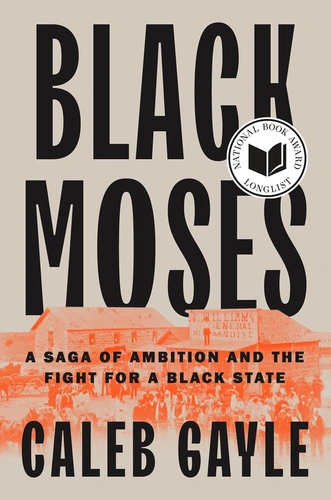
Gayle’s writing is elegant in its restraint. He does not lecture. He lets the documents and letters speak. There is one subtle light that stays with me. It is a photograph of a Black family standing in front of a log cabin in Langston, Oklahoma, circa 1900. The father holds a rifle. The mother holds a baby. The children are barefoot. They look exhausted but defiant. That image carries the entire book. It is hope and desperation in one frame. Gayle’s craft is in helping us see not just the political maneuvering, but the human weight behind it. Every failed bill, every broken promise, every burned church, is a tear in the fabric of a dream.
What does freedom actually mean?
I finished this book three weeks ago, and I am still wrestling with it. The story of McCabe and the Black state movement does not have a happy ending. The dream of a Black state died. Oklahoma became a state in 1907, and within a decade, Jim Crow laws were in full effect. Towns like Langston survived but never flourished. McCabe died in relative obscurity. But Gayle argues that the failure was not meaningless. It revealed something profound about American democracy. The system was never designed to let Black people choose their own path. Whether they tried to integrate or separate, the door was always closed.
So who should read this book? Anyone who has ever felt like an outsider in their own country. Anyone who has wondered if the fight for inclusion is worth the cost. The book’s only weakness is that it sometimes gets bogged down in political details. I wished for more of the ordinary people’s voices. But that is a minor complaint. What you get instead is a powerful meditation on ambition, betrayal, and the terrible price of hope.
I thought I knew the history of Black resistance in America. I was wrong. This book taught me that the question is not whether to stay or leave. The question is whether we can ever truly belong to a place that does not want us. Maybe that is what real freedom looks like. Not a separate state or a seat at the table. But the quiet, stubborn refusal to stop asking the question.
