I was sorting through old photographs last month, the kind you find in a shoebox under the bed. Black and white faces I could not name. People who shared my blood but not my memory. I felt a strange guilt. They lived, they loved, they suffered. And I knew almost nothing. That is the question at the heart of this book. What do we owe the dead we never knew?
A Vivid Portrait of Grandmothers on a Mission
The book centers on a group of Australian grandmothers. They are not young. They are not powerful in any traditional sense. They are ordinary women who decide to do something extraordinary. They search for the children stolen from their families during a government policy of forced assimilation. The Stolen Generations.
These grandmothers are the protagonists. I loved how the author, whose name escapes me for a moment, refuses to make them into saints. They are stubborn, sometimes petty, and often exhausted. They argue over logistics. They cry in hotel rooms. They keep going anyway.
The core conflict is not just against a cruel system. It is against time itself. These women are old. They might die before they find the children. The suspense is brutal. Will they find a living relative? Will a child recognize a grandmother’s face after sixty years of separation? I will not tell you what happens. But I will say this. Reading their story made me want to call my own grandmother. Just to hear her voice.
The Craft of Light and Shadow
The author uses a specific image throughout the book. It is the flower. The flower that traveled in the blood, from one generation to the next. It sounds poetic. It is. But it is also painfully literal. The stolen children carry the flower of their ancestors inside them. They just do not know it.
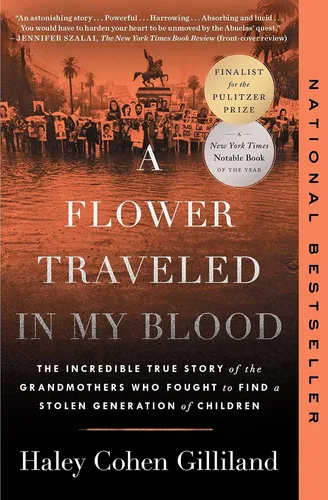
The imagery is subtle. There is a scene where one grandmother finds a photograph of a child who might be her granddaughter. The child is standing in a dusty yard. The light falls on her face in a way that mirrors an old portrait of the grandmother herself. The author does not explain this. She just places the two images side by side. The reader sees the connection. The reader feels the ache.
This is not a book about grand gestures. It is about small, quiet acts of recognition. A name whispered. A hand held. A flower pressed between the pages of a letter. The author’s craft lies in letting the light fall where it needs to. Not too bright. Not too dark. Just enough for us to see the shape of what was lost.
What I Learned and Why You Should Read It
I finished the book and sat in silence for a while. I realized something. This story is not just about Australia. It is about every family that has a secret. Every family that has a silence. The grandmothers in this book teach us that the search itself is a form of love. Even if you never find what you are looking for.
The book has one weakness, I think. It focuses so much on the grandmothers that the children themselves become somewhat distant. We hear their stories through letters and secondhand accounts. I wanted to hear their voices directly. But maybe that is the point. The children were stolen. Their voices were taken. The grandmothers are trying to give them back.
Core insight: We carry the dead with us, even when we do not know their names. The flower travels in the blood. Our job is to look for it.
