I was walking through my neighborhood last week, and I stopped at a certain intersection. You know the one. On one side, the houses are wide, the lawns groomed. On the other, the sidewalks crack, and the corner store has bars on the windows. I have crossed that line maybe twice in five years. Why? I never had a good answer. Then I read Michelle Adams’s The Containment, and I started to wonder: how much of what I feel as “just the way things are” is actually a decision someone made, decades ago, that I never knew about?
What The Containment Is Really About
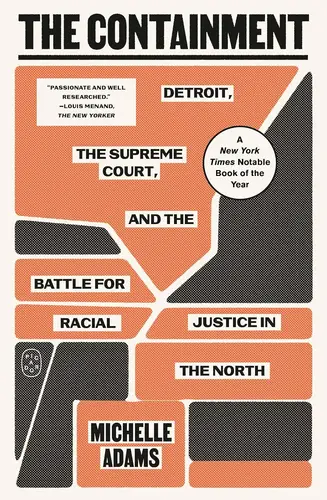
Adams does not give us a straightforward history lesson. She focuses on a single neighborhood in 1960s Detroit: Conant Gardens. White residents there used violence, intimidation, and legal maneuvers to stop Black families from moving in. They called it “containment.” The book follows one family’s struggle to buy a home on the wrong side of that line, and how the case eventually reached the Supreme Court. But here is the thing. Adams is less interested in the courtroom drama than in the texture of daily fear. She shows us what it felt like to be a Black family walking past a crowd of white neighbors holding signs. She shows us the quiet complicity of the police who looked away. She shows us the exhaustion. I will not tell you how the case ended. But I will say this: the legal victory did not erase the line. It just made it invisible.
The Craft That Makes It Hurt
Adams writes with a journalist’s clarity and a novelist’s eye for detail. She lingers on small things. The way a white mother pulls her child inside when a Black family drives by. The way a real estate agent’s voice changes on the phone. These moments feel small, but they are not. They are the machinery of containment. The book’s core theme is not racism as an abstract evil. It is racism as a series of small, daily choices made by ordinary people who thought they were protecting their property. The subtle light here is hope. Adams traces how a few residents, white and Black, quietly broke the code. They shared a cup of coffee. They let their kids play together. These small acts did not win the war. But they showed that the line was not inevitable. It was constructed. And what is constructed can be taken apart.
What This Book Asks You to Do
I finished The Containment and sat with it for a while. Then I looked up the zoning history of my own city. I found a document from 1968. A city council meeting where someone said, “We need to keep our neighborhoods stable.” I knew what that word meant. The book made me see it. The Containment is not just about Detroit. It is about every city where a highway separates a wealthy area from a poor one. Every suburb where the housing prices seem to shift for no clear reason. Every street you never cross. Adams does not give you easy answers. She gives you a question: what am I willing to see? The book has one weakness. It is dense. Adams includes a lot of legal and political detail that can slow the reader down. But if you push through, you get something rare. A clear-eyed look at how the past lives in the present. I recommend it to anyone who has ever wondered why their city looks the way it does. To anyone who has felt that invisible line and wanted to understand where it came from.
Maybe the line is not permanent. Maybe we just have to decide to cross it.
