She’s in the pack-n-play, red-faced, screaming. You just need to chop an onion. Three minutes ago she was fine, and now she’s arching her back like you’ve committed some terrible betrayal. Your coffee’s gone cold. You wonder if you should just let her cry. Someone told you that picking her up “reinforces the behavior.” But she’s only eleven months old. Can a baby this small even throw a real tantrum?
Here’s the truth: You are not alone. This is normal. What looks like an 11 month old tantrum is rarely a calculated power play. It’s a tiny human with big feelings and zero words, losing it because she’s exhausted, frustrated, or convinced you might vanish forever. And you, the parent who can barely function on broken sleep yourself, are supposed to figure out the “right” response in the moment.
It’s a lot. Let’s break it down.

11 Month Old Tantrums: Why They Happen and How to Handle Them
Why Does My 11 Month Old Have Tantrums Out of Nowhere?
She threw herself backward because you closed the fridge door. You took away the remote. You dared to put her in the walker so you could drink water while it was still hot. These aren’t tantrums in the way a three-year-old has tantrums. An eleven-month-old brain can’t plan a manipulation strategy, a point echoed by many long-time nannies and child development resources. Her prefrontal cortex, the part that handles impulse control, is years from being fully wired. What she has is a surge of frustration or panic, and one way to let it out. Screaming.
When my daughter was that age, confinement felt like a prison sentence to her. The high chair, the car seat, the gated play area. She’d be happily crawling one second, then a banshee the next, just because I set her down. I thought I was doing something wrong. But she wasn’t trying to manipulate me. She was expressing a desperate, primal need to move and to stay close. Some kids hate being contained from birth. It’s a temperament thing. Your neighbor’s baby might sit placidly in a swing for twenty minutes. Yours might act like the straps are made of hot lava. Both are normal.
Then there’s the exhaustion factor. You said it yourself: as a grown adult, you can barely function when you need sleep. An eleven-month-old is often right on the cusp of walking, teething, or hitting a mental leap. These all torch her sleep quality. A tired baby’s emotional regulation collapses. The small frustration of a stuck toy becomes a full-body meltdown. In her 2019 book The Whole-Brain Child, Dr. Tina Payne Bryson explains that when a child is flooded with emotion, logic goes offline. They literally cannot hear reason. They need connection first.
What to Do About 11 Month Old Tantrums When She Just Wants to Be Held?
Here’s what worked for me.
- Talk her through the transition. Before you put her in the pack-n-play, squat down and say, “Mommy is going to wash her hands for one minute. Then I pick you up again.” She won’t understand “one minute” as a unit of time, but she’ll learn the pattern. The words mean the separation has a clear endpoint. Some families find that narrating the departure and return reduces the panic.
- Connect before you step away. Get down on the floor and play peek-a-boo through the mesh sides. Hand her a toy and name it. Stay for sixty seconds. This tiny investment signals, “I’m not disappearing. We’re still connected, even with this barrier between us.”
- Use a carrier when you can. If she’s melting down and dinner needs to be made, wearing her on your back for ten minutes might save your sanity. At eleven months, some babies find facing inward comforting. My friend’s daughter would only calm down if she could watch the carrots being chopped from the safety of the wrap. The phase does pass. The urge to explore eventually wins over the need for closeness, especially when you fill that need upfront.
- Offer an acceptable replacement, not a lecture. When you take away the dangerous object she grabbed, immediately hand her a wooden spoon or a crinkly toy. “Phone is not for you. This is yours.” Half the time it works. The other half, she’ll scream anyway. That’s fine. You still held the boundary. She’s allowed to be mad about it.
- Pause before you react. The best advice I got was annoyingly simple: take one deep breath before you say or do anything. This pause stops you from snapping. It gives you a split second to read the room. Is she hungry-tired angry, or is this separation-anxiety angry? The former needs a bottle and a dark room. The latter needs a hug and a song.
Feeling overwhelmed by daily parenting battles? Articles give you quick fixes, but lasting peace requires a framework. Discover how to stay calm, break the fatigue cycle, and foster deep connection in [The Parent You Aspire to Be].
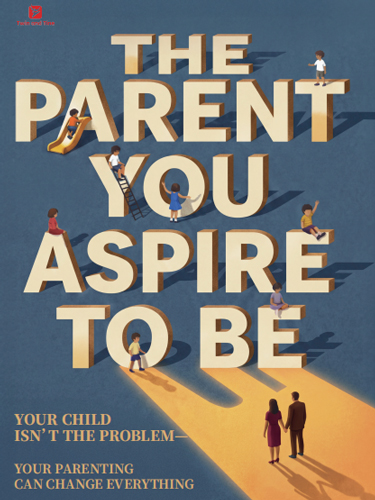
The Parent You Aspire to Be
Miles CarterPractical guidance for tantrums, backtalk, lying, screen addiction, emotional outbursts, and everyday parenting struggles.
When She’s Overtired: A Completely Different Animal
There’s a specific flavor of 11 month old tantrum that needs a completely different script: the exhausted meltdown. When she’s starting to fade, you’ll see the signs. Rubbing her eyes. Staring blankly at a fixed point. A low-grade whine that ramps up with any small trigger.
In this state, I stop negotiating. I drop the idea of teaching any kind of lesson. I say, “You’re so tired, sweetheart. Let’s rest.” And I lie down with her on the floor bed or rock her in the chair with a pacifier. Some parents worry this creates a bad habit. An old-school voice says, “Don’t give in.” But a baby sinking into exhaustion isn’t manipulating you. She’s drowning and asking for a life raft. I’m a full-grown woman, and when I’m bone-tired, I am not my best self. Expecting more emotional control from an eleven-month-old than you’d show at 2 a.m. after a sleepless night is unreasonable.
Don’t overhaul her sleep schedule right now. If you have a ritual that works, even a weird one involving a specific lullaby and three books read backward, stick to it. Consistency is scaffolding when everything else feels wobbly.
The “I See You” Ritual
Close your eyes. Try to tune out the noise. A baby’s cry is designed to make your skin prickle with urgency. When you feel that surge of stress, try a named ritual you can run on autopilot. I call it the “I See You” Reset.
Step one: Say out loud what you think she’s feeling. “You’re furious because I put you down. You want me to hold you. I get it.” Use a calm, low voice. Even if she doesn’t understand the words, she absorbs the tone. She learns that her feelings have a name and that you can hold them without falling apart.
Step two: Offer a simple choice. “Do you want the bunny or the giraffe?” At eleven months, she might just stare at you, or she might grab one. The choice gives her a tiny sense of control in a moment when she feels completely powerless.
Step three: If she keeps screaming after you’ve validated her, given a choice, and stayed close, it’s okay to let her fuss for a minute while you finish a critical task. Running to the bathroom isn’t neglect. The distress doesn’t come from a minute of solo crying. It comes from the pattern of being consistently unheard. A few moments of fussing while you narrate from the next room, “I’m right here, washing my hands, coming back to you,” is not going to scar her.

FAQ: 11 Month Old Tantrums
Q: Are 11 month old tantrums normal?
A: Completely. This is the age where the desire to explore crashes into limited communication skills and zero impulse control. Separation anxiety also peaks around 9 to 11 months, which can look like a sudden increase in crying when you leave the room.
Q: Should I ignore my 11 month old’s tantrums in the pack-n-play?
A: Not as a blanket rule. Ignoring a crying baby of this age can increase her stress. Instead, try narrating your return, playing a brief game through the mesh, or moving the pack-n-play to a spot where she can see you. True ignoring is a strategy for older toddlers who have the cognitive ability to connect actions and consequences for attention-seeking. Your baby is seeking security.
Q: How much should I expect from her when she’s tired?
A: Very little. When you see fatigue cues like eye-rubbing or zoning out, any demand for emotional regulation is probably pointless. Reduce stimulation. Shorten your routine. Hold her or lie down with her. This is not the time to enforce independent play goals.
Q: Do 11 month old tantrums mean she will be a difficult toddler?
A: No. Some babies with intense early emotional expression become very independent, easy toddlers. As one parent noted, a baby who screams in the playpen out of pure frustration, then happily crawls away the second the gate opens, isn’t being “bad.” She’s showing a strong drive for autonomy. That same drive will serve her well when she’s confidently exploring the playground at two.
One last thing. The mother on the online forum whose baby suddenly refused the walker and screamed unless she was held, the one who wondered if she was creating a monster by responding, the one who was just so bone-tired herself. She was doing a good job. The phase felt endless, it always does, but the screaming at the fridge door did stop. The pack-n-play did eventually hold a happily babbling baby for ten glorious, onion-chopping minutes. You are in the thick of it, and you are the exact right parent for this baby, even with cold coffee and a soundtrack of tiny fury.