I grew up in a small town in the Midwest. In school, we learned about Pilgrims and pioneers. We learned about Manifest Destiny as if it was a noble march. We never learned about the people who were already here.
I remember looking at old photographs of my town. There were no Native faces. It was as if the land had always been empty, waiting for settlers to fill it. That silence stayed with me for years. It felt wrong, but I didn’t have the language to say why.
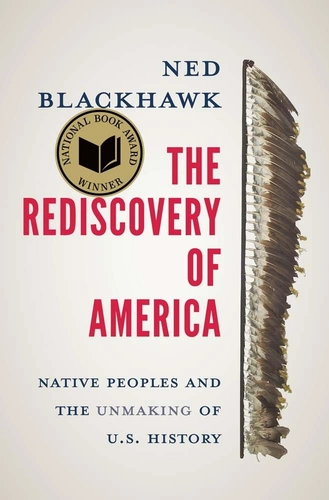
Then I picked up Ned Blackhawk’s The Rediscovery of America: Native Peoples and the Unmaking of U.S. History. I’ll be honest. I expected another academic book about oppression, a long list of grievances. I was wrong.
Blackhawk, a member of the Te-Moak Tribe of Western Shoshone and a Yale historian, does something different. He doesn’t tell the story of victims. He tells the story of actors. Native peoples weren’t just pushed aside. They shaped treaties, wars, economies, and the very idea of American democracy. The question this book asks is simple and devastating: What if the story you know is the one that was easiest to tell, not the one that is true?
Character and Plot: Not Victims, But Architects
Blackhawk doesn’t write about one hero. His protagonist is a people. He traces five centuries of Indigenous history, from the Spanish invasion to the present. But he does it with a kind of intimacy that surprised me.
Take the early chapters on the Iroquois Confederacy. Most of us learned that the Constitution was inspired by European Enlightenment thinkers. Blackhawk shows that the Founding Fathers studied the Iroquois system of governance, their ideas of federalism and consensus. The Iroquois didn’t just resist colonization. They taught the colonizers how to build a nation.
Then there is the story of the Pueblo Revolt of 1680. The Pueblo people drove the Spanish out of New Mexico for twelve years. I had never heard of this. It was a successful rebellion against a colonial power. It changed the course of the Southwest. But it was erased from mainstream history because it didn’t fit the narrative of European superiority.
Blackhawk writes with a historian’s precision but a storyteller’s rhythm. He lingers on moments of agency. He shows Native leaders negotiating, trading, and fighting not just for survival, but for power. The emotional weight of the book is not in the suffering, though that is there. It is in the dignity of people who refused to be erased.
I finished those early chapters with a hollow feeling. I realized that my education had been a kind of theft. It had stolen the truth from me.
Theme and Imagery: The Fractured Mirror
The core theme of this book is erasure. But Blackhawk doesn’t just mourn it. He dissects it.
He uses a powerful image throughout the book: the map. The maps we know are European creations. They divide land into states and territories. But Blackhawk asks us to imagine a different map. One that shows trade routes, kinship networks, and sacred sites. One that shows the places where Native peoples built cities, like Cahokia, which was larger than London in the 13th century.
The imagery of the map becomes a metaphor for history itself. We were given one version of the map. It was drawn by the victors. Blackhawk’s work is an act of redrawing. He doesn’t erase the violence of colonization. He shows how that violence was not inevitable. It was a choice. And that choice was resisted, negotiated, and sometimes reversed.
There is a moment in the book that broke me. Blackhawk describes the Trail of Tears, the forced removal of the Cherokee. He doesn’t just list the death toll. He writes about the Cherokee leaders who had adopted American legal and political systems to try to stay on their land. They had written a constitution. They had built schools. They had done everything the Americans asked. And the Americans still took their land. The betrayal was not just physical. It was legal, political, and deeply personal.
The truth is, I put the book down after that chapter. I needed to walk away. It felt like I was complicit in that betrayal by not knowing it.
Elevation and CTA: The History We Need
The Rediscovery of America is not a comfortable read. It is not meant to be. Blackhawk won the 2023 National Book Award for Nonfiction, and I understand why. This book is a correction. It is a reckoning.
But it is also a gift. Blackhawk gives us tools to see the world differently. He shows that Indigenous history is not a footnote to American history. It is American history. The founding of the United States was not a conflict between freedom and tyranny. It was a conflict between expansion and survival. And that conflict continues today, in land rights, in sovereignty, in the very language we use to talk about the past.
There is a weakness to the book. It is dense. Blackhawk writes with academic rigor, and some chapters feel like a slog. I wish he had simplified the political details. But I also understand why he didn’t. He is not writing a popular summary. He is writing a new foundation.
Who should read this? Anyone who has ever wondered why the past feels incomplete. Anyone who has felt that the story they learned in school was sanitized. Anyone who wants to understand the country they live in, not the myth of it.
What will you get? A deeper sense of justice. A humility about what you don’t know. And maybe, a willingness to listen to voices that have been silenced for too long.
I closed the book and looked at my town again. The land under my feet was not empty. It was full of stories I had never been told. That is the gift of this book. It doesn’t give you answers. It gives you the questions you should have been asking all along.
