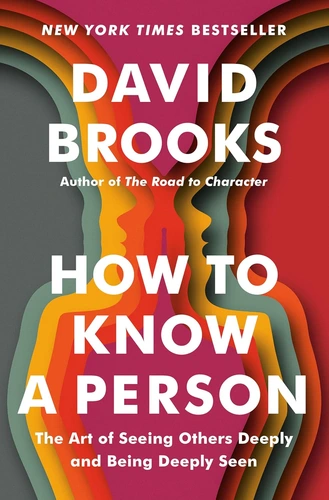
I was at a dinner party recently. Eight people, good food, wine. Everyone talked about their jobs, their kids, their travel plans. But by the end, I realized I knew nothing real about anyone at the table. We had shared facts, not selves. Later that week, I picked up David Brooks’s latest book, and it felt like he had been at that same party, watching me fail. How to Know a Person asks a question that stings: Why do we spend so much time around people, yet feel so unseen?
The Protagonist: Not a Person, but a Skill We Lost
The book doesn’t have a single hero. The protagonist is a capacity we all once had, or think we have: the ability to really see another human being. Brooks calls it “Illuminationism,” the art of making someone feel known. He tells stories of people who do this well. A teacher who remembers the quiet kid’s name and asks about his sick mother. A nurse who sits on the floor to be at eye level with a patient. These aren’t dramatic moves. They are small, deliberate acts of attention.
But here is the tension. Brooks also shows us the opposite. The person who listens only to reply. The friend who turns every conversation back to herself. The colleague who asks “How are you?” and walks away before you answer. We are all guilty of this, myself included. I found myself wincing, recognizing my own habits. Brooks argues that we have lost this skill because we live in a culture that rewards speed and performance, not patience and vulnerability. The core conflict is between the deep desire to connect and the modern habits that prevent it. The book never promises easy fixes, but it makes you wonder: Have I ever truly been seen by anyone? And have I ever truly seen them?
Themes: The Courage to Be Curious
Brooks’s core theme is that seeing another person is an act of moral courage. It requires us to set aside our own agenda, our own judgments, our own need to be interesting. He introduces a concept he calls “the gift of attention.” It is not just about listening to words. It is about noticing the hesitation in someone’s voice, the flicker of sadness in their eyes, the way they fidget when they talk about their childhood.
The key imagery in the book is that of a “ladder.” Brooks describes how we climb down from our own high horse of assumptions and climb into another person’s world. It is not a smooth process. It involves asking questions that feel awkward. It means sitting with silence when it feels uncomfortable. He writes about a therapist who asks her patients, “What was the moment you felt most alive?” and then just waits. No follow-up. No advice. Just quiet space for the other person to fill.
This character’s struggle, the struggle of modern humanity, reveals a universal pattern. We are all walking around with invisible wounds, invisible joys, invisible stories. And we are all desperate for someone to ask the right questions. Brooks is not writing a self-help manual. He is writing a philosophy of connection. The book challenges the idea that being a good person is about grand gestures. It is about the small, repeated acts of seeing. I realized that my dinner party failure wasn’t about bad company. It was about my own lack of curiosity.
Elevation: The Unfinished Work of Being Human
What makes How to Know a Person resonate is that it is not a prescription. It is a confession. Brooks admits his own failures. He talks about his own loneliness, his own awkwardness. That honesty makes the book feel less like a lecture and more like a conversation with a wise friend who has messed up many times.
The book has its limits. It can feel repetitive. Some of the examples are a bit too neat, too heartwarming. You want a little mess. But that is maybe the point. Brooks is not offering a system. He is offering a direction. In an age where we have more tools for communication than ever, and less understanding, this book feels urgent. It is for anyone who has ever felt lonely in a crowd. For anyone who has ever wanted to ask a deeper question but didn’t know how. For anyone who suspects that the real problem in their relationships is not a lack of love, but a lack of attention.
I finished the book and went back to my phone. I saw a message from a friend who was going through a hard time. I did not send a quick emoji. I sat down and wrote her a clumsy, imperfect note. I told her I was thinking about her, and that I wanted to hear how she was really doing. I am not sure I did it right. But I tried. And maybe that is the only real recommendation: that this book makes you want to try.
