I was talking to a friend recently about her grandfather. He left rural Mississippi for Chicago in 1943, just another face in the Great Migration. She knew the dates, knew he worked in a meatpacking plant. But she never asked him what it felt like. The leaving. The arriving. The staying. That silence haunted me as I picked up Isabel Wilkerson’s “The Warmth of Other Suns.” This is a book about six million African Americans who fled the Jim Crow South between 1915 and 1970. But it is also a book about every family that has ever uprooted itself and started over. What happens to a person when they trade one world for another? What gets left behind?
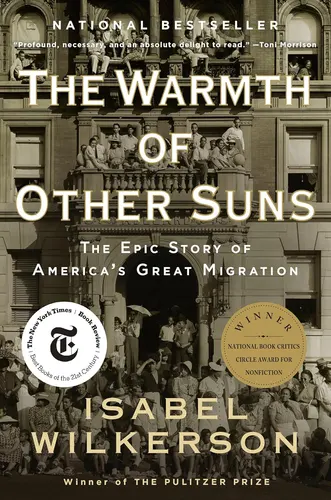
Wilkerson follows three migrants over decades. There is Ida Mae Gladney, sharecropper’s wife who leaves Mississippi in 1937 after her cousin is nearly beaten to death. George Swanson Starling, a citrus picker who escapes Florida in 1945 because his life was threatened for organizing workers. And Robert Joseph Pershing Foster, a surgeon who drives from Louisiana to California in 1953, desperate for a place where his skills matter more than his skin. Each journey is terrifying. The trains stop in strange cities. The police watch. The welcome is colder than the South promised. But here is the thing. Wilkerson never lets you forget the cost. Ida Mae missed the smell of pine trees. George could never shake the fear of being followed. Robert achieved everything he dreamed of and still felt like an outsider at dinner parties. The book is not a triumphant march north. It is a complicated, painful dance with hope and loss. And it left me wondering. Do we ever fully arrive anywhere?
Here is where the book becomes something deeper than history. Wilkerson’s central argument is that migration is not just a movement of bodies. It is a remaking of souls. She calls the migrants “the exodusers,” borrowing from the biblical Exodus. They left not just a place but a system of humiliation. The imagery she uses is relentless and precise. The South is a “prison,” the North a “promised land” that often betrays. Trains are “iron lungs” carrying people from suffocation. But the most powerful metaphor comes from the migrants themselves. They called the journey “crossing over.” Not just state lines, but a psychological border. You leave one version of yourself behind and try to become another. Wilkerson shows how this act ripples through generations. The children of migrants inherit the silence. They inherit the ambition. They inherit the grief of a story never fully told. I realized reading this that my own family’s leaving story, small as it seems, carries the same weight. The same unspoken questions.
What Wilkerson achieves is rare. She makes a macro history feel like a conversation with your own grandmother. The book’s weakness, if I am honest, is that it sometimes gets lost in the details. Three lives over sixty years is a lot of ground. You wish for more reflection, less reporting. But maybe that is the point. Maybe the migrants themselves never had time to stop and think. They were too busy surviving. I finished this book and immediately called my friend. I told her to ask her family. Ask the old ones before they go. Ask about the train, the first job, the moment they knew they could not go back. Because “The Warmth of Other Suns” is not just for Americans. It is for anyone who has ever left. Anyone who has ever been the stranger. Anyone who has ever wondered what home really means. Maybe home is not a place. Maybe home is the people who crossed over with you. And the ones who came after.
