I went to a quiet suburban wedding recently. The groom, a software engineer, gave a toast. He talked about spreadsheets, cost-benefit analysis, and the “optimal decision” to marry his bride. Everyone laughed. But I couldn’t shake the feeling. What if the most rational choice is sometimes the most dangerous one?
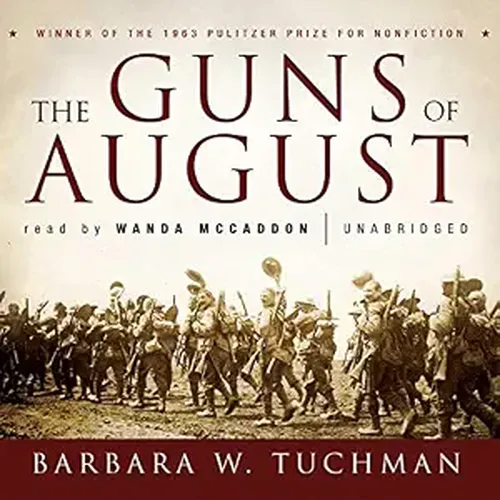
That question sent me back to Barbara W. Tuchman’s “The Guns of August.” I had read it years ago in college. I remembered dates and battle names. I did not remember the terror. Tuchman writes about August 1914, the thirty days when Europe stumbled into World War I. Every general, every diplomat, every king made decisions that seemed perfectly logical at the time. Mobilization schedules. Alliance obligations. Strategic advantages. Each choice made sense in isolation. Together, they created a catastrophe that killed millions.
The Architects of Ruin: How Smart People Build Disasters
Tuchman’s book opens with the funeral of King Edward VII in 1910. Nine European monarchs ride together in a procession. They are all relatives. They wave at crowds. Nine years later, four of their empires will be gone. The scene feels almost cruel in retrospect, like watching people dance on a sinking ship.
The protagonist of this story is not a person. It is a system. Tuchman shows us a network of military plans, political alliances, and national ambitions. The German Schlieffen Plan, for instance, was a masterpiece of military thinking. It required Germany to invade France through neutral Belgium. It was fast. It was efficient. It was also guaranteed to bring Britain into the war. The Germans knew this. They calculated that speed would outweigh the risk. They were wrong.
What haunts me is how reasonable everyone sounds. The Kaiser writes letters full of wounded pride. The French generals talk about “elan vital,” the fighting spirit. The British cabinet debates the legalities of Belgian neutrality. Nobody is a monster. Nobody wants war. But every conversation, every memo, every meeting pushes them closer to the abyss.
The Machinery of Misunderstanding: When Reason Becomes a Trap
Tuchman’s core theme is the gap between intention and outcome. The imagery she uses is mechanical. Trains. Timetables. Telegraph wires. Mobilization is described as a machine that, once started, cannot stop. The German army has schedules. If the trains run, the troops move. If the troops move, the war begins.
This is the book’s central argument. We like to think we control our decisions. We plan. We analyze. We choose what seems best. But the machinery of our lives has its own momentum. A career path that looked sensible at twenty-five feels like a cage at forty. A relationship built on “good reasons” crumbles under the weight of unspoken feelings.
The imagery that stayed with me is the light. Tuchman describes the August sunlight falling on the fields of France and Belgium. It is beautiful. It is indifferent. The soldiers march into this light, confident in their plans. The light does not care. It is not a metaphor for hope or despair. It is just light. That feels true to how things actually happen. The world does not arrange itself around our intentions.
The Lesson We Keep Forgetting: Why This Book Matters Now
I finished “The Guns of August” on a Sunday afternoon. I sat in my chair for a long time. The book was published in 1962. John F. Kennedy read it during the Cuban Missile Crisis. He told his advisors to remember 1914. Remember how things slip. Remember how reasonable people can start a war nobody wants.
The insight is not about war, exactly. It is about the stories we tell ourselves. We say “this is the rational thing to do” when we mean “this is what I want to do.” We build elaborate justifications for choices that feel right in our gut. We confuse logic with wisdom.
The book has a limitation. Tuchman focuses almost entirely on the leaders. The soldiers, the civilians, the ordinary people are nearly invisible. You do not learn what the war felt like for a farmer in Belgium or a factory worker in Berlin. That is a real gap. But it is also the point. The machinery of decision-making is blind to the people it crushes.
Who should read this book? Anyone who has ever made a choice that seemed perfect and ended in disaster. Anyone who has watched a relationship, a job, or a project fall apart despite every sign pointing toward success. You will not find comfort. You will find understanding.
The core insight sits in my chest like a stone. The most dangerous decisions are not the obviously bad ones. They are the ones that look perfectly reasonable. The ones we can defend. The ones we believe in. Because those are the ones we cannot see coming.
Maybe that is the real lesson. The light in August is beautiful. It does not warn you. It just shines.
