I have a friend who runs ultramarathons. Fifty miles, a hundred miles, through mountains, in the dark. I asked him once what he thinks about for ten hours straight. He said, mostly, he just tries not to stop. I thought of him while reading William Finnegan’s “Barbarian Days: A Surfing Life.” This is a book about a man who spent decades doing one thing. But it is not a book about winning. It is a book about the opposite of winning. It is a book about a lifelong negotiation with failure. So here is the question the book planted in me: What does it mean to give your life to something that will never, ever truly be yours?
The Man Who Never Mastered the Ocean
Finnegan is not a champion surfer. He is a very good one, sure. He rides waves most people would run from. But the book’s protagonist is not a hero in the classic sense. He is a restless kid from California who falls in love with the ocean, then spends the next forty years chasing it around the planet. He goes to Hawaii, to Fiji, to South Africa, to Australia. He works odd jobs. He sleeps on couches. He gets pounded by waves so hard he nearly drowns. He breaks boards. He gets injured. He gets scared.
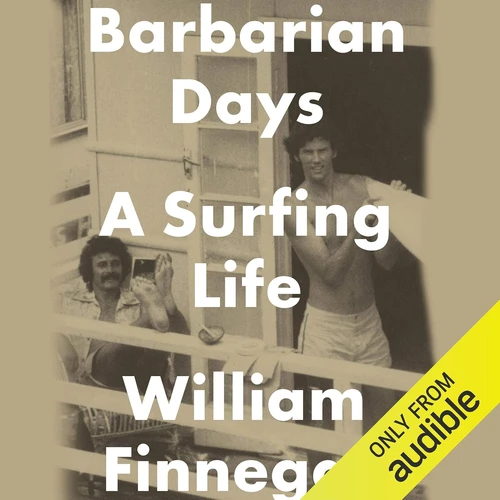
What makes Finnegan’s portrait compelling is his honesty about the obsession. He does not romanticize it. He shows the loneliness, the poverty, the broken relationships left behind. The core conflict is not man versus wave. It is man versus himself. He wants the perfect wave. But the perfect wave, when it comes, lasts maybe ten seconds. Then it is gone. The rest is waiting, paddling, failing. The suspense in this book is not whether he will succeed. It is whether he will ever admit that the chase is meaningless. Spoiler: He never does. And that is the point.
What a Wave Teaches You About Time
The core theme of “Barbarian Days” is surrender. Not to God, not to fate, but to a physical reality that is completely indifferent to you. A wave does not care if you are having a bad day. It does not care if you are tired. It either lets you ride or it crushes you.
Finnegan’s key imagery is the wave itself. He describes it with the precision of a jeweler and the awe of a child. He talks about the color, the shape, the way the light moves through it just before it breaks. He writes about the moment of takeoff, when everything else disappears. I found myself underlining passages about the feeling of being inside a barrel, that tube of water that forms around you. It is the closest thing to being inside a heartbeat, he says. That image stayed with me. Because it is not glamorous. It is intimate. It is vulnerable.
This character’s struggle reveals a universal pattern. We all have something we return to, again and again, even when it hurts. For Finnegan, it is surfing. For my friend, it is running. The author’s craft here is in making the specific feel universal. He does not preach. He just shows you a man who found his thing, and he lets you wonder about your own.
The Gift of an Impossible Love
I finished “Barbarian Days” feeling something unexpected. Not inspiration, exactly. More like a quiet recognition. Finnegan never claims to have figured life out. He is in his sixties now, still surfing, still getting it wrong. He admits that the ocean terrifies him more than it ever did. He knows his body is failing. He knows the waves he loved as a young man are changing because of the climate. And yet. He keeps going.
The book’s resonance across eras is clear. We live in a time of optimization. Side hustles, productivity hacks, life goals. Finnegan’s life is the opposite of that. It is inefficient. It is wasteful. It is beautiful. He did not build a career in surfing. He built a life around it. There is a difference.
What the book offers, ultimately, is a model for how to love something without needing to possess it. Finnegan does not own the waves. He visits them. He respects them. He lets them go. And that, I think, is what we are all trying to learn. How to find a thing so big that it makes our small selves feel okay. How to surrender to it without losing ourselves completely.
Maybe the question is not whether you have a passion. Maybe the question is: Are you brave enough to let it break you a little, and still come back the next day?
