We were sitting at the corner table of a loud coffee shop. My friend Jenna was telling me about her boss, again. I nodded while mentally lining up my advice. Mid-sentence, she stopped and said, “You’re not even listening.” She was right. I wasn’t. I was just waiting for my turn to talk. That was the moment I realized I had no idea how to truly understand other people. Not their words, but what sat underneath them.
I started asking: What are your tricks? How do you see past someone’s surface and into their actual experience? That Reddit thread, with thousands of strangers swapping their best “how to understand people” secrets, became my blueprint. Here’s what I’ve learned, tested, and still stumble over every single week.
Quick Ways to Understand People Today
If you want to connect more deeply with others, start here:
- Listen without planning your reply. Your only job is to absorb.
- Watch their body, not just their words. Posture and tone tell the real story.
- Treat every person as the main character of their own life. Their logic makes sense to them.
- Ask questions that begin with “what” or “how,” not “why.”
- Give them two minutes of uninterrupted talk time before you form an opinion.

Why Is It So Hard to Actually Understand Someone Else?
The honest answer is discomfort. Understanding another person requires you to temporarily set aside your own perspective, your own rightness, your own need to solve. That feels vulnerable. One Redditor nailed it: “Most people reject discomfort.” When we sit with someone’s confusion or sadness without trying to fix it, we feel useless. We squirm. So we jump in with advice or platitudes. We think we’re helping, but we’re really protecting ourselves from that helpless feeling.
I remember listening to my neighbor talk about his son’s struggles at school. Every cell in my body wanted to offer a book title or a teacher’s name. Instead, I just said, “That sounds exhausting. Tell me more.” He talked for another ten minutes. At the end, he said, “Thanks, I feel lighter.” He didn’t need my brilliant solution. He needed a witness. That was a major unlock.
Most of us listen to reply. We hear a few words, our brain leaps to a similar experience, and we fire back our own story. That’s not listening. That’s a conversational relay race. One Reddit user put it bluntly: “Two ears. One mouth.” I used to think that was a bumper sticker. Now I see it as the entire operating system.
When I first tried to truly listen, I failed badly. I’d sit there, mouth shut, but my mind screamed with quiet impatience. My eyes would dart. I’d nod too fast. People could tell. So I had to build a tiny ritual. Before any conversation that mattered, I’d take one deep breath and silently repeat: “I am here to understand, not to be understood.” Corny, sure. But it shifted something. My shoulders dropped. My breathing slowed. I actually heard the pauses between their words. That’s where the real meaning hides.
The Main Character Lens: Seeing People as the Center of Their Own Story
One of the most helpful ideas came from that same Reddit thread: “Always assume everyone is a main character in their own story.” When you watch a movie, you root for the protagonist even when they make bad choices. You understand their backstory shapes their actions. You give them grace. Why not do that with everyone?
I started applying this way of thinking in a simple way. When someone starts talking, I become a silent researcher for 120 seconds. I don’t interrupt. I watch their face, hands, tone. I listen for their emotional word choices: “I feel,” “I just can’t,” “It’s always.” Then I ask one curious question that doesn’t try to steer them. “What does that feel like when it happens?” or “What would you want others to understand about this?” This tiny reset cracks open a door. Their answer almost always surprises me. And surprise is the birthplace of genuine understanding.
When Words and Body Language Disagree
My friend told me she was “fine.” Her arms were crossed so tight her knuckles were white. Her smile didn’t reach her eyes. I almost accepted the word and moved on. Then I remembered another trick from the thread: let vocal tone and body language tell the bigger story. The words we choose are the tip of the iceberg. The rest of the mass lives in a clenched jaw or a too-fast “I’m okay.”
I’m not a body language expert. But I’ve learned to watch for three mismatches:
- When their tone doesn’t match their words
- When their posture suddenly shrinks or stiffens
- When their eye contact drops the moment they arrive at a certain topic
Any of these is an invitation. Not to call them out, but to gently reflect. “You said you’re fine, but something seems off. I’m here if you want to talk.” That’s it. No pressure. Just an open door they can walk through if they choose.
What If They’re Really Different From You?
Understanding people who share your worldview is easy. The real test comes when someone’s values or decisions baffle you. I used to argue or mentally prepare a counterpoint. I lost connection every time. Then I tried asking “What’s the most important thing to you in this situation?” instead of “Why are you doing that?” The “why” puts people on the defensive. The “what’s important” uncovers their inner priorities.
A colleague once made a career move I thought was reckless. When I asked what mattered most to her, she talked about autonomy and creative control—things I valued but had buried under practicality. Suddenly her choice made sense. I didn’t agree, but I understood. That distinction is everything. Understanding is not agreement. It’s simply seeing their internal logic.
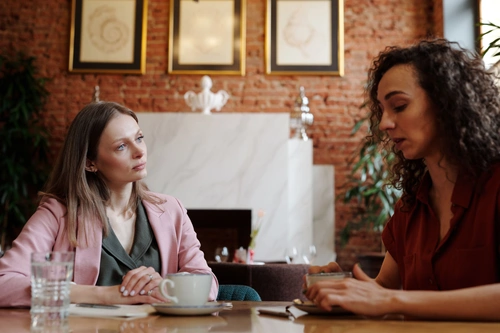
The Trick That Requires Zero Talent: Shut Up for Two Minutes
A customer service veteran on the thread shared their secret: let the other person speak freely for the first two minutes to “study” them. That means no head-nodding that signals “get to the point,” no checking your phone, no formulating your response. Just absorb. In that window, you learn their pace, their emotional temperature, and what they’re actually asking for beneath the words. After two minutes, you choose your approach: gentle reflection, a direct question, or simply more silence.
I tried this at a family dinner with my opinionated uncle. For two whole minutes, I just listened while he described a community project. I noticed his voice softened when he talked about the kids involved. That was my in. I asked, “What’s the best part about working with the kids?” His whole face changed. He felt seen. I wasn’t just tolerating his rant; I was connecting with what he actually cared about. That’s the power of shutting up and studying first.
FAQ: How to Understand People
Q: What’s the first step to understanding someone better?
A: Stop planning your reply. Your only job in the first few minutes is to absorb. Most of us listen to respond, not to understand. The shift starts with that one intention.
Q: How do I understand someone who thinks very differently from me?
A: Ask what’s important to them, not why they’re doing what they’re doing. The “what” uncovers values. The “why” triggers defensiveness. Understanding doesn’t require agreement—just seeing their internal logic.
Q: What if someone says they’re fine but clearly aren’t?
A: Don’t push. Gently reflect what you notice: “You said you’re fine, but something seems off. I’m here if you want to talk.” Then leave the door open. No pressure. They’ll walk through when ready.
Q: How do I stay present when someone is talking for a long time?
A: Take a breath and set a small intention: “I’m here to understand.” Watch their face and hands. Notice their tone. The physical observation keeps your mind from wandering.
Q: Is it possible to understand everyone?
A: No. And that’s okay. Some people are hard to read. Some don’t want to be understood right now. The goal isn’t perfection. It’s showing up with curiosity and leaving space for them to be seen.
One Last Thing
I still get it wrong. Just last week I offered unsolicited advice to my partner before she’d finished speaking. She gave me that look. But now I catch myself faster. I pause. I say, “Sorry, start again. I’m listening.” The look softens. She starts again. And I hear her. Not perfectly. But enough. That’s the real trick, I think. Not getting it right every time, but coming back to the attempt again and again, because everyone deserves the dignity of being understood.
References
- Carnegie, D. (1936). How to Win Friends and Influence People. Simon and Schuster.
- Rosenberg, M. B. (2003). Nonviolent Communication: A Language of Life. PuddleDancer Press.
- Nichols, M. P. (2009). The Lost Art of Listening: How Learning to Listen Can Improve Relationships. Guilford Press.
