I was sitting in my kitchen last fall, scrolling through news about yet another protest somewhere far away. The images felt distant, almost abstract. Then a friend who grew up in Tehran sent me a voice message. She was crying. She said, “You don’t understand. This time, they are not going back.” I didn’t know what to say. So I picked up this book.
Can a single death ignite an entire nation? And what happens when the people who rise up know they might not survive the night?
The Protagonist: A Movement That Refuses to Be a Single Hero
This is not a book with one main character. The protagonist is a crowd. Women, young men, grandmothers, schoolgirls. They step into the street with their hair uncovered, knowing the cameras are watching and the security forces are closer. Fatemeh Jamalpour and Nilo Tabrizy do something remarkable here. They do not romanticize the protesters. They show us the fear in their eyes. The moment when a woman in a headscarf stops, hesitates, then removes it anyway. That hesitation is the real story.
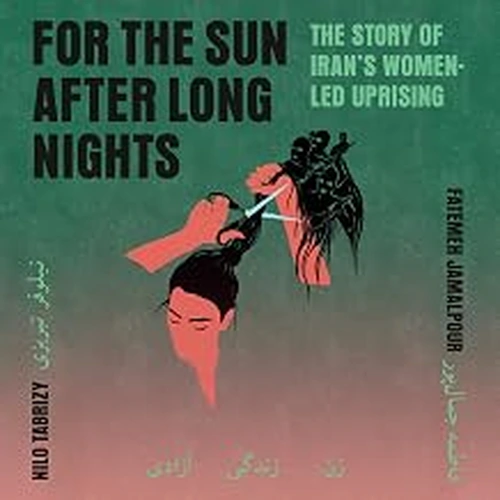
The structure of the book mirrors this tension. Chapters alternate between the underground organizing and the public clashes. You feel the breathlessness of it. The constant looking over the shoulder. I found myself holding the book tighter, as if the pages themselves might be confiscated.
The authors also show us the quieter moments. A mother who hides a young activist in her pantry. A teacher who whispers the movement’s slogans in a classroom. These are not grand gestures. They are small, human. And that is what makes them dangerous. The book never tells you how the story ends, because in some ways, it has not ended yet. But you feel the weight of what has been lost and what has been gained.
The Theme and Imagery: The Light That Comes Through Cracks
The core theme here is sacrifice. Not the heroic kind you see in movies. The messy, lonely kind. The kind where you are not sure if your actions matter until years later. The imagery that stuck with me most is the repeated description of night. Long nights of waiting. Of hiding. Of hoping for a phone call that might not come. The “sun after long nights” in the title is not a guarantee. It is a promise that might break.
The authors craft this tension with a journalist’s precision and a poet’s eye. They linger on small details. The sound of footsteps in an empty alley. The smell of tear gas mixing with jasmine from a neighbor’s garden. These details make the political feel personal. You realize that the struggle for freedom is not an abstraction. It is a twenty-year-old girl deciding whether to send her mother a goodbye text.
The book also reveals a universal pattern. Every uprising, whether in Iran, Hong Kong, or Belarus, carries this same weight. The courage to speak when silence is safer. The loneliness of being the one who steps forward. I realized, reading this, that the question is not whether you would join the protest. The question is whether you would stay when everyone else has gone home.
Elevation and Call to Action: What the Book Asks of You
This book is not an easy read. It is not meant to be. The authors do not offer neat conclusions or triumphant endings. They give you the raw material of history in the making. If you want a book that will inspire you with easy hope, look elsewhere. But if you want a book that will sit with you, that will ask you hard questions, this is for you.
What the book does best is to show the cost of resistance. Many characters disappear. Some are killed. Others simply vanish, their stories left unfinished. The authors do not shy away from this. They let the silence speak. It made me uncomfortable. It should.
I finished the book late at night. I sat in the dark for a long time. I thought about my friend’s voice message. About the women who took off their headscarves. About the mothers who buried their children. The book does not answer the question of whether the revolution succeeded. Maybe that is the point. Maybe the point is that people keep trying, even when the outcome is uncertain. Maybe that is what courage really is. Not the absence of fear, but the decision to act anyway.
Here is the question the book leaves you with: If the world is watching and doing nothing, does your silence make you complicit?
