I spent last weekend in my garden, pulling weeds under a sun that felt too hot for spring. My hands were black with dirt. And I couldn’t stop thinking about dust. Not the dust on my knees. The dust in Karen Russell’s new novel, “The Antidote.” The kind that gets into your house, your lungs, your dreams. The kind that doesn’t leave. I found myself asking a strange question while I watered my tomatoes: if everything I owned, everything I loved, turned to dust, what would I try to save? And more importantly, what would I be willing to lose?
The Girl Who Tries to Hold the Sky
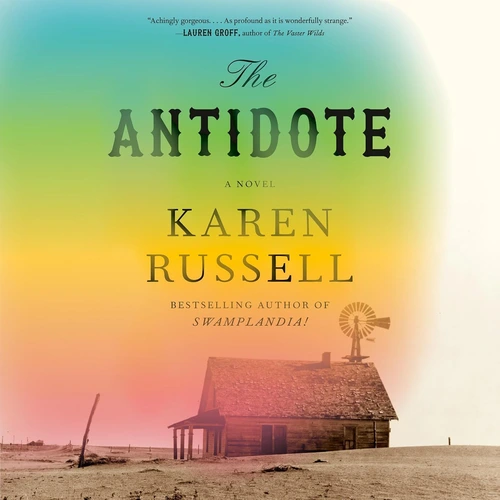
The novel’s heart is a young woman named Prairie. She lives in the Nebraska prairie during the 1930s, a time when the sky itself seems to be fighting back. The dust storms aren’t just weather. They are a slow, suffocating apocalypse. Prairie is not a hero in the cape-and-armor sense. She is a survivalist, a hoarder of supplies, a girl who learns to calculate risk the way other people learn to breathe. Her family is fractured. Her town is dying. And she is asked to protect something precious. Something that isn’t food or water. I won’t tell you what it is, because the suspense of that secret drives the whole book. But I will say this: Prairie’s struggle is not about staying alive. It is about staying human. Every decision she makes feels like a small betrayal of her own soul. I found myself holding my breath during her scenes, waiting for her to break. And the question the book plants deep in your chest is this: when the world is cruel, does it make you cruel too?
The Metaphor of the Empty Silo
Russell’s writing is not pretty. It is beautiful in the way a cracked bell is beautiful. She uses dust as a central image, but not just as a symbol of decay. Dust becomes a character. It fills the silos, the houses, the mouths of the characters. It is the silence that comes after a scream. The core theme here is not just environmental collapse. It is moral erosion. What happens to a person’s ethics when there is no water to wash with? When there is no food to share? Prairie’s story reveals a universal pattern: we like to think we are good people. But goodness is a luxury. In the dust, goodness becomes a choice you have to make, over and over, with an empty stomach. I realized while reading that Russell is not writing about history. She is writing about now. About the quiet compromises we all make when things get hard. The small lies we tell ourselves to keep moving. The imagery of the empty silo — a structure meant to hold abundance, holding only wind — stayed with me for days. It made me think about all the empty things in my own life.
What We Carry When We Can’t Carry Anything
Russell completes her argument in the novel’s final act. She does not offer easy answers. There is no happy ending where the rain comes and everyone is saved. Instead, she shows us something rarer. A kind of grace that exists only in the middle of loss. The real antidote in the book is not a thing. It is a way of seeing. A refusal to let the dust define everything. This book has a cross-era resonance that is almost painful. I thought about the climate crisis, about the families losing their homes to fires and floods. I thought about the quiet desperation of people who have to choose between morality and survival. And honestly, I felt a little ashamed. Ashamed of my own comfort. Ashamed of how easily I forget that for many people, this is not a novel. It is a life. The real emotion I felt at the end was not sadness. It was a strange, heavy gratitude. Gratitude for the dust on my hands. For the weeds in my garden. For the fact that I still have a choice. Maybe that is what the antidote really is. Not a cure for suffering. But the courage to suffer well.
