I have a confession. I never thought much about the women who clean my office building. They come in at night. They leave before I arrive. Their existence registers only as a faint smell of bleach in the morning. Then I read Lucia Berlin.
What kind of writer spends decades working as a cleaning woman, a nurse’s aide, a high school secretary, and writes stories about it that nobody reads until after she dies? The kind who does not complain. The kind who sees everything. Berlin’s collection “A Manual for Cleaning Women” arrived in my life like a quiet knock on a door I did not know was closed. Her stories are short. Her sentences hit harder than they look. And I kept asking myself: why did it take her death for us to notice her?
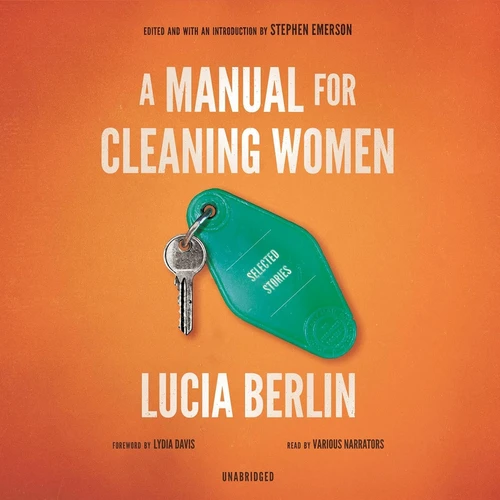
A woman who cleans, and sees, and survives
The protagonist across these stories is always a version of Berlin herself. She is a woman with a drinking problem. She is a woman who has been left by husbands. She is a woman whose hands are raw from scrubbing other people’s toilets. But she is never a victim. That is the first surprise.
Berlin’s narrators have a voice that is dry, almost amused. They do not ask for pity. In the title story, a cleaning woman notes the pills on a bedside table, the photograph of a dead son, the unpaid bills. She does not judge. She just sees. The suspense here is not about what happens next. It is about how this woman keeps going. She has been through so much. Her children have problems. Her body hurts. And yet she shows up.
I found myself holding my breath during the emergency room stories. Berlin worked as a nurse’s aide. She writes about a woman miscarrying in a hallway. She writes about a man who has been shot and keeps asking for his mother. The language is plain. The details shatter.
What makes these stories work is not the suffering. It is the noticing. Berlin notices the small kindnesses between poor people. She notices how a patient’s hand trembles. She notices the exact color of a bruise. She never explains. She never moralizes. She just puts the moment on the page and lets it burn.
The work nobody sees, the dignity nobody grants
The core theme here is invisible labor. I mean that literally. Berlin writes about jobs that society trains us to ignore. Cleaning women. Laundry workers. Hospital orderlies. These are roles where you are supposed to be a ghost. You are supposed to do your work and disappear.
Berlin refuses to disappear. Her key imagery is hands. Hands that scrub. Hands that hold a mop. Hands that touch a sick person’s forehead. Hands that pour a drink. She makes you see the physical cost of staying alive when you have nothing.
I realized something reading these stories. We think of poetry as something that happens in quiet rooms with fancy words. Berlin shows that poetry happens in a bucket of soapy water. It happens in the way a woman folds a sheet. It happens in the moment a dying man’s eyes meet yours across a hospital room.
The universal pattern here is simple. Most lives are hard. Most work is unseen. Most people are fighting something. Berlin does not pretend that suffering makes you noble. She does not pretend that cleaning toilets is meaningful. She just says: this is real. This is what it feels like. And that act of telling, of witnessing, becomes its own kind of grace.
What stays when everything is scrubbed clean
I finished this book on a Tuesday night. The next morning, I walked past the cleaning woman in my building’s lobby. She was mopping. She looked tired. I looked at her differently. Not with pity. With something closer to recognition.
Berlin’s greatest gift is this. She does not ask you to feel sorry for the people in her stories. She asks you to see them. To see the intelligence in their eyes. To see the humor that survives against all logic. To see that a woman who scrubs floors can have a richer inner life than the people whose floors she scrubs.
There are weaknesses here. The collection is uneven. Some stories feel like fragments. Berlin’s refusal to explain can frustrate. You sometimes want her to say what it all means. She will not. She trusts you to figure it out.
But the real emotion, the one that stayed with me, is this. I have walked past hundreds of cleaning women in my life. I never once thought they might be writing stories about me. Now I wonder what they see. Now I wonder what they write.
Maybe that is the point. Not that we should feel guilty. Not that we should do something. Just that we should pay attention. Because the woman cleaning your office tonight might have a life as full and as broken and as beautiful as any character in any book. And if Lucia Berlin taught me anything, it is that the best stories are not in the library. They are in the rooms we never enter.
