I was sitting in my apartment last winter, scrolling through news about another writer being canceled, another voice silenced. I felt something close to despair. Then I picked up Stephen Greenblatt’s new book, and I realized: this has always been the pattern. The question is not whether censorship exists. The question is what a genius does when the only way to speak is to hide.
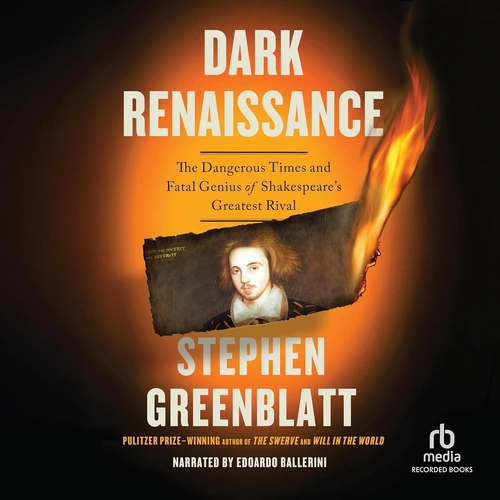
Christopher Marlowe was a spy, a blasphemer, a brawler. He was also Shakespeare’s greatest rival. Greenblatt doesn’t just tell us that. He shows us how Marlowe’s life and work were the same thing. The same desperate gamble. The same refusal to shut up, even when silence would have been safer.
The Man Who Could Not Stop Provoking
Marlowe was killed at twenty-nine. Stabbed above the eye in a tavern brawl. But that was not the real violence. The real violence was what happened before. He wrote plays that made the audience gasp. Not from spectacle. From truth. In Doctor Faustus, a man sells his soul for knowledge. In The Jew of Malta, a villain laughs at God and government. In Edward II, a king loves another man and is destroyed for it.
Greenblatt paints Marlowe as a man who lived at the edge of a knife. He was employed by the queen’s secret service. He informed on other Catholics. He denied Christ in public and then took it back. He was a liar, but his lies pointed at something true. The Elizabethan state was a machine of surveillance and punishment. You could not say what you thought. You could only whisper. Or you could write a play that said everything, but said it sideways.
The core conflict: Marlowe had to choose between safety and expression. He chose expression. He chose it knowing it would kill him. Greenblatt does not reveal the final moments in a sentimental way. He lets the facts speak. Marlowe was under investigation for heresy. He died before the trial. Accident? Murder? The book leaves the question open, and that uncertainty feels honest.
The Craft of a Censored Genius
Greenblatt is a master of what I would call the “negative space” of biography. He does not just tell us what Marlowe did. He tells us what Marlowe could not do. The Elizabethan theater was a place of coded speech. A line about a tyrant could be about the queen. A joke about a Jew could be about a minister. Greenblatt shows us how Marlowe used this. He packed his plays with double meanings. He made the audience complicit. We are all in on the joke, and the joke is dangerous.
The imagery of the book is dark, but there is a subtle light. Greenblatt writes about the “fatal genius” of Marlowe, but he also writes about the joy. The joy of writing something that scares the powerful. The joy of watching a crowd gasp. The joy of knowing that your words will outlast the people who try to silence you.
The weakness of the book? Sometimes Greenblatt assumes too much knowledge. He drops names and events without enough context. A reader who does not know Elizabethan politics might get lost. But for those who stay, the reward is enormous. You finish the book feeling that you understand not just Marlowe, but the whole system that crushed him.
What This Means for Us Now
I finished the book and sat in silence for a while. I thought about all the writers today who are afraid. The journalists in prison. The novelists who self-censor. The poets who write in code. Marlowe’s story is not a historical curiosity. It is a mirror. We live in our own dark renaissance, a time when truth is punished and lies are rewarded.
But here is the thing Greenblatt makes me feel: hope. Not because the system changed. Because Marlowe existed. He wrote. He died. But his plays are still performed. His words are still read. The power of a single voice, even a broken one, is real.
There is a moment in the book where Greenblatt describes Marlowe’s last play, The Massacre at Paris. It is a messy, violent work. Critics have called it a failure. But Greenblatt argues that the mess is the point. Marlowe was trying to capture the chaos of a world where nothing is safe. He did not succeed perfectly. But he tried. That trying is what matters.
Maybe that is what genius really is. Not perfection. Not safety. Not even survival. It is the willingness to say something true, even when the truth is a death sentence. Greenblatt has written a book that honors that willingness. And I think, in our own dark times, that is exactly the book we need.
