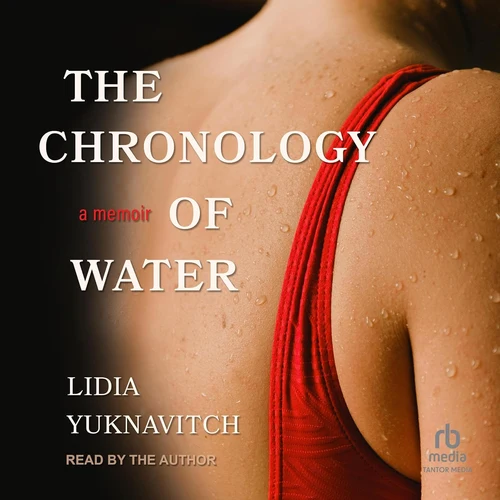
I sat on my kitchen floor last week, a glass of water in one hand and this book in the other. I wasn’t reading it. I was staring at the cover, trying to figure out why I kept putting it down and picking it up again. It wasn’t the writing. The writing was electric. It was something else. A fear, maybe. A suspicion that this book knew something I wasn’t ready to admit about my own life.
The Chronology of Water by Lidia Yuknavitch is a memoir that asks a terrifying question. What if your story doesn’t make sense in order? What if the timeline of your life is a lie we tell ourselves, and the truth is something messier, something that lives in water, not in dates?
The People Who Stay
The protagonist here is Lidia herself. But she isn’t a hero. She’s a girl who almost drowned in a swimming pool at four years old, a young athlete who swam competitively, a woman who lost a child at birth, a drunk, a lover of both men and women, a writer who couldn’t find her voice until she stopped trying to make it pretty. She doesn’t follow a straight line from trauma to healing. She circles back. She falls apart. She sleeps with strangers. She screams at her own reflection. The core conflict isn’t external. It’s the fight between the self that wants to die and the self that insists on writing. You never know if she will make it. That suspense is what keeps you turning pages, even when the stories make you wince.
I wanted to look away several times. The details of her daughter’s stillbirth, the raw physicality of her grief, the way she describes her own body as something that betrayed her. I didn’t look away because she didn’t. She held my gaze and said, this is what it felt like. And if you have ever felt anything like it, you know what I mean.
Navigating Grief and Identity
The core theme is this. There is no single self. There is no one story. We are not narrators of our lives. We are collages. We are fragments held together by water, by memory, by the stories we choose to tell and the ones we can’t.
The key imagery is water. Swimming pools, oceans, baths, tears, sweat, the fluid inside a womb, the water that fills a newborn’s lungs when it cannot breathe. Yuknavitch uses water not as a metaphor for peace or flow. She uses it as a force of destruction and creation. Water drowns you. Water also carries you. You cannot control it. You can only learn how to move in it. She writes about swimming laps as a girl, how the repetition of her body in water was the only thing that made sense. Later, after her daughter’s death, she writes about floating in a bathtub, not wanting to come up. The author’s craft here is astonishing. She breaks chronological time to match emotional time. A memory from age seven sits next to a scene from age thirty. They echo each other. They argue with each other. The reader is not told what to feel. The reader is given the pieces and trusted to assemble them.
I realized reading this that I have been telling my own story wrong. I have been trying to make it linear. I have been trying to find a lesson in every loss. Yuknavitch suggests something else. Maybe there is no lesson. Maybe there is only the water, and the swimming.
Finding Your Own Language
This book completes its argument by showing us what a different kind of memoir looks like. It doesn’t offer closure. It offers a method. The method is this. You take the broken pieces. You do not glue them back together into a vase. You arrange them on the floor in a pattern that means something to you. Then you invite someone to look at it. That is the art.
Yuknavitch’s father was an alcoholic who abused her. She doesn’t forgive him in the book. She doesn’t seek therapy through writing. She seeks truth through beauty. She writes, “I am not interested in telling you my story. I am interested in making something beautiful out of the mess.” This is a radical idea. Most memoirs are about explaining or healing. This one is about creating. It is less a confession and more of a sculpture.
I think the book has a limitation, and I should name it. It is not for everyone. The language is intense, sometimes brutal. There is no gentle handholding. If you want a memoir that wraps you in comfort, this is not that. This is a memoir that grabs you by the collar and says, look at this. Look at what we are capable of surviving. Look at what we are capable of making.
What you get from this book is permission. Permission to tell your own story in whatever shape it takes. Permission to be messy. Permission to not forgive. Permission to not have a neat ending. I finished it and felt like I had been submerged. I came up gasping. But I came up.
The recommendation is simple. If you have ever struggled to tell your own story, if you have ever felt that the words didn’t fit the feeling, read this. It will not give you a template. It will give you courage.
