I was sitting in a coffee shop recently when a barista mispronounced my name for the third time. I smiled and let it slide. Later that night I opened Nuseibeh’s book and felt something crack open. She asks a question I had never dared to pose: What if your name is not a gift but a quiet burden? What if the story it carries is one you never asked for? And what if discovering that story changes everything you thought you knew about yourself?
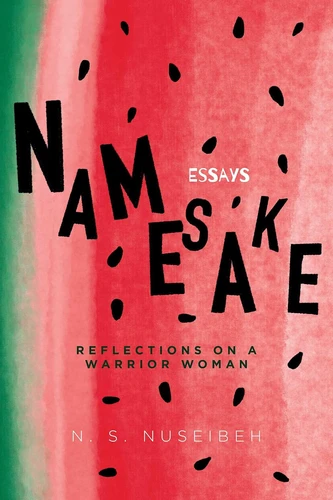
The Protagonist Who Lives in Two Centuries
Nuseibeh does something strange and beautiful. She tells us about a woman who died fourteen centuries ago. A warrior named Nusayba bint Kaab who fought alongside the Prophet Muhammad, who took a sword to her shoulder in battle, who bled for her faith. Then she tells us about herself, a modern Palestinian Muslim woman living in the UK, a scholar, a mother, a person who gets stopped at airports.
And you realize: she is not writing two stories. She is writing one.
The modern Nuseibeh struggles with her name in ways that feel achingly familiar. She wonders if she can live up to the ancient warrior. She worries she is not brave enough. She jokes about how people mispronounce her name or ask where she is really from. There is a scene where she describes her father telling her the story of Nusayba for the first time. She was a child. She did not understand the weight. Later, as an adult, she goes to the mosque and sees the name engraved on a wall. She touches it. And I thought about how many of us have never touched our own names like that. Not really.
What the Warrior Woman Teaches Us About Home
The core theme here is inheritance. What do we owe to the people who came before us? Nuseibeh does not give easy answers. She shows us that names are not just labels. They are containers for memory, for expectation, for love and for grief.
Her key image is the wound. The ancient Nusayba was wounded in battle. Her shoulder was cut open. But she kept fighting. The modern Nuseibeh asks: What are our wounds? What battles do we fight that no one sees? She writes about being a woman in a male-dominated academic world. About being Muslim in a post-9/11 West. About the small daily cuts of being told you do not belong.
The imagery is subtle. She talks about names as threads. A thread connects you to your grandmother, to your history, to a land you may never have visited. But a thread can also choke you. It can hold you in place. What if the name your parents gave you is a rope you cannot untie? What if you want to be someone else entirely?
I found myself thinking about my own name. About the person I was named after. I had never asked why.
What We Carry Forward
This book is not just for people with complicated names. It is for anyone who has ever felt caught between worlds. Between the person their family wants them to be and the person they are becoming. Between tradition and freedom.
Nuseibeh does not pretend to have solved anything. She admits she still struggles. She still gets nervous when someone asks her name. She still wonders if she is worthy of the warrior woman she was named for.
But here is what she figured out. The ancient Nusayba was not perfect. She was not a flawless hero. She was a woman who made choices, who fought, who bled, who kept going anyway. And maybe that is the real inheritance. Not the legend. Not the perfect story. But the permission to be flawed and still keep going.
The modern Nuseibeh writes: “I am still learning how to carry her.” And I think that is what we are all doing. Learning how to carry the names we were given. Learning how to make them our own.
Core insight: Your name is not a fixed point. It is a conversation. Between the past and the present, between who you were supposed to be and who you are choosing to become. The question is not whether you deserve your name. The question is what you will add to it.
