I was walking my neighbor’s dog last week, a scruffy terrier mix with one eye and no sense of direction. He stopped every few feet to sniff a patch of grass like it contained the secrets of the universe. I stood there, waiting, and I realized: I had nowhere else to be. That moment of pure, pointless patience — that’s what Tommy Tomlinson is after in Dogland.
The book takes you inside the Westminster Kennel Club Dog Show, that glittering, slightly absurd spectacle where humans spend years and fortunes preparing dogs to be judged on how well they stand still. But Tomlinson isn’t really writing about dog shows. He’s writing about a question that haunts me: What is it about these four-legged creatures that makes us drop our guard, our time, our money, our hearts?
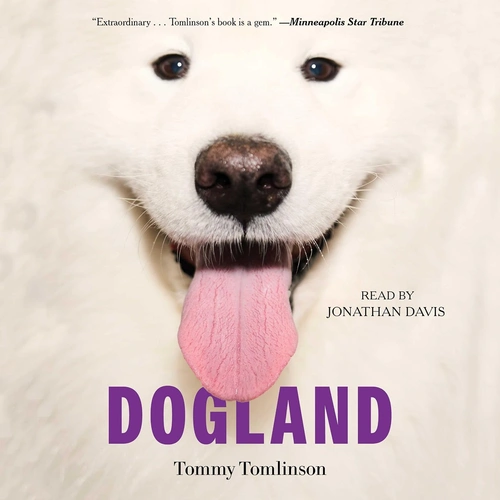
What the Dog Show Really Shows
Tomlinson introduces us to the people who live for Westminster. There’s the breeder who sleeps on the floor next to her pregnant dog. The handler who talks to his poodle in a soft murmur, like a secret shared between old friends. The judge who can spot a crooked incisor from twenty feet away.
These people are obsessive, sure. But the more Tomlinson watches them, the more he sees something else. He describes a moment when a handler, after a loss, kneels down and whispers something to her dog. The dog wags its tail. That’s it. That’s the whole transaction.
I found myself thinking about my own dog, the one I had as a kid. She was a mutt, half-beagle and half-anything. She would curl up next to me when I was sad, never asking why. I never thanked her properly. Tomlinson captures that silent exchange better than anyone I’ve read. The dog doesn’t need to know your story. It just needs to know you’re there.
The suspense in Dogland isn’t about who wins Best in Show. It’s about whether these humans, in their frantic pursuit of ribbons and recognition, ever actually see the dog in front of them. Or are they just looking at a mirror?
The Mess We Choose
Tomlinson writes about one of the most beautiful, heartbreaking ideas I’ve ever encountered. He calls it “the contract.” We agree to feed them, walk them, clean up after them, pay the vet bills. In return, they give us something we can’t name.
It isn’t unconditional love, exactly. More like unconditional presence. My friend once told me that her dog looks at her the same way whether she just won an award or just burned dinner. That steadiness. That lack of judgment. For a species wired for anxiety and social comparison, that might be the most precious gift of all.
Tomlinson doesn’t romanticize this. He writes about the slobber, the smell, the moment when an old dog can’t get up the stairs anymore. He writes about the breeders who treat dogs like products, and the owners who treat them like children. The book is honest about the mess.
But underneath all that, there’s a subtle light. Tomlinson shows how our bond with dogs reveals a deep human need for something pure. In a world where every relationship comes with strings, a dog just wants to be with you. That’s it.
He observes that the most touching moments at Westminster aren’t the wins. They’re the quiet gestures. A handler wiping drool off a dog’s face. A dog resting its head on its owner’s shoe during a tense wait. These tiny acts of care — they don’t win trophies. They win something else.
The Loneliness We Carry
Here’s what I keep thinking about after reading Dogland. We live in an era of unprecedented connection. Phones, social media, endless texts. And yet, loneliness is epidemic. We have more ways to reach each other than ever, and we feel more alone.
Maybe that’s why dogs matter so much now. They ask for nothing but your presence. They don’t care about your job title or your Instagram feed. They don’t interrupt you. They just sit there, breathing, waiting for you to scratch behind their ears.
Tomlinson writes about a woman who brings her elderly golden retriever to the show. The dog can barely walk. She carries it in a little wagon. People think she’s crazy. But she doesn’t care. She just wants to be with him one more time.
That’s the core insight of Dogland. Our love for dogs isn’t about the dog at all. It’s about the part of us that still remembers how to love without conditions, without strategy, without trying to get something back. It’s about the loneliness we carry and the creature who, without a single word, tells us we are not alone.
I closed the book and looked at the terrier mix asleep on my couch. He snored. I didn’t mind. Maybe that’s the whole point.
