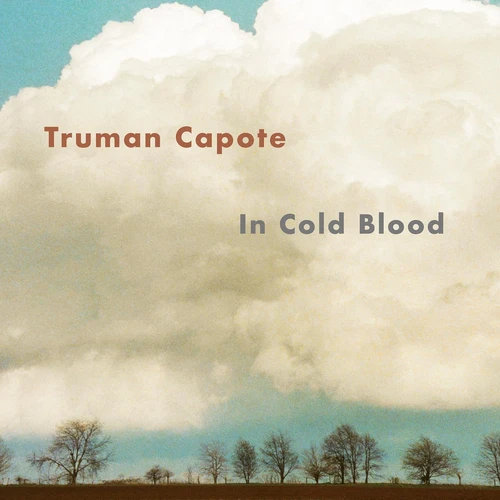
I found myself talking to a friend about a crime I barely remembered. The Clutter family murders, 1959, Holcomb, Kansas. I had heard the name Truman Capote, knew he wrote something about it. But honestly, I thought it was just a journalist’s report. Then I picked up “In Cold Blood” and realized I was wrong. Completely wrong. The book made me ask a strange question: can a story about real people dying be this beautiful? Can it be this literary? Or does the beauty somehow betray the truth?
The Ordinary Men Who Became Monsters
The book follows two men, Dick Hickock and Perry Smith. They are not cunning masterminds. They are not misunderstood geniuses. They are petty criminals with big mouths and empty pockets. Dick has a plan, a scheme he calls perfect. Perry is the muscle, the troubled soul, the one who writes letters to his father and dreams of finding treasure in Mexico. Capote paints them with such intimacy, such detail, that I forgot I was reading about killers.
Their crime is brutal. Four people, a family named the Clutter, are shot in their own home for a few hundred dollars. But Capote does not just show the murder. He shows the boredom before it, the fear after it, the small moments of humanity. Perry hesitates. Dick lies. They drive through empty highways, eat bad food, argue about nothing. The suspense is unbearable. You know what happens. Everyone knows. Yet Capote builds tension like a thriller writer. You keep turning pages, hoping maybe this time they will run away. They never do. And that is the horror.
The Poetry of Violence and the Weight of Place
Capote’s core theme is the randomness of evil. Why this family? Why these men? There is no clean answer. The imagery he uses is almost too beautiful for the subject. He describes the Kansas prairie as a flat, silent ocean. The wind moves through wheat fields like a whisper. The Clutter house stands alone, white and clean, like a promise that cannot be kept. He writes about blood on the wall, and it sounds like a photograph, not a horror. That is the trick.
He crafts sentences that feel like poetry. Short, sharp, then long and slow. He shifts from the killers’ point of view to the detectives’ to the townspeople’s. You feel the cold of the Kansas winter. You smell the cheap motel rooms. His technique makes you complicit. You are not reading from a safe distance. You are in the car with Dick and Perry. You are in the house when the gun goes off. The question he raises is universal: when we tell stories about real suffering, do we honor it or exploit it? I still do not know.
The Book That Changed Everything
“In Cold Blood” was published in 1966. It created a genre, the nonfiction novel. But it also created a problem. Capote claimed everything was true. Every conversation, every thought, every detail. Later, people found inconsistencies. He changed timelines. He invented dialogue. He said Perry confessed to him in private, and we have to take his word for it. The book is not journalism. It is storytelling dressed as journalism.
Does that matter? I think it does. Capote wants us to feel sympathy for Perry, the sensitive murderer. He wants us to see the tragedy, not just the crime. But the Clutters are dead. They cannot tell their side. The book gives Perry a voice and silences the victims. That is a choice. A powerful one, but also a dangerous one. Reading it now, decades later, I realize the book is not about the murder. It is about the story of the murder. And that story, Capote’s story, has its own agenda.
So what do you do with a book like this? You admire the craft. You feel unsettled by the intimacy. And you ask yourself one last question: when a writer tells you a true story, how much of it is really true, and how much of it is just a beautiful lie?
