Have you ever wondered what it takes to make your phone feel smart? I mean really smart. Not the clever tricks, but the engine underneath.
I use AI every day. I dictate messages to Siri. I ask ChatGPT to rewrite emails. I never thought about who trained those models. Not once. Then I read Karen Hao’s “Empire of AI,” and I felt a little sick.
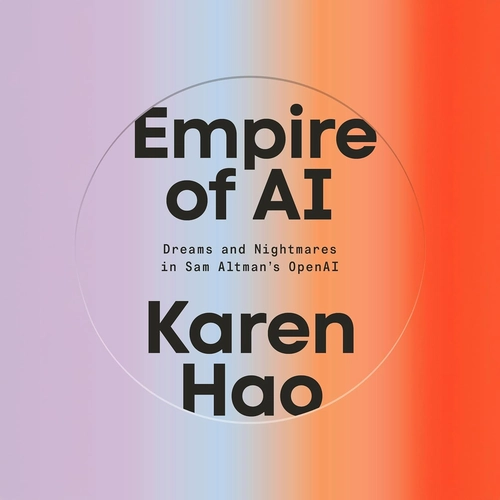
Hao, a journalist who spent years inside OpenAI and other labs, asks one question throughout the book. It is a simple question. Who pays the real price for this convenience? She does not mean the subscription fee.
The protagonist of this book is not a person. It is a system. A system of money, ambition, and hidden labor.
Hao takes us inside OpenAI’s early days. The idealistic startup with a mission to save humanity. Then she shows the pivot. The moment when survival became about funding. And funding meant selling out. She follows the money from Silicon Valley billionaires to the data workers in Kenya and the Philippines. These are the people who label images, filter toxic content, and train models for pennies an hour.
The core conflict is this. The people building AI are brilliant. They genuinely believe they are doing good. But the people enabling AI are invisible. They are treated as disposable. Hao does not name the whistleblowers. She could not. They would lose their jobs. But she describes their working conditions. The trauma from reviewing child abuse images. The burnout from repetitive labeling. The quiet desperation of workers who know their labor is essential yet invisible.
The suspense comes from watching the gap widen. The gap between what AI promises and what it demands. By the end, I was not rooting for the technology. I was rooting for the people who make it work and get nothing in return.
The core theme is extraction. Not just of data, but of human life.
Hao uses one image repeatedly. The server farm. Massive buildings filled with blinking lights. They look like cathedrals of progress. But she shows what it takes to cool those servers. Rivers of water diverted from nearby communities. Power grids strained to breaking. And the heat. The heat that kills coral reefs and melts glaciers.
The imagery that stuck with me was the data labeler in Nairobi. A young woman. She sits in a sweltering room with twenty others. She labels images of cars, pedestrians, and traffic signs for eight hours a day. She earns two dollars an hour. Her work trains the self-driving car that a wealthy man in Palo Alto uses to avoid traffic. She will never ride in that car. She cannot afford a bus pass.
Hao’s craft is precise. She does not editorialize. She lets the facts accumulate. One statistic. Then another. Then a quote from a worker. The weight builds slowly. It is like watching a wave form at sea. By the end, it crashes over you.
This book is not a condemnation of AI. It is a call to see the whole picture.
Hao argues that we have built a system where convenience is privatized but costs are socialized. We get the benefit. Someone else pays the price. The question she leaves us with is uncomfortable. What are we willing to ignore for a faster search result?
The book’s weakness is its scope. Hao covers so much ground that some sections feel rushed. The chapter on climate impact could have been twice as long. But that is a minor complaint. The book does what investigative journalism should do. It makes the invisible visible.
Who should read this? Anyone who uses technology. Anyone who has ever asked Siri a question. Anyone who has ever said “AI will save us.” You will not put this down feeling good. But you will put it down feeling less naive.
We do not need to stop AI. We need to start asking who does the work and how they are treated. That question changes everything.
