I still remember the Monopoly game. My son was seven. He landed on my hotel for the third time, and his face just crumbled. He swept the board with one angry arm, little green houses scattering across the rug, and then he cried like his heart would break. I sat there thinking, “This is not about Monopoly. Something deeper is going on.” That night I started searching for phrases I barely understood, things like “how to cultivate a growth mindset.” I thought it would be about teaching him to study better. Turns out, it was really about teaching him to lose, and to somehow still feel okay.
Quick Growth Mindset Tips Today
If you’re parenting a kid who can’t stand losing, try these:
- Notice effort out loud instead of saying “you’re so smart.”
- Share your own small failures at dinner, casually.
- Ask “what did you try that was hard?” not “did you win?”
- Praise specific actions: “I saw you keep your cool when that tower fell.”
- Celebrate mistakes as “something to figure out” together.
Why Does My Child Fall Apart After a Loss?
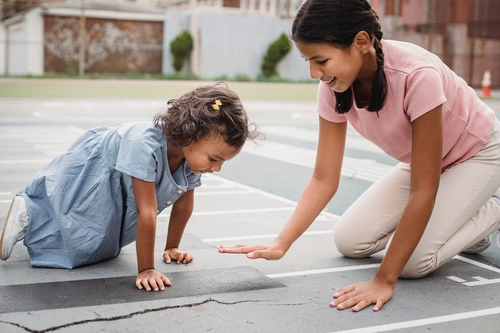
You would think losing a board game or getting a B on a spelling test is just a blip. But for some kids, it feels like the end of the world. My daughter would rather not try a new puzzle than risk not finishing it perfectly. What I learned, slowly, is that many kids tie their whole sense of worth to the outcome. Winning means I’m good. Losing means I’m bad. There is no gray area. It is not about being a sore loser. It is about a fixed mindset, as Dr. Carol Dweck describes it—the belief that abilities are carved in stone. So a loss is not just a loss. It is a verdict on who you are.
I saw it in myself too. When I burned a pan of chicken, I would spiral: “I’m a terrible cook.” My son heard that. He learned that one mistake defines you. How do we break that cycle? By changing the conversation, one quiet moment at a time.
How to Cultivate a Growth Mindset When Every Game Ends in Tears
I tried everything. Bribes, long lectures, letting him win. Nothing worked until I stopped focusing on the game’s outcome and started focusing on what happened inside him during the game. One afternoon, after a very loud Connect Four loss, I sat with him and said, “You know what I saw? I saw you trying a new diagonal move. You have never tried that before. And even though you lost, you tried something brave.” He was still sniffling, but he looked up. I wasn’t lying. I had noticed the small, brave thing.
That became our new rhythm. Before any rematch, I would whisper, “What’s the one thing you want to work on this game? Blocking my shots? Staying calm when I score?” Now winning wasn’t the hidden goal. The hidden goal was “did I do the thing I said I would?” When he blocked two in a row and still lost the game, he could say, “But I blocked you!” and there was genuine pride there. Somehow the loss stung a little less.
I started using this with homework too. “What’s the tricky part you’re proud of?” Not “what grade did you get?” The shift was tiny. The effect was enormous.
A Simple Ritual That Turned Our Weekends Around
After a while, I started a small practice with my kids. After any attempt, big or small, win or lose, we take turns saying one thing we noticed the other person doing that was effortful or different. Not praise like “good job.” Real, specific noticing. “I saw you take a deep breath when your tower wobbled.” “I noticed you tried the math problem a second way even after you got the answer wrong the first time.”
This practice did something unexpected. It took the pressure off the result. The game or the test became almost a side dish. The main course was being seen trying. For my son, it gave him a new way to feel successful that had nothing to do with the score. For me, it forced me to watch my kids with curious eyes, not judgmental ones. I was less of a referee and more of a quiet observer of their bravery. Which, it turns out, is exactly what a growth mindset asks of us all.
When It’s Not Just Games: School and Social Stress
The same idea applies to friendship struggles or hard tests. After a rocky day at school, instead of “How was your day?” I ask, “What felt tricky today that you kept working on anyway?” One Tuesday my daughter said, “I asked a girl to play even though I was scared she’d say no. She said yes!” She was lit up inside. The outcome was good, sure. But she also learned that courage matters more than the other person’s answer. That’s a growth mindset muscle she’ll use forever.
When Your Own Reactions Get in the Way
I’ll be honest. Some days I still hear my son rage at a video game and I feel my own chest tighten. I want to fix it fast. But now I try to say, “That level is really unfair, huh? You keep trying anyway. That’s kind of incredible.” I don’t always get it right. Some days I snap. But the practice has given us a shared language. It feels like a small life raft for those big feelings.
Small Wins Over Big Victories: The Real Secret
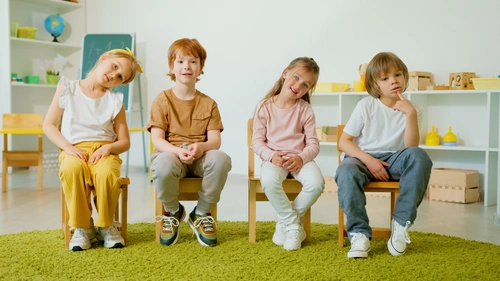
In the beginning, I wanted my kids to win less painfully. But what I really wanted, I think now, is for them to not be afraid of the hard things. A growth mindset is not about forcing optimism. It is about celebrating the process so loudly that the outcome loses some of its power. One lost soccer game does not make you a loser. One failed science project is not a life sentence. A simple noticing practice is just a way to make that truth concrete, every single day.
FAQ: Growth Mindset for Kids Who Hate Losing
Q: How do I help my child handle losing without a meltdown?
A: Start by separating their worth from the outcome. Notice and name the effort you saw, not the result. “I saw you try a new strategy” matters more than “you almost won.” Also, model losing gracefully yourself. Let them see you shrug off a loss and say, “Oh well, I’ll try a different move next time.”
Q: What if my child refuses to play games because they’re scared of losing?
A: Lower the stakes. Play games where luck matters more than skill, so losing doesn’t feel personal. Or set a goal like “let’s both try a new move today” so the focus shifts from winning to learning.
Q: Is it bad to let my child win sometimes?
A: Not at all—but balance it. Let them win sometimes to build confidence, but also let them lose occasionally and stay present with them through the discomfort. The goal isn’t to protect them from loss. It’s to help them survive it.
Q: How do I praise effort without sounding fake?
A: Be specific. Instead of “good effort,” say “I noticed you kept trying even when that level got frustrating.” Instead of “nice try,” say “You moved your knight differently this time—you’re learning from the last game.” Specific noticing feels genuine.
Q: What if my child’s school doesn’t emphasize growth mindset?
A: You can still model it at home. Talk about your own mistakes. Celebrate small improvements. Ask questions that focus on process, not grades. The research shows that what parents say about failure and effort has a powerful effect on children’s beliefs.
One Last Thing
The other night my son asked to play chess for the first time in months. He lost, again and again, to his dad. But at the end he looked up and said, “I almost trapped your knight that one time. I’m going to practice that.” And I just sat there, barely breathing, because that single sentence felt like the whole point.
References
- Dweck, C. S. (2006). Mindset: The New Psychology of Success. Random House.
- Siegel, D. J., & Bryson, T. P. (2011). The Whole-Brain Child: 12 Revolutionary Strategies to Nurture Your Child’s Developing Mind. Delacorte Press.
- Mueller, C. M., & Dweck, C. S. (1998). Praise for intelligence can undermine children’s motivation and performance. Journal of Personality and Social Psychology, 75(1), 33–52.
