I sat on the kitchen floor at 6:47 a.m., coffee cold, my untouched journal beside me. For the third time that month I’d promised myself 20 minutes of quiet writing before the kids woke up. And for the third time, I just scrolled my phone instead. The shame was familiar. What I didn’t know yet was this: the problem was never my willpower. I was simply learning how to build good habits in a way that works for actual humans, not superheroes. Real change asks for a different approach entirely.
Quick Habit Wins Today
If you’re tired of failing at habits, try these:
- Pick a habit you secretly enjoy doing.
- Shrink it down until you almost laugh at how easy it is.
- Glue it onto a routine already baked into your morning.
- Tell one friend what tiny thing you’ll do today.
- Celebrate finishing the baby version like you just ran a marathon.
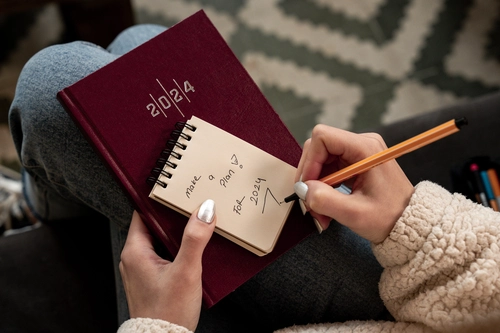
Why Do I Keep Failing at Habits Even When I’m Motivated?
Motivation feels like rocket fuel on day one. And then life happens. You get a cold, the baby hits a sleep regression, work explodes. The rocket stalls somewhere in the stratosphere and drifts back down. The truth: motivation is the least reliable tool in the box. Most of us blame ourselves. I did for years. I’d think, “I’m just lazy” or “I don’t want it enough.” But some behavior researchers found that depending on willpower actually predicts failure more than success. The real question shifts from “Am I strong enough?” to “Is my system smart enough?”
Think of it this way. Your brain runs mostly on autopilot. Roughly 40% of daily actions are habits, not decisions. So fighting your autopilot with willpower alone is like trying to steer a cruise ship with a canoe paddle. You exhaust yourself. You give up. Knowing how to build good habits means learning to reprogram the autopilot itself, gently and gradually. It means working with your brain’s natural wiring instead of at war with it.
What Actually Helps Build Good Habits That Stick?
One rainy Tuesday, I stopped trying to be impressive and started being strategic. I picked flossing. Just flossing. And I didn’t even commit to flossing all my teeth. One tooth. That was the whole assignment. Sounds absurd, right? But that absurdity is where the magic hides. My only job was to stand at the bathroom sink after brushing and floss exactly one tooth. Most nights I did more. But on the nights I was exhausted, I did just one and went to bed. For the first time in my life, I didn’t feel like a failure at dental care. I felt like someone who flosses every night. The feeling of success, not the scale of the effort, cemented the habit.
Researchers call this approach “tiny habits,” but you can just call it making the bar so low you can’t trip over it. The sequence matters far more than the size. You want to wire in the prompt and the reward first. The volume comes later, almost always without forcing it. If you’re trying to figure out how to build good habits, stop asking “How much can I do?” and start asking “What’s the smallest version that lets me feel successful tonight?”
A Simple Anchor That Changed Everything
My favorite tool has a simple name: the anchor. An anchor is an existing habit you never skip. For me, it’s the moment the coffee maker starts hissing and gurgling at 6:15 a.m. That sound now triggers exactly three minutes of stretching on the kitchen mat. No decision. No debate. The coffee goes, the stretching follows. Your brain loves this because it strings two actions together like beads on a necklace. After a few weeks, doing one without the other feels a little off.
Here’s how to build your own anchor:
- Pick an unmissable everyday action: brushing teeth, pouring coffee, feeding the dog, starting the microwave.
- Attach your new tiny habit right after it: “After I pour my coffee, I will write one sentence in my journal.”
- Say the sentence to yourself out loud for the first few days. Your brain needs to hear the script.
- Celebrate immediately after. A little fist pump. A quiet “nicely done.” This sounds corny. It works. Emotion stamps the memory, making the habit stick faster.
This ritual takes five minutes to design and changes everything about your daily rhythm. You stop relying on reminders and to-do lists and start trusting the chain of linked behaviors that already run your morning.
Different Habit Anchors for Different Times of Day
| Time of Day | Anchor Idea | New Tiny Habit |
|---|---|---|
| Morning | After I turn on the shower | I take three deep breaths |
| Midday | After I heat my lunch | I walk to the mailbox and back |
| Evening | After I close my laptop | I wipe down one kitchen counter |
| Night | After I get into bed | I read one page of a book |
Do I Need to Track My Habit Progress?
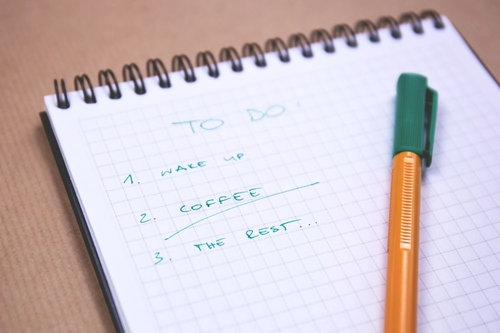
I used to think tracking was for Type-A spreadsheet lovers. Then I tried it with a simple piece of paper on the fridge. Each night I put a little checkmark next to “five-minute tidy.” Seeing the chain of checkmarks grow gave me something willpower alone never could: proof I am the kind of person who does this. Visual feedback creates momentum. It quiets the inner critic who insists you’re not making progress. You don’t need an app. A sticky note works. The key is just observing yourself kindly, like a scientist watching a plant grow.
FAQ: How to Build Good Habits
Q: How long does it actually take to build a good habit?
A: The old “21 days” idea isn’t backed by solid research. Some studies show a range closer to 18 to 254 days, depending on the person and the complexity of the routine. But for tiny versions of a habit, the feeling of “this is automatic” can come much faster, sometimes in under a week, because you’re not fighting any resistance. The clock matters less than your consistency in feeling successful each time you do the micro-step.
Q: What if I miss a day of my habit routine?
A: The biggest risk isn’t the missed day. It’s the story you tell yourself afterward. “I blew it. Might as well quit.” A more honest story: humans are imperfect. Life gets messy. When I travel or get sick, my routines wobble. The trick is to do the bare minimum—five minutes, one page, a single stretch—and count it as a win. The goal isn’t a perfect streak. The goal is a resilient identity that bounces back after a wobble.
Q: Can I build multiple good habits at once?
A: Technically yes, but I wouldn’t recommend it unless you have a very stable life at the moment. If you’re truly determined, use anchors to scatter tiny habits across different existing routines. One with morning coffee, one with your lunch break, one with bedtime teeth brushing. But the moment you feel overwhelmed, strip down to just one habit. The one that matters most. Protect that tiny success above all else.
Q: Is building good habits with a friend really more effective?
A: It has been for me. Not a nagging accountability partner, but a friend who simply gets a text after I finish my tiny walk. I send a thumbs-up emoji. She sends one back after her floor stretches. No pressure. Just parallel play. Having someone notice your effort makes the victory feel real. It taps into a deep wiring we all have: we try harder when we’re not alone, and we enjoy it more.
Q: What if I have ADHD and tiny habits still feel hard?
A: Some brains need extra novelty and immediate rewards. Try pairing your tiny habit with something you already enjoy—listen to a favorite song while doing it, or use a visual tracker with colorful stickers. Experiment with different cues and locations. The principles still work, but you may need to adjust the reward to match your brain’s wiring.
One Last Thing
As I write this, my coffee is hot. I can hear the kids starting to stir upstairs. My journal has a single sentence scrawled in it from 6:17 this morning. Not profound. Not polished. But it’s there. And I’ve finally learned that the sentence itself isn’t the win. The win is that I showed up, again, for the writer I want to become. That quiet consistency, built one tiny, celebrated step at a time, is the only real way I know how to build good habits that last.
References
- Clear, J. (2018). Atomic Habits: An Easy & Proven Way to Build Good Habits & Break Bad Ones. Avery.
- Fogg, B. J. (2019). Tiny Habits: The Small Changes That Change Everything. Houghton Mifflin Harcourt.
- Rubin, G. (2015). Better Than Before: What I Learned About Making and Breaking Habits. Crown.
