I have a wooden spoon in my kitchen. It belonged to my grandmother. I don’t know where she got it or who carved it. It just sits there, worn smooth by years of stirring soup. I never really thought about it until I read Edmund de Waal’s book.
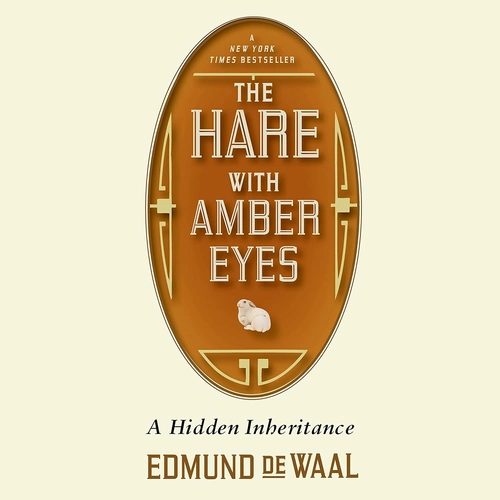
He inherited 264 netsuke — tiny Japanese carvings, each no bigger than a thumb. Ivory frogs, ivory hares with amber eyes, a sleeping tiger. Objects so small you could hold a dozen in one palm. But in those small objects, de Waal found something enormous. A whole world. A whole century of European Jewish history. I found myself asking: what do our things know about us that we don’t know about ourselves?
Charles Ephrussi and the Paris of Lost Dreams
The protagonist of this book is not exactly de Waal. It is Charles Ephrussi, his great-granduncle, a wealthy Jewish art collector in 1870s Paris. Charles was part of the world that Proust wrote about. He attended salons, bought Impressionist paintings before they were famous, and collected Japanese art.
I need to be honest here. I expected a story about glamour. Old money. Beautiful things. Instead, de Waal shows us something else. Charles was a Jew in a city that tolerated him but never fully accepted him. He bought netsuke and filled his study with them. They were beautiful, yes. But they were also small. Portable. Easy to hide.
Then the Dreyfus Affair happened. The anti-Semitism that had been simmering boiled over. Charles watched his world change. Those netsuke — they became something else. Not just art. A quiet rebellion. A way of saying: I am here, I have taste, I belong. But belonging is fragile when it depends on the goodwill of people who see you as an outsider.
The book never tells us the ending of Charles’s story in a dramatic way. The ending is just that he lost. His collection passed to his nephew in Vienna. And then Vienna happened.
Light in a Darkening Room: What the Netsuke Witnessed
De Waal is a potter by trade. He knows how to handle objects. And he writes about them with a potter’s patience. The key imagery in this book is the netsuke themselves. Small, silent, unbreakable. They survived wars, expropriations, the Holocaust. They sat in drawers while their owners were deported to camps.
There is a subtle light that runs through this book. It is not dramatic. It is the light of a single candle in a room where everything else has been taken. The Ephrussi family lost their bank, their palaces, their paintings. But the netsuke remained. De Waal’s grandmother hid them in her mattress during the Nazi occupation. She sewed them into her clothing.
I found this detail almost unbearable. A woman in a ghetto, sewing tiny ivory animals into the hem of her skirt. What did she think about? Did she think about Charles in Paris, showing off his collection to Proust? Did she think about her children, who might never inherit anything?
The author’s craft here is extraordinary. He does not tell us what to feel. He just shows us the objects. And we fill in the grief ourselves. It is a grief that is quiet, like the netsuke themselves. Not loud. But present. Always present.
The Weight of Things: What We Carry Forward
This book is not just about the past. It is about what we do with what we inherit. De Waal inherited these netsuke when his uncle died. He did not want them at first. They were old. Strange. Japanese carvings in a London flat. What was he supposed to do with them?
He decided to touch them. To trace their history. And in doing so, he found a way to hold his family’s loss without being destroyed by it.
There is a weakness in this book, I think. It is almost too elegant. The prose is so beautiful that sometimes the horror becomes a little distant. You read about the Holocaust and you think: this is beautifully written. And then you catch yourself. You wonder if the beauty is a kind of escape. But maybe that is the point. The netsuke are beautiful. That beauty is what allowed the family to survive. Not physically, but spiritually. They kept the small beautiful things alive so that something of themselves would remain.
I recommend this book to anyone who has ever wondered about an object in their home. A vase. A photograph. A wooden spoon. It will make you look at that object differently. It will make you ask: what did you see? Who held you before me? What did you survive?
Maybe that is what love really is. Not the grand gestures. Not the big houses. Just the small things that we keep, that outlast us, that remember us when we are gone.
