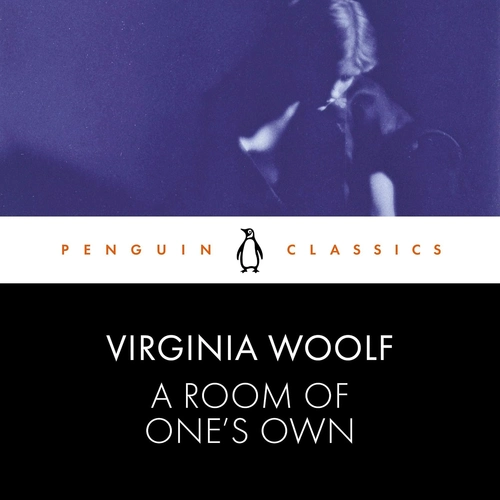
I walked into a bookshop last week, looking for something to quiet my mind. I found Virginia Woolf instead.
She asks a question that has haunted me since: What does a woman need to write fiction? Her answer, delivered in 1929 with the calm of someone who has already figured it out, is almost insultingly simple. Five hundred pounds a year and a room with a lock on the door. No muses. No inspiration. No special genius. Just money and space.
But here is where I started to squirm. Because she is not talking about material comfort. She is talking about something far more difficult. She is asking what it costs to have a mind of your own.
Judith Shakespeare and the Locked Door
Woolf invents a character to make this real. Judith, Shakespeare’s imaginary sister. As talented as Will. As ambitious. But when she runs to London to make plays, she is laughed off the stage. She ends up pregnant, alone, dead by her own hand. No one remembers her name.
I read this and felt something close to shame. Not because I am a woman. Because I recognized the pattern. The talent that dies from lack of oxygen. The voice that never gets spoken because there is no quiet place to speak it.
Woolf walks through the British Library, looking for books about women. She finds them written by men. Angry books. Tender books. All of them telling her what she is supposed to be. None of them written by the women themselves. She realizes that for centuries, women have been mirrors. They reflect men back at twice their natural size. But what happens when the mirror cracks?
The core conflict is not with men, exactly. It is with the shape of the world. A world that says your mind is welcome only if it behaves. Only if it stays in its corner. Only if it does not ask for money or a door.
The Web of Inheritance and the Light of Ordinary Life
This is where Woolf’s craft becomes something like magic. She does not shout. She weaves.
The core theme is inheritance. Not just money, though she is rigorous about that. She points out that for centuries, women could not own property. Could not keep what they earned. Could not pass anything down. So each generation started from zero. No accumulated capital. No accumulated confidence. The mind cannot build on nothing.
But there is a subtle light in this book. It comes from small things.
Woolf describes a meal at a women’s college. Plain soup. Prunes. Water. Then she describes a meal at a men’s college. Partridge. Wine. Rich sauces. The difference is not just food. It is the message that some minds are worth feeding and others are not.
I found myself thinking about my own small privileges. The afternoon I spent reading in a café, undisturbed. The salary that means I do not have to say yes to every request. Woolf made me see these not as treats but as tools. She made me see that the most radical thing you can do is claim your own attention.
The Mind as a Room of Its Own
Woolf ends with a quiet call. She says we need more women who write. Not to compete. To complete what has been left undone. She imagines a future where Judith Shakespeare is born again, this time with money and a room. This time she lives.
The book is not perfect. It is a product of its time. Woolf assumes a certain kind of woman. Educated. White. Privileged enough to hear her question. She does not fully see the women who were never allowed near a university.
But the core insight remains. It is not that you need money to be happy. It is that you need money to be free. Free from the constant noise of survival. Free from the need to please. Free to think a thought all the way through, without someone telling you to stop.
I closed the book and looked at my own room. My own modest income. I realized I had been treating them as background. Woolf says they are the whole stage. Without them, you are not writing. You are just performing.
Maybe that is what freedom really is. Not the absence of struggle. But the presence of a door you can close.
