I went to a dinner party recently. Someone asked, what book changed how you see writing? I paused. Then I said, Montaigne. Not a novel. Not a poem. A collection of essays from the 1500s. The room fell quiet. I realized I had to explain.
Montaigne invented the essay. The word itself comes from the French “essayer,” to try. He tried to write about himself. Honestly. Without pretending to be wiser or braver than he was. He wrote about his fear of death. He wrote about his friendship with a fellow writer. He wrote about what his cat might be thinking. He wrote about his own laziness, his own forgetfulness, his own body’s failures.
The book asks a strange question. Can a person ever truly write themselves down on the page? Or do we always hide behind a mask of polish and performance?
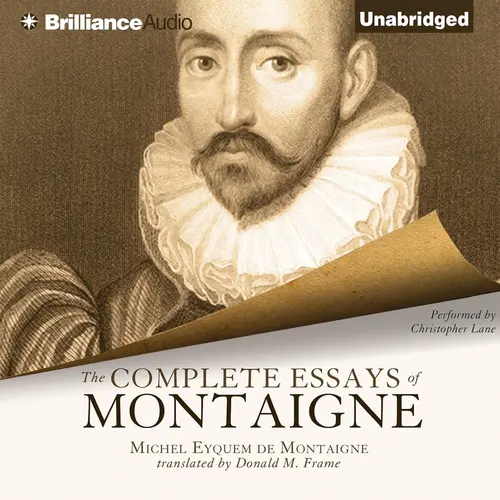
The Protagonist is Montaigne Himself
There is no plot in the usual sense. No hero’s journey. No love story. No crime to solve. The protagonist is Montaigne himself, a French nobleman who retired to a tower library and started writing.
He is not a hero. He admits his own cowardice. He admits he is terrified of pain. He admits he cannot remember names or dates. He admits he is sometimes bored by his own thoughts.
The core conflict is simple. Montaigne wants to show himself as he is. But he knows that the act of writing changes what he writes. He cannot capture the raw, messy, real self. He can only capture a version. A polished version. A version that is already shaped by language.
I felt a deep unease reading this. It wasn’t because Montaigne was shallow. It was because he was so honest about his own dishonesty. He writes, “I paint myself for others, but I paint myself for myself as well.” He is trying to escape the mask. But the mask is always there.
This is a book about a man wrestling with a question. And the question is: what do we owe the truth about ourselves?
The Unfinished Portrait
The central theme is authenticity. Montaigne wants to write a self-portrait that is true. Not a portrait that makes him look good. Not a portrait that hides his warts. A portrait that is honest.
The key imagery is the unfinished painting. Montaigne describes his essays as sketches, not finished works. He says he adds touches here and there. He never corrects the first draft. He lets the flaws stand. He lets the contradictions stand.
I realized this was a radical act in the 1500s. Most writers of his time tried to sound wise and certain. Montaigne wrote, “I am myself the matter of my book.” He wrote about his own ignorance. He wrote about his own uncertainty. He wrote about his own body’s digestion problems.
The pattern is universal. We all feel the tension between who we are and who we show to others. Montaigne just had the courage to write it down. He shows that the struggle to be honest is itself a kind of honesty.
The Permission to Be Imperfect
Montaigne’s essays are not a manual. They are a permission slip. He gives us permission to write imperfectly. To write without a clear structure. To write about the small things. To write about the embarrassing things.
The book’s weakness is its density. Montaigne jumps from topic to topic. He quotes Latin and Greek writers without translation. He can be rambling. He can be boring.
But that is exactly the point. He is not trying to impress you. He is trying to be real.
The core insight: Honesty is not about being perfect. It is about being willing to show the mess. Montaigne showed the mess 400 years ago. He showed that writing about yourself is a kind of courage. Not because you have something important to say. But because you are willing to say something true.
Maybe that is what writing really is. Not a performance. Not a masterpiece. Just a person trying to say, this is who I am. And hoping it is enough.
