I remember the exact moment I closed the fifteenth browser tab. My heart was thumping. I’d opened a brokerage account for the first time. The screen showed a search bar, a list of ticker symbols that might as well have been hieroglyphs. My cursor hovered over “Buy.” Then my brain did what it always did: “What if I lose it all? What if I’m the idiot who loses my kid’s college fund on a stupid click?” I clicked the X. I told myself I’d research more. I didn’t come back for three years. Why people are afraid to invest money was no longer a question. I was living it.
Quick Action for Fighting Investment Fear Today
If you’re stuck on the sidelines, try these:
- Open a separate savings account just for your first investment.
- Choose one broad index fund, not a single stock.
- Transfer $20 and actually hit the buy button.
- Leave the app for a month. Don’t peek.
- Notice that nothing terrible happened. That’s the whole lesson.
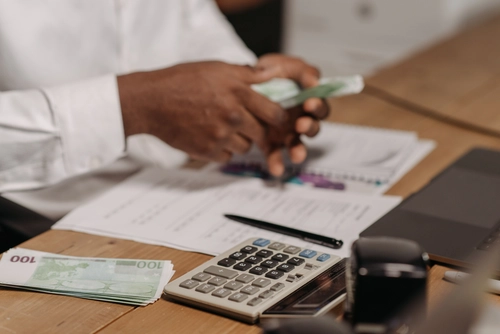
Why Does the Thought of Investing Make My Palms Sweat?
Why people are afraid to invest money doesn’t boil down to one big thing. It’s about a dozen small, sticky fears that stack up like dirty dishes. I’m not talking about not having enough cash. I’m talking about the feeling that you’re about to step into a casino where everyone else seems to know the rules, and you’re just guessing. When my brother first asked me about my portfolio, I laughed. “Portfolio? I have a checking account and a vague hope.” He didn’t laugh back. That’s when I realized I wasn’t just uninformed. I was avoiding something that made me feel like a child.
Most of us aren’t taught this. We learn that investing is for people with extra money, sharp suits, and a certain swagger. The language is hostile: expense ratios, dividend yields, rebalancing. It’s designed to make you feel small. And the deeper fear? Losing money you worked decades to earn. Our brains process financial loss twice as painfully as gain. That’s not a flaw. That’s just how we’re wired.
Even when I understood index funds conceptually, I couldn’t shake the mental image. I’d picture a red arrow pointing down. I’d imagine checking my balance and seeing half of my savings gone. That imagined pain was enough to keep me in cash for years. I told myself I’d wait until I felt ready. That day never came.
Instead, I discovered I’d silently sacrificed something far more precious than temporary peace of mind. The math is sobering. If you start at 21 with just $200 a month, you could have over $600,000 by 65, assuming a 7% yearly return. Wait until 30, and that number drops below $330,000. The difference isn’t just interest. It’s the compounding that never got to happen. I lost money I never lost on paper. That money simply never came into existence because I waited for a feeling of certainty that doesn’t exist.
So How Do You Finally Invest Without It Feeling Like a Gamble?
Why people are afraid to invest money isn’t really about the market. It’s about the story we tell ourselves about the market. Here’s the shift that changed everything for me. I stopped trying to be a stock picker. I stopped trying to time the perfect entry point. Instead, I bought a tiny slice of the entire global economy.
When I first heard the phrase “total stock market index fund,” I assumed it was complicated. It’s not. It’s like buying dinner at a buffet instead of betting on one dish. If one company stumbles, the whole meal doesn’t collapse. I put my first real investment into a fund that tracks thousands of companies across the world. I did it on a Tuesday. I felt sick for ten minutes. Then I closed my laptop and went for a run. Best decision I ever made.
My partner watched me do this. “You’re really just giving your money to a faceless fund?” she asked. “I’m buying tiny slivers of thousands of real businesses,” I explained. “As long as humans keep inventing things and selling each other cereal, I’ll probably be okay.” I wasn’t convincing her. I was convincing myself. That’s the trick. You don’t need to understand every mechanism. You need a belief broad enough to sleep on: the global economy will likely be bigger in 30 years than it is today. That is not a wild bet. It’s not gambling. It’s accepting that over long stretches, human creativity tends to generate growth.
I started with one automated withdrawal. $100 a month, every single month, no matter what the headlines screamed. That one habit replaced the monthly ritual of opening my checking account and feeling stuck.
The $20 Courage Challenge: A Tiny Ritual to Rewire Your Brain
Why people are afraid to invest money often comes down to a single moment. The moment before the first click. I invented a simple exercise that I’ve now handed to five friends. I call it The $20 Courage Challenge. It’s not about building wealth. It’s about proving to your amygdala that investing is boring, not terrifying.
Here’s how it works. Take $20 from your checking account. Not $2,000, not your emergency fund, just $20. Use a simple investing app or brokerage. Buy exactly one share of a broad ETF. Not a hot stock, not Bitcoin, just a plain vanilla index. Then, don’t do anything for one week. Don’t check the price. Don’t read analysis. Let those $20 sit there and prove one thing to you: the world didn’t end. The next week, maybe buy another $20. Then another. At the end of a month, you’ll have $80 invested. But more important, you’ll have done the thing that scared you the most. You’ll have clicked the button without the sky falling.
One of my friends, someone who had hoarded cash in a sad savings account for six years, tried this. She texted me after her first $20 purchase: “I did it. I feel literally nothing. Is that normal?” I told her that’s the whole point. The monster under the bed was never a monster. It was just a boring, beige-colored financial transaction dressed up in scary clothes. Now she invests every paycheck automatically. The $20 Ritual isn’t a magic financial solution. It’s a psychological defuser. It proves that the hardest part isn’t the mechanics. The hardest part is the story you tell yourself before you even begin.
What Happens When You Mistake Complexity for Risk
Why people are afraid to invest money is partly a marketing problem. The financial industry sells complexity because complexity justifies fees. We absorb that message and assume that if we don’t understand everything, we’re not allowed to participate. I spent months reading about tax-loss harvesting. I didn’t have enough assets for it to matter. That was my fear wearing a research costume.
I now tell people: you don’t need to know how an airplane works to buy a plane ticket. You just need to trust that it usually gets to the destination. Broad index investing is the same. A little knowledge is essential. A lot can become a fancy form of procrastination.
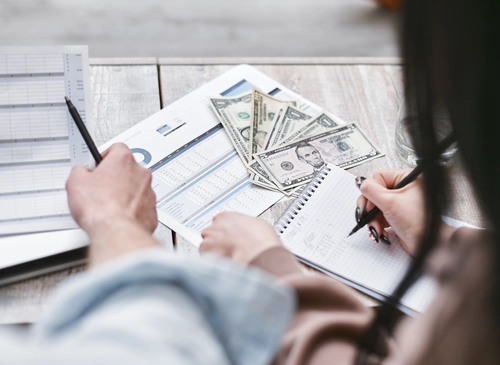
The Day I Realized I’d Already Lost Over $70,000
I once sat down and calculated the cost of my waiting. I wasn’t trying to shame myself. I was trying to understand what the fear had actually cost me. The number wasn’t a hypothetical loss of money I once had. It was money I’d never earned because I kept my savings in cash. I crunched it using a simple compound interest calculator. Starting in my early twenties versus my early thirties, the gap by retirement age stretched past seventy thousand dollars. That number was not a punishment. It was a permission slip. I realized I could keep waiting for the perfect moment, or I could accept that I’d already paid a high price for fear, and I didn’t want to pay another dollar. So I funded my account that afternoon.
FAQ: Why People Are Afraid to Invest Money
Q: Why am I so scared to invest money when I know I should?
A: It’s not a character flaw. Our brains are wired to feel losses twice as intensely as gains. The financial industry also makes investing sound complicated on purpose. The fear is normal. It just needs a small action to break through.
Q: What if I invest and the market crashes immediately?
A: That can happen. But if you’re investing for the long term (5+ years), a crash is just a discount. The market has always recovered from every crash in history. You’re not buying a stock. You’re buying a slice of human productivity over decades.
Q: How much money do I need to start investing?
A: As little as $20. The amount matters less than the habit. Start small. Prove to yourself that you can click the button. Then increase it over time.
Q: What’s the simplest thing I can invest in?
A: A broad index fund like VOO, SPY, or a total stock market ETF. These track the entire market. You don’t need to pick winners. You’re betting on the whole economy over time.
Q: How do I stop checking my investments every day?
A: Set up automatic contributions and delete the app from your phone. Check once a month at most. The daily noise will drive you crazy. Long-term investing is boring. That’s a good thing.
One Last Thing
Those fifteen browser tabs are still seared into my memory. But now when I hover over my account, I don’t see a casino. I see a quiet accumulation, a slow, sleepy machine that asks nothing of me except patience. The fear never completely vanishes, but it gets quieter with every automatic deposit. It’s not about being brave. It’s about being too tired of the real price of doing nothing.
References
- Malkiel, B. G. (1973). A Random Walk Down Wall Street. W. W. Norton & Company.
- Dalbar, Inc. (n.d.). Quantitative Analysis of Investor Behavior (QAIB) Report.
- Thaler, R. H., & Sunstein, C. R. (2009). Nudge: Improving Decisions About Health, Wealth, and Happiness. Penguin Books.
