I was sitting on my porch last week, watching a father toss his toddler in the air. The kid shrieked with joy. I thought about all the kids who never got that. Then I thought about Ashley C. Ford’s memoir, Somebody’s Daughter, which I had just finished. And I wondered: what happens when the person you need most is a ghost?
Ford grew up in Indiana with a mother who was often harsh, a grandmother who was her anchor, and a father who was in prison. She did not know why he was there. For years, she imagined him as a kind, gentle man who would come home and fix everything. She wrote him letters. She held onto a phone call, one single call where he told her he loved her. That voice became the shape of her hope.
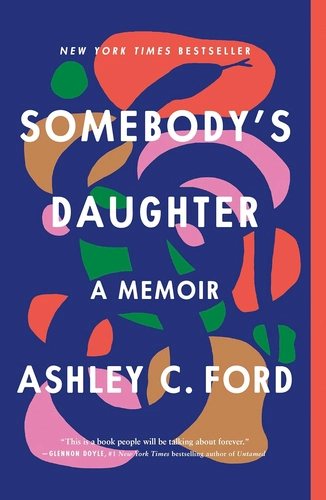
The book opens with a scene of her childhood, small and sharp. Ford is sitting in a car, waiting. She does not know what she is waiting for. But the waiting itself becomes the texture of her life. She waits for her father’s release. She waits for her mother’s approval. She waits for her own body to make sense. The prose is clean, almost plain, which makes the emotional hits land harder. She does not dramatize. She just shows you what it felt like.
Then, in her twenties, Ford finally learns the truth about why her father went to prison. And the truth does not set her free. It breaks her. Because the man she loved in her imagination, the man who was supposed to be innocent, the man she needed to be blameless? He was not innocent. He did something unforgivable. And she has to hold that fact next to her love for him.
This is where the book asks its deepest question. Can you forgive someone who never asked for forgiveness? Can you love someone who hurt other people? Ford wrestles with this openly. She does not give easy answers. She goes to therapy. She talks to her mother. She visits her father in prison. She tries to understand without excusing. And she lets you see the mess of it.
The core theme here is absence. Not just physical absence, but emotional absence. The way a missing person becomes a story you tell yourself. Ford’s father was not a bad father in her mind because he was not there to be a father at all. He was a blank space. And she filled that space with her own need. The key imagery that stuck with me was the waiting. Over and over, Ford waits. In cars, on phone calls, in her own bedroom. Waiting for something to change. Waiting for someone to show up. It is a kind of prison too.
I think about the line where she says she wanted her father to be the one who saved her. And then she realized he was the one she needed saving from. That is the brutal truth at the heart of this book. The person you love can be both things. You do not have to choose. But you also cannot pretend.
Honestly, I struggled with this book. Not because it was bad. Because it was true. Ford does not let you off the hook. She does not turn her father into a villain, which would be easy. She does not turn him into a hero, which would be dishonest. She lets him be a person, flawed and broken and capable of terrible things. And she lets herself be a person too, flawed and needy and capable of loving someone who hurt her.
The book has its limits. It focuses tightly on Ford’s inner world. You do not get a lot of context about the prison system or race or class. That is not a flaw, exactly. It is a choice. She is telling her own story, not a political argument. But if you want a broader analysis, this is not that book.
What you get instead is something rarer. A careful, painful look at what it means to be somebody’s daughter. To be shaped by someone who was never really there. To carry a love that has no place to go.
I closed the book and sat in the quiet for a while. I thought about the father and his toddler. I thought about all the invisible children. And I thought about how we spend our lives trying to understand the people who made us. Some of us never get a clear answer. Ford got one, and it was worse than not knowing.
Recommendation: Read this if you have ever loved someone you were not sure you should love. Read this if you have ever waited for someone who never came. Read this if you want to see what honesty looks like when it costs something.
