I was sitting in a doctor’s waiting room last month, staring at a poster of the human circulatory system. The arteries were red. The veins were blue. It looked like a subway map, clean and functional. I thought I understood my body that day. Then I read Siddhartha Mukherjee’s new book, and I realized I understood nothing.
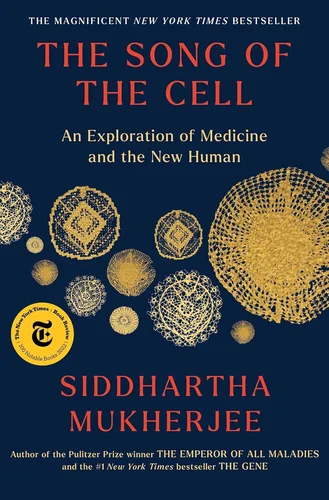
Mukherjee has a way of making you feel small in the most generous way. The Song of the Cell is not just a history of cell biology. It is a meditation on what it means to be a collective. The question Mukherjee asks is simple and devastating: If each of our cells is a living thing with its own impulses, its own hunger, its own death, then who exactly is the “I” that I call myself? Is my consciousness just a negotiation between trillions of tiny aliens who happen to get along?
Character and Plot: The Protagonist Is a Universe
The protagonist of this book is not a person. It is a concept, a living contradiction. Mukherjee traces the cell from its discovery by Robert Hooke in 1665 to the modern era of immunotherapy and CRISPR. But he does something strange along the way. He treats each cell like a character with a personality. The immune cell is a soldier. The nerve cell is a messenger. The cancer cell is a traitor who forgot its allegiance.
I will be honest. I expected a dry textbook. What I got was a thriller. The suspense comes from one central tension: every cell wants to live, but the organism needs them to cooperate. When a cell forgets its role, when it starts dividing for itself, we call that cancer. When cells sacrifice themselves for the whole, we call that immunity. Mukherjee never reveals the ending, because there is no ending. The negotiation is ongoing. Every breath we take is a treaty renewal.
What struck me most was his portrait of the early cell biologists. These were people who looked through crude microscopes at pond scum and saw something sacred. They saw that life was not a single flame. It was a colony of fires.
Theme and Imagery: The Fragile Contract We Call Health
The core theme of this book is cooperation. Mukherjee argues that the true miracle of life is not that cells exist, but that they learned to trust each other. He uses one image again and again: the chorus. A single cell singing alone is bacteria. A group of cells singing together is a human being.
The key imagery here is the “social contract” of the body. Mukherjee shows how every disease is a breakdown of that contract. Diabetes is a failure of communication. Alzheimer’s is a failure of memory storage. Autoimmune disease is a civil war. It sounds dramatic, I know. But the science backs it up. We are not individuals. We are societies of cells that have been negotiating for billions of years.
I found myself thinking about my own immune system differently after this chapter. Every time I catch a cold, I am witnessing a war. Every time I heal a cut, I am watching a peace treaty being signed. The book made me feel grateful to my cells. They work so hard. They never take a vacation.
Elevation and Call to Action: The Cell That Remembers You
The deepest layer of this book is philosophical. Mukherjee asks: If our cells are replaced every seven years, what remains constant? The answer, he suggests, is the pattern. The song. Not the individual singers, but the arrangement they hold together.
I have one small criticism. The book is dense in places. Mukherjee assumes you are willing to work for the insight. He does not hand it to you. But that is also its strength. It treats the reader like a cell in a larger body of knowledge. You must do your part to understand.
This book crosses eras. It connects the 17th-century church protests against dissection to the 21st-century debates about gene editing. It shows that every generation has feared the cell. Every generation has tried to control it. And every generation has failed.
I recommend The Song of the Cell to anyone who has ever wondered what they are. Not what they do for a living or who they love, but the raw substance of their existence. Read it. Then look at your hand. Thirty-seven trillion living things decided to call themselves you. That is the most beautiful accident I have ever heard.
