I was sitting in my car last week, waiting for a traffic light to change. And I thought about the rating I would give that moment. Three stars? Maybe three and a half. Not bad. Not great. Just a moment passing.
That is the trick John Green pulls in The Anthropocene Reviewed. He takes the habit we all have, the quiet one where we judge things without saying it out loud, and turns it into a literary form. He reviews everything. Canada geese. The internet. Sunsets. The QWERTY keyboard. And he gives each one a star rating, five stars being the best.
But here is the question that haunts the whole book. What are we actually doing when we rate things? Is it a way to control a world that refuses to be controlled? Or is it something sadder, something more human?
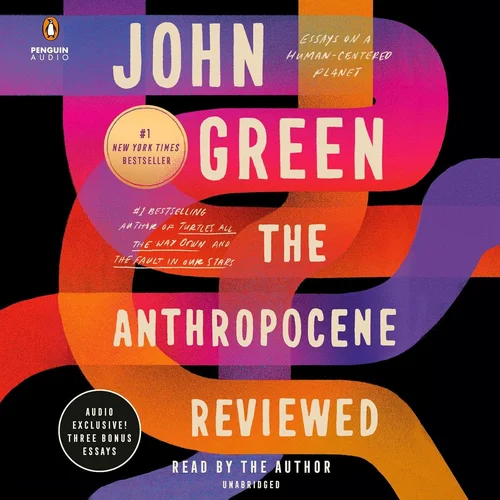
The Protagonist Who Rates the World
I will be honest. I thought this would be a gimmick. A popular YouTuber and novelist decides to write an essay collection where he gives stars to stuff. It sounds like a joke. But it is not a joke.
The protagonist here is not John Green, exactly. It is John Green in a specific mood. The mood of a man who has been through the kind of pain that does not go away. He writes about his obsessive-compulsive disorder. He writes about his anxiety. He writes about the fear that he is not enough, that the world is too much.
And his method, this strange system of rating things, becomes his way of surviving. He cannot fix the world. He cannot stop the climate from changing. He cannot bring back the people he has lost. But he can give the experience a score. He can say, this sunset in a hospital parking lot, the one I saw after my friend died, that was five stars.
The core conflict is between the smallness of the act and the enormity of the feeling. He reviews a famous painting. He reviews the disease that almost killed him. And somehow, in the gap between the rating and the thing itself, you find the truth.
I felt the suspense on every page. Not the kind of suspense where you wonder what happens next. The kind where you wonder if the author can hold it together. He almost does not. That is what makes it beautiful.
Theme and Imagery: The Light in the Cracks
The core theme is scale. How do you measure a human life against a glacier? How do you compare a single kiss to the age of the Earth? Green does not solve this problem. He just keeps asking the question.
The key imagery is the Anthropocene itself. The geological epoch shaped by humans. Green writes about parking lots and air conditioning and the internet, these things we made that now make us. And he finds a strange kind of grace in them.
He writes about the Harvey Weinstein conviction. He writes about the Indianapolis Colts. He writes about his own panic attacks. And the imagery keeps coming back to light. Light through a window. Light on a screen. Light that fades at the end of the day.
What I realized is that Green is not rating things to judge them. He is rating things to pay attention to them. The act of rating forces him to look closely. And looking closely is the only way to see the small beauties that most of us miss.
There is a limitation here. The book can feel repetitive. Five stars for this. Four stars for that. But I think that is the point. The repetition is the ritual. And rituals are how we make meaning.
Elevation: What You Take With You
This book will not change your life. It is not that kind of book. But it might change the way you look at your life. And that is something.
Green writes about his own struggle with mental health with a rawness that took my breath away. He does not pretend to be healed. He does not pretend to have answers. He just keeps showing up, keeps rating, keeps trying.
The book is for anyone who has ever felt small. Anyone who has ever wondered if their pain matters in a world that is always burning. Anyone who has ever looked at the sky and wanted to give it a score.
The limitation is real. Some essays are stronger than others. The ones about his personal life land harder than the ones about historical events. But that is okay. A collection of essays does not need to be perfect. It just needs to be honest.
What you take with you is a new way of paying attention. You start rating things in your head. The coffee in your hand. The way the light falls on the floor. The sound of someone you love breathing in the next room.
And maybe that is the point of the whole project. Not the rating itself. But the noticing.
I will leave you with this, from the essay on sunsets: “The sunsets of our youth are always the best, not because they were objectively better, but because we were young enough to pay attention.” That is the whole book in one sentence. The golden quote that breaks your heart and then puts it back together.
