My daughter’s question came out of nowhere. We were walking home from the park, her tiny hand sticky with melted granola bar, when she stopped dead on the sidewalk and pointed at a crack in the concrete. “Mama,” she said, “do ants ever get lost?” I had no idea. I still don’t. But I do remember the way she stood there, waiting, her whole body lit up with the need to know. That was four years ago. She’s nine now. Somewhere between timed multiplication drills and nightly reading logs, she stopped asking things like that. I didn’t think much of it until a teacher mentioned she was doing “fine”—not curious, just compliant. That night I sat up late, googling phrases like “my child doesn’t wonder anymore” and “how to bring back curiosity in kids.” I kept coming back to one idea: the real importance of curiosity in children education isn’t about getting smarter. It’s about staying alive to the world. And we’re losing it, one right answer at a time.
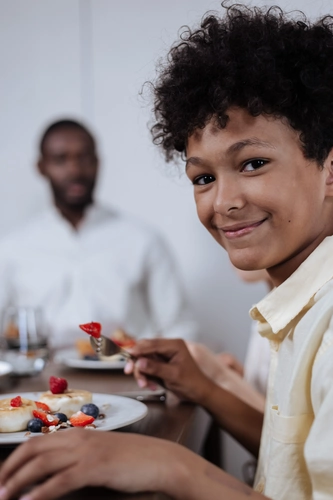
Why Does My Child Stop Asking Big Questions After Kindergarten?
Here’s something that still trips me up: I assumed curiosity would just keep growing. It didn’t. By second grade the constant “but why?” chatter had faded into “is this going to be on the test?” According to research from Harvard’s Elizabeth Bonawitz, curiosity starts to drop in school settings around fourth or fifth grade. Not because kids stop caring, but because the system nudges them toward compliance over inquiry. Bonawitz calls curiosity “mise en place for learning”—like prepping the kitchen before you cook. When children feel genuinely curious, their brains lock onto new information faster. Memory systems fire up. Reward pathways come online. They’re not just listening. They’re ready.
I first saw this happen with my son, who could recite every dinosaur fact on the planet at age four, but by six he’d shrug and say “I dunno” whenever I asked what he learned. The spark hadn’t died. It was just buried under worksheets and praise for staying quiet. The more I read, the more I understood: the importance of curiosity in children education isn’t just about grades. It’s the one thing that makes all other learning possible. Lose it, and you’re left with a kid who can memorize but never wonder. And wonder is what gets you through the hard stuff.
5 Ways to Nurture Your Child’s Natural Curiosity Right Now
Before I share the one habit that changed everything in our house, here are five things I tried that actually worked. None of them require flashcards, apps, or a teaching degree.
- Ask one real question at dinner. Not “how was school?” but something genuinely puzzling: “Why do you think cats purr?” or “If clouds are heavy with rain, why don’t they fall?” I learned to sit with the silence. Sometimes the thinking is more important than the answer.
- Let your child hear you say “I don’t know.” That’s harder than it sounds. But Bonawitz’s work shows that modeling intellectual humility—admitting gaps in your own knowledge—gives kids permission to be uncertain. Instead of hiding my confusion, I started saying, “Huh, I have no idea. Let’s figure it out together.”
- Make space for questions before instruction. When my daughter brought home a science worksheet about plants, we flipped the order. First, she asked ten questions about leaves. Some were ridiculous. Some made me pause. Then we did the worksheet. She remembered everything.
- Celebrate wrong guesses. I used to gently correct her mistakes. Now I say, “That’s such an interesting way to think about it. Tell me more.” Curiosity requires psychological safety. If they think they’ll be judged, they stop.
- Use what I call a pedagogical question. That’s just a fancy term for turning a fact into a puzzle. Instead of “Bees pollinate flowers,” try “Why do you think flowers need bees?” I hate jargon, but this one trick shifted the dynamic from telling to wondering.
How to Bring Back the “Why” Phase at Any Age
What I wish someone had told me sooner is that curiosity isn’t a fixed trait. It’s more like a muscle. Bonawitz’s team ran a study where one group of kids was encouraged to ask as many questions as they wanted during science lessons, while another group was told to listen carefully. After two weeks, the question-askers were not only more curious about new topics—they learned more actual content. The effect was strongest for children who started with lower readiness scores. That blew me away. The very kids we worry about most are the ones who benefit most from a question-friendly environment.
So I started a tiny experiment at home. Every night after bath, I’d sit with my son and say, “Tell me one thing you wondered about today but didn’t ask.” The first few nights, crickets. Then he mumbled, “I wondered if sharks sleep.” We looked it up. Turns out some sharks never stop swimming, so they have to keep moving while resting half their brain. He was hooked. The next night he had five questions. Not because I’d taught him anything. Because I’d given him back permission to not know. The importance of curiosity in children education hit me there—not as a theory, but as a lived thing. You can’t force it. But you can build a tiny room in your day where wondering is welcome.
The Question Collector Jar: A Family Ritual That Sticks
I’m going to give this a name because naming it made it real for us: The Question Collector Jar. It’s embarrassingly simple. We put a mason jar on the kitchen counter with a stack of blank sticky notes next to it. Anyone in the family—kid or adult—drops in a question they’re genuinely curious about. Once a week, usually Sunday breakfast, we pull out three and see what we can discover together. No screens. No lesson plans. Just a messy, joyful hunt for understanding.
Last week’s jar held: “Why is water wet?” (from my daughter), “How do birds know where to fly?” (from me), and “Do worms have bones?” (from my son, obviously). We spent twenty minutes on the worm question. We got it wrong twice before we realized they’re all muscle and fluid. I watched my kids light up as they figured it out, not because I delivered a neat answer but because we stumbled through the dark together. That’s the thing about curiosity. It spreads when you stop being the expert and become a co-learner.
How to Start Your Own Question Collector Jar
If your child is shy about speaking up, a written question feels safer. I keep the sticky notes small so the commitment feels low. At first I’d plant a few questions myself: “What would happen if the sun didn’t rise tomorrow?” Just to show that wondering isn’t graded. Within a couple of weeks, my kids started adding their own without prompting. Sometimes the questions are silly. Sometimes they break my brain. That’s the point. The jar turned our kitchen into a place where not knowing was completely fine.
What to Do When the Jar Gets Quiet
There were stretches where no one added anything. I didn’t push. Instead, I’d mention something I’d wondered about that day—maybe a strange bird call I heard, or a headline I didn’t understand. Letting them see my own curiosity, without forcing theirs, slowly brought the jar back to life. Bonawitz’s research backs this up: children who watch adults engage with their own uncertainty are much more likely to do the same. Modeling matters more than any lecture.
Tailoring the Jar to Different Ages
With my nine-year-old, the jar sparked debates about fairness and space. With my younger one, it was pure delight in weird animal facts. There’s no wrong age. The only rule is that questions belong to everyone. Even my partner, who initially rolled his eyes, started dropping in notes about car engines. It became this strange, wonderful family habit that reminded us all what it felt like to be five and unafraid of sounding foolish.
Frequently Asked Questions About the Importance of Curiosity in Children Education
What is the real importance of curiosity in children education?
Curiosity prepares the brain to learn. It activates memory, reward, and attention systems so that new information sticks. Children who stay curious perform better academically and are more resilient when facing challenges.
How can I help my child stay curious when school seems to discourage questions?
Set aside small daily moments—like the Question Collector Jar—where asking is the whole point. Show your own curiosity openly. Even ten minutes of undirected wondering can counterbalance a day full of compliance.
Does the importance of curiosity in children education apply to kids who struggle in school?
Absolutely. In fact, studies show that curious children from under-resourced backgrounds make larger gains in reading and math than their peers. Curiosity can act as a powerful equalizer.
Is my child really losing curiosity, or is it just hidden?
Often it’s hidden. A child who stops asking in class may still wonder deeply but has learned that questions aren’t welcome. Creating a safe space at home uncovers a lot of what’s been tucked away.
It’s been six months since we started the jar. The other morning, my daughter came downstairs with a note already written. It said: “Can a person be brave and scared at the same time?” I didn’t answer. I just smiled and dropped it in the jar. She’s ready. The world is big and broken and full of questions. And she’s still asking.
