I still remember the party where I first saw it happen. A friend of a friend, a guy named Leon, walked in. He wasn’t tall. Hair was a mess. Jacket looked like he’d borrowed it from a thrift store. Within twenty minutes, four different people were leaning toward him, laughing at something he said. I stood by the chips bowl, confused. What did they see?
Later, when I asked one of the women what made him so interesting, she shrugged and said, “I don’t know. He just makes you feel like you’re the only person in the room.” That was it. No six-pack. No jawline. Just a way of paying attention that felt rare.
Charisma, I’ve learned, doesn’t announce itself. It whispers, “You matter.” And that whisper is often louder than a pretty face. It’s why you’ll see couples where one person is strikingly good-looking and the other is, well, not, and yet you can’t imagine them apart. There’s a gravitational pull that goes beyond symmetry. Some people call it chemistry. But really, it’s just the skill of making someone feel seen.
Now, does this mean looks don’t count at all? Not exactly. More on that later.
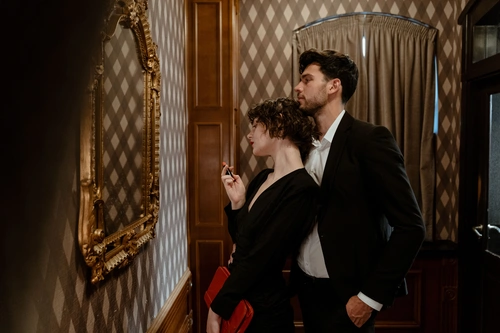
Quick Charisma Insights
If you’re wondering whether charm really matters, start here:
- Notice how the most magnetic person in the room rarely relies on looks alone.
- Charisma works best in repeated, low-stakes settings like classes, clubs, or friend circles.
- Warmth and genuine curiosity create attraction faster than pickup lines ever will.
- Even introverts can learn the tiny habits that make others feel special.
Why Do We Fall for Charisma Even When Looks Are Average?
Here’s where it gets tricky. Charisma needs a door to walk through. If you’re a total stranger at a loud bar trying to get someone’s attention, your looks will probably speak first. That’s not shallow. It’s just how quick decisions work. But the moment there’s a real conversation, the balance shifts.
I used to think I needed to be wittier, more impressive. Then a friend taught me something small. “Stop trying to be interesting,” he said. “Start being interested.” He’d ask questions that weren’t about jobs or weather. “What’s the best thing that’s happened to you this week?” Or “If you could instantly master one skill, what would it be?” The shift was immediate. People opened up. And when they did, they associated that feeling of being heard with him. That’s charisma doing its quiet work.
The context matters a lot. In settings where you meet the same people repeatedly, like a yoga class or a co-working space, charisma has time to build. Short, warm exchanges stack up. A smile here, a remembered detail there. After a few weeks, that person you thought was just okay-looking becomes the one you’re excited to see. Meanwhile, the magazine-cover stranger at the club has already faded.
So, yes, charisma can absolutely outweigh looks, but it needs a chance to be seen. And sometimes, you have to create that chance by showing up again and again.
The “Warm Glow” Ritual: A Simple Way to Use Charisma Daily
I stumbled onto this almost by accident. After a string of awkward first dates, I decided to stop preparing conversation topics and just focus on making the other person feel comfortable. I’d walk in, take a breath, and in the first few minutes, I’d offer a genuine, specific compliment. Not about appearance, but about something they chose. “I love those earrings. They’ve got a real storybook feel.” Or “That book you’re carrying, I’ve been curious about that author. Any good?”
Then I’d ask a follow-up and listen without planning my reply. Four minutes of this, and the whole tone changed. I started calling it the “Warm Glow” ritual because it felt like switching on a lamp in a dim room. The date felt less like an interview and more like two people who’d already met.
Here’s the script I used, and you can adapt it:
- Specific compliment (avoid “you’re so pretty”)
- One open-ended question related to the moment
- Listen and respond with, “Tell me more about that.”
- Share a tiny, vulnerable detail about yourself before asking another question. Balance the conversation.
This ritual doesn’t require being loud or funny. It’s low-risk and works in almost any setting. If you’re naturally reserved, don’t worry. Charisma isn’t about being the life of the party. It’s about creating a pocket of warmth around you. That’s something anyone can learn.
Where Charisma Shines vs. Where Looks Dominate
I’ve seen this play out in different settings, so I put together a quick comparison based on my own observations and what friends have shared.
| Setting | Charisma Advantage | Looks Advantage |
|---|---|---|
| House party through friends | Very high. You have time and social proof. Someone vouches for you. | Moderate. Initial glance matters but fades fast. |
| Loud nightclub / bar | Low unless you can lead with energy. Hard to showcase listening skills. | High in the first seconds. Lasts only if conversation follows. |
| Weekly class or hobby group | Extremely high. Repeated exposure lets small gestures build. | Low. Familiarity often softens evaluation of looks. |
| Online dating app | Moderate. Witty bio and first messages can intrigue. | High initially since swipe is visual. But messaging shifts the balance. |
| Coffee shop regular | Very high. Baristas and regulars notice warmth over time. | Low. Daily presence normalizes appearance. |
This isn’t science. It’s just pattern recognition from years of watching how connections form. If you’re in a setting where charm can’t get its foot in the door, don’t blame yourself. Change the setting.
How to Build Charisma When You’re Not Naturally Outgoing
I used to believe charisma was a gift you were born with. Then I spent a summer forcing myself to talk to strangers in low-stakes places like bookstores or farmers’ markets. I wasn’t trying to date them. I just practiced starting conversations and seeing where they went.
A few things happened:
- Eye contact became easier. I’d hold it a second longer than felt natural, and people seemed to lean in.
- I learned to mirror body language without being creepy. If someone leaned against a wall, I’d shift my weight similarly. It signaled we were on the same wavelength.
- Silence stopped scaring me. I’d count to three before filling a pause. Often, the other person would share something deeper.
I also kept a tiny note on my phone of things people mentioned. A coworker’s dog’s name, a barista’s upcoming trip. A week later, I’d ask, “How was that trip to Maine?” They’d light up. That remembered detail is cheap charisma, and it costs you nothing.
If you’re dating, try this: before a date, spend five minutes doing something that makes you feel engaged with life. Play a song you love. Call a friend who makes you laugh. Walk into the date already feeling good, not hoping the other person will provide that mood. That inner hum is magnetic.
FAQ: How Charisma Affects Attraction
Q: Does charisma affect attraction more than physical appearance?
A: In many situations that allow conversation, yes. Charm and warmth can override average looks, but physical attraction often starts the interaction. Charisma seals the deal.
Q: Can someone learn charisma if they’re naturally shy?
A: Absolutely. Quiet charisma is a real thing. It’s built on listening, remembering details, and making others feel valued, not on being loud.
Q: How does charisma affect attraction in online dating?
A: In text chats, charisma shows up as playful, curious messaging. While the profile photo gets the swipe, a charming first message often leads to a date far more effectively than a generic “hey.”
Q: Is charisma just confidence in disguise?
A: Not exactly. Confidence is feeling sure of yourself. Charisma is making others feel sure of themselves around you. They overlap, but charisma has a more generous, outward focus.
Q: Can charisma make up for a complete lack of physical attraction?
A: This is tricky. Some baseline attraction usually needs to exist. But many people have found that someone who wasn’t initially their “type” became deeply attractive once they experienced their personality. Chemistry is complex.
One Last Thing
I think back to that party, the one with Leon in the ugly jacket. By the end of the night, no one remembered what he looked like. They only remembered how he made them feel. And isn’t that what we all want? To be remembered warmly? Looks might get a glance, but charisma gets a seat at the table you never want to leave. It’s not magic. It’s just the courage to be fully present with another person. And that’s something every one of us can offer.
References
- Cabane, O. F. (2012). The Charisma Myth: How Anyone Can Master the Art and Science of Personal Magnetism. Portfolio.
- Cuddy, A. (2015). Presence: Bringing Your Boldest Self to Your Biggest Challenges. Little, Brown and Company.
- (2018). The power of listening in helping people change. Harvard Business Review.
