I stood in the snack aisle for maybe eight minutes yesterday. Not debating a mortgage. Not picking a school for my kid. Just staring at two brands of granola bars like they held the secret to my entire future. My hand hovered. My throat got tight. And then I just left without buying anything because I couldn’t stand how stupid the whole thing felt. Overthinking simple decisions had crept into my life so quietly I didn’t notice until I was standing in my own kitchen, staring at an unopened text message, trying to decide if my reply should end with an exclamation point or a period. Like either one would somehow ruin everything.
Quick Overthinking Fix Today
If you’re stuck on a small choice, try these:
- Set a timer for 2 minutes the second you notice you’re stuck.
- Flip a coin — not to decide, but to hear what your gut yells back.
- Whisper to yourself: “Done beats perfect every single time.”
- Ask what you’d pick if nobody was watching or judging.
- Stand up and shake your hands hard, like you’re flicking water off.

Why Does My Brain Overthink Simple Decisions Until I Can’t Choose?
It starts small. You’re picking a movie on Netflix. Then 40 minutes pass and you’ve read 12 synopses and watched 18 trailers and now you’re too tired to watch anything so you scroll Instagram instead. Overthinking simple decisions isn’t really about the granola bar or the movie. It’s about the strange fear that one wrong pick will set off a chain reaction you can’t control. My mind opens 20 browser tabs for something that only needed one. Each “what if” feels heavier than the last.
I realized something the other day while trying to decide whether to call my mom now or after dinner. The stakes were nonexistent. But my body was treating it like a threat. Heart rate up. Shoulders tight. The same reaction I’d have if someone yelled my name in a crowd. A friend once told me, “Overthinking is just your brain trying to keep you safe from a danger that isn’t there.” And that landed hard. I wasn’t indecisive. I was scared. Scared of getting it wrong and feeling that little sting of regret later. The problem is, avoiding decisions doesn’t protect you. It just fills your day with a bunch of open loops that leave you exhausted and stuck.
There’s a quiet truth buried in all this. There is no perfect decision. A comment I read put it simply: you’re looking for the choice with the greatest potential outcome. But you won’t know that outcome until after you choose. So all the mental scanning in the world won’t give you certainty. It’ll just give you a headache.
How Can I Stop Overthinking Simple Decisions and Actually Move Forward?
Last month I tried an experiment. Every time I caught myself frozen, I gave myself permission to make a “bad” decision on purpose. I’d pick the first option I saw and say out loud, “I’m willing to be wrong about this.” What shocked me was how rarely being wrong even mattered. I chose the wrong spaghetti sauce once. The meal was fine. Nobody noticed. My brain had been drilling for disaster and all we got was a slightly tangier pasta. Honestly, it was still good.
The coin trick changed things too. You don’t flip a coin to let fate decide. You flip it and then pay attention to the split second of emotion before you see the result. That tiny flicker—relief or disappointment—that’s your actual answer. One person described it as realizing how he really felt and going that way. I tried it with lunch today. Tails was salad, heads was leftover pizza. The coin landed tails. My stomach sank a little. So I ate the pizza. The whole decision took ten seconds.
Another thing that helps: ask a friend to just choose for you. Not because they know better, but because their random choice snaps you out of the loop. You’ll either go with it or feel a sudden clarity. Either way, you’re unstuck. When I’m really tangled up, I ask myself, “Will this matter in a week? A month? When I’m 80?” The answer is almost always no. That’s embarrassing, sure. But it’s also freeing.
A Simple Ritual for When You’re Stuck
I made myself a tiny ritual because my brain needs a container. When I notice I’m overthinking simple decisions, I do this:
- Say the words, “I’m stuck,” out loud. Just naming it helps.
- Set a two-minute timer on my phone. No more than that.
- Ask my gut, not my head. I literally put a hand on my stomach.
- Flip a coin or pick a number between 1 and 2.
- Notice the immediate feeling. If relief, go. If dread, pick the other one.
- Take one physical action. Grab the box, type the word, hit send.
The timer part is key. Without it, I’ll spin forever. The ritual works because it gives my anxiety a beginning and an end. It doesn’t ask my brain to stop worrying. It just says, “You have two minutes. Then we’re moving.” I’ve used this for choosing what to say in a difficult text, deciding whether to go to a party, even picking a new toothbrush. It sounds silly. But silly is a lot better than paralyzed.
When Your Brain Keeps Listing Every Possible Future
Mine does this thing where it writes 17 different scripts for a conversation before I’ve even replied. “If I say this, they’ll think that. If I say that, they’ll feel this.” And then I say nothing and the silence gets weird and now there’s actually a problem. I’ve started interrupting the script with one blunt question: “What would I do if I weren’t afraid of being misunderstood?” That question cuts through the noise. It doesn’t solve everything, but it gets me back to what I actually wanted to say, before fear took over.
The Relief of Deciding to Be “Good Enough”
Perfectionism is the engine of overthinking simple decisions. I realized I wasn’t trying to make a good choice. I was trying to make a choice that would never, ever lead to discomfort. That’s impossible. So I started aiming for “good enough” instead. I’d tell myself, “The goal isn’t the best decision. It’s a decision that doesn’t hurt anyone and gets me to the next moment.” That lower bar gave me so much room to breathe. One mom I talked to said she now picks her battles by asking, “Is anyone bleeding?” If no, she picks fast. That’s the energy I need.
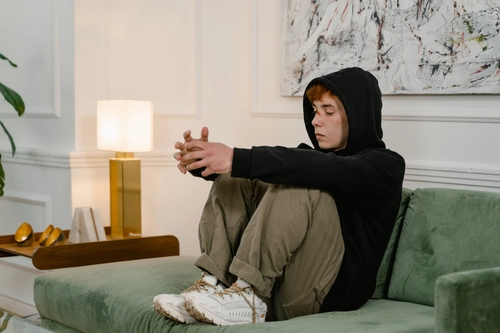
FAQ: Overthinking Simple Decisions
Q: Why do I overthink small decisions so much?
A: Overthinking small decisions often comes from a fear of making the “wrong” choice and experiencing regret. Your brain treats low-stakes choices like high-stakes threats. The antidote is reminding yourself that most small decisions have little lasting impact.
Q: How do I stop overthinking simple decisions quickly?
A: Try the 2-minute gut check. Set a timer, put a hand on your stomach, and pick something. Done beats perfect. The timer forces you to stop analyzing and start acting.
Q: Is overthinking simple decisions a sign of anxiety?
A: It can be. Overthinking is often a symptom of generalized anxiety or perfectionism. But many people without a diagnosis experience it. If it’s interfering with daily life, it’s worth exploring with a professional.
Q: What if I make a decision and regret it?
A: That’s okay. Regret is uncomfortable but temporary. Most small decisions don’t have lasting consequences. And you can learn from the ones that do. The goal is to choose, not to choose perfectly.
Q: How do I know if I’m overthinking or just being careful?
A: Careful feels like gathering information and then deciding. Overthinking feels like gathering information and then being unable to decide. If you have enough facts but still feel stuck, you’re overthinking.
One Last Thing
I went back to the grocery store this morning. Pasta aisle again. Same two brands. I felt the familiar freeze creeping in. Then I laughed, shook my head, and grabbed the one with the prettier box. Not because it was better. Because it was done. And it turns out done really does taste a whole lot better than perfect ever could.
References
- Schwartz, B. (2004). The Paradox of Choice: Why More Is Less. HarperCollins.
- Rock, D. (2011, April 15). The neuroscience of decision making. Psychology Today. Retrieved from psychologytoday.com
- Morin, A. (2019, September 24). 5 ways to stop overthinking every decision. Inc. Retrieved from inc.com
