You have been avoiding this conversation for weeks. Maybe months. You know it needs to happen. But every time you get close, you stop. You tell yourself it is not the right time. You tell yourself you will do it tomorrow. And tomorrow never comes.
We all do this. We avoid the conversations that matter because we are afraid of how they will go. The problem is, avoidance does not make them go away. It just makes them bigger. The person becomes more intimidating. The problem becomes more entrenched. The gap between you grows wider.
The three books below will change how you show up in these moments. One gives you the actual words to say. One gives you the courage to stop running. One shows you how to talk about the things you thought were impossible to discuss.
Say It Right Every Time by Miles Carter
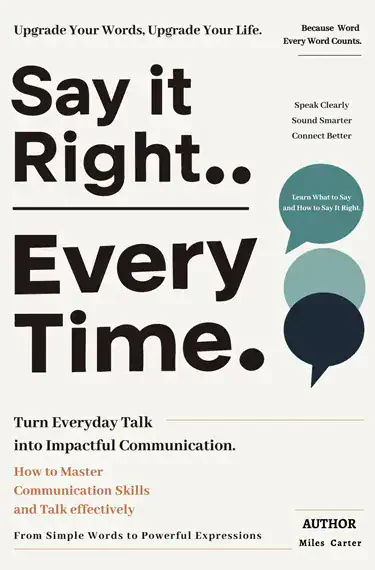
You know that moment when you have something important to say, and you have rehearsed it in your head a dozen times. But when you open your mouth, something else comes out. You sound defensive when you meant to sound firm. You say something that makes the situation worse instead of better.
This book solves the most immediate problem in difficult conversations: what do you actually say?
Carter does not give you vague advice like “stay calm” or “be empathetic.” He gives you specific language patterns that work when your nerves are working against you. The book is built around side-by-side comparisons that show you how the same idea lands completely differently depending on how you phrase it.
Take a common scenario. A colleague just dismissed your idea in front of everyone. Your instinct is to defend yourself. But defensive reactions make you look weak. Carter shows you what to say instead. He gives you the exact words that shift the conversation from conflict to collaboration.
The book covers job interviews, salary negotiations, difficult conversations with partners, and team disagreements. It does not ask you to change who you are. It asks you to change what you say.
This is the book for people who know what they want to say but keep saying it wrong.
Fierce Conversations by Susan Scott
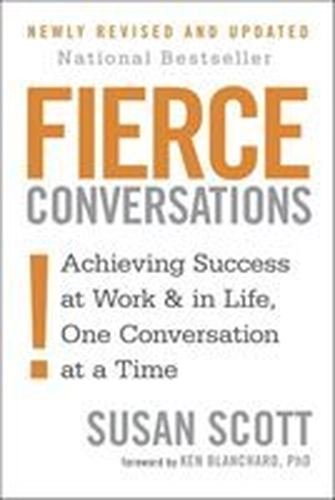
Some people avoid difficult conversations because they do not know what to say. Others avoid them for a different reason: they would rather pretend the problem does not exist.
Scott’s book is for the second group. She wrote it for people who spend their lives sidestepping the conversations that matter. Her central argument hits hard: the quality of your life is directly related to the quality of the conversations you are willing to have. If you avoid the hard ones, you limit everything else.
This is not a book about communication techniques. It is a book about courage. Scott writes about the cost of avoidance—how not having the conversation slowly erodes relationships, trust, and results.
She tells the story of a leader who let a performance problem slide for eighteen months. By the time he finally addressed it, the employee had developed deep resentment, the team had lost respect for their manager, and the situation was ten times harder to fix than it would have been at the start.
Scott does not pretend difficult conversations are easy. She tells you they are hard, and you should have them anyway. And then she gives you a framework for actually doing it.
If you are tired of letting things slide, this book will give you the push you need.
How to Have Impossible Conversations by Peter Boghossian and James Lindsay
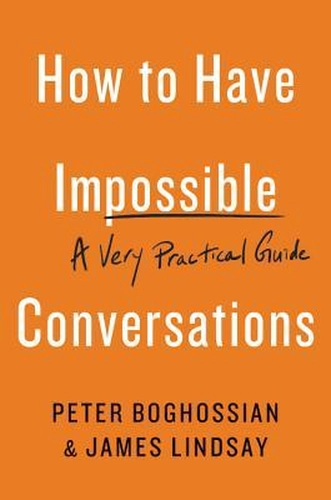
The first two books are about difficult conversations. This one is about impossible conversations.
Some conversations are not just difficult. They seem impossible. You disagree on fundamental values. You do not share the same facts. You do not even agree on what counts as evidence. Politics, religion, moral issues. These are the conversations where most people either avoid them entirely or end up shouting at each other.
Boghossian and Lindsay wrote this book for exactly these moments. They are both philosophers, and their approach is about how to talk to people when you disagree on almost everything.
The book is built around specific techniques. How to listen without agreeing. How to ask questions that open up space instead of closing it down. How to identify the assumptions underneath someone’s position without attacking them. How to stay curious even when you are convinced the other person is wrong.
They give a concrete example: in a tense conversation about politics, instead of saying “you are wrong,” you say “help me understand how you arrived at that view.” That one shift changes the entire dynamic. You go from adversary to someone who is genuinely curious. And when people feel heard, they become far more willing to listen.
This is not an easy read. The techniques require practice, patience, and letting go of the need to win. But for the conversations that really matter, this book offers something essential.
The only way to lose a difficult conversation is to avoid it. The conversation does not go away. It just gets bigger. These books will not make the conversations easy. They will make them possible.
If you need the right words in the moment, start with Carter. If you need the courage to stop running, start with Scott. If the conversation is about something you thought was impossible to discuss, Boghossian and Lindsay will show you how.
Pick the one that matches where you are stuck. Then pick up the next when you are ready. Each one covers a different piece of the puzzle.
