You know you need to bring something up with your manager, but you keep putting it off because you do not want to sound ungrateful. A friend has crossed a line, yet you tell yourself it is easier to let it go than risk an awkward conversation. At home, a small disagreement turns into an argument because neither person feels heard. You may know what you want to say, but finding the right words under pressure is another challenge entirely.
Difficult conversations are rarely difficult just because of the topic. They can bring up fear of rejection, frustration, guilt, or the worry that one wrong sentence will damage a relationship. Some people avoid the discussion until resentment builds; others speak too sharply and regret it afterward. Reading books on communication can help you prepare for these moments, express your needs more clearly, and respond to disagreement without losing sight of what you want to achieve.
1. Difficult Conversations by Douglas Stone, Bruce Patton, and Sheila Heen
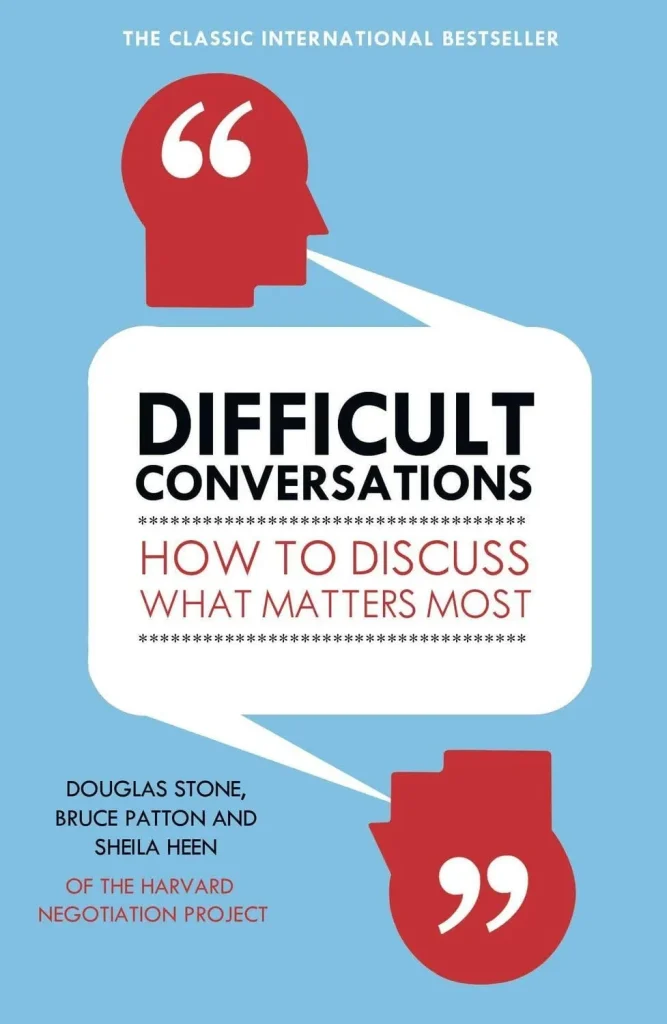
A conversation can go off track even when both people believe they have a reasonable point. You raise a concern about a missed deadline, for example, and the other person hears an accusation about their character. Soon, the discussion is no longer about what happened; it becomes a debate over who is right and who is to blame.
Difficult Conversations explores why these exchanges become emotionally complicated and how people can approach them more productively. The authors break difficult discussions into several layers, including disagreements about what happened, the feelings involved, and what the situation means to each person’s identity. This framework helps readers see why focusing only on the facts may not resolve a conflict when emotions and assumptions are also at work.
The book encourages readers to approach conversations with curiosity rather than treating them as contests to win. Instead of assuming you already understand the other person’s intentions, you can ask questions, explain your own perspective, and acknowledge where your interpretations differ. This makes it a useful starting point for workplace disagreements, family tension, and conversations that have been avoided for too long.
Best for: Readers who want to understand why difficult conversations go wrong and learn a more constructive way to approach conflict.
2. Say It Right Every Time by Miles Carter
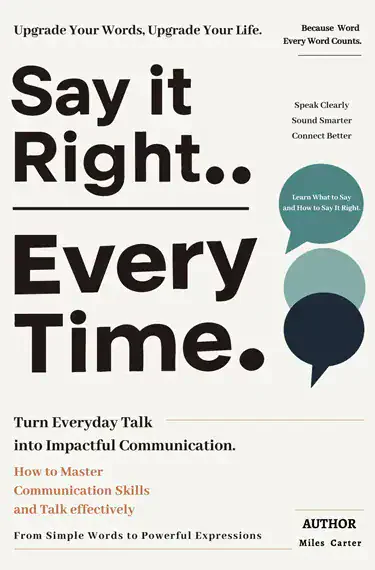
Sometimes you understand the problem perfectly well but cannot find a way to explain it without sounding aggressive, apologetic, or unclear. You might soften a reasonable request until the other person misses the point, or become defensive when someone challenges your opinion. Say It Right Every Time by Miles Carter focuses on practical communication skills for situations where your words need to be both clear and considerate.
The book covers mature expression and calm responses, including ways to set boundaries, make requests, express disagreement, communicate ideas, and respond under pressure. It also addresses common difficulties such as people-pleasing and struggling to speak up when a conversation becomes uncomfortable. With 115 communication scripts and 15 frameworks, it offers readers examples and structures they can adapt to real interactions instead of relying on vague advice to simply communicate better.
These skills are particularly useful when you need to refuse a request, address an uncomfortable issue, or disagree without making the other person feel dismissed. The aim is not to memorize a perfect line for every situation. It is to develop a more reliable way to organize your thoughts, choose appropriate language, and remain composed when the conversation does not go as planned.

Say it Right..Every Time.
Miles CarterPractical communication tools for the moments that matter — say what you mean, calmly and confidently.
Best for: Readers who want practical wording and repeatable frameworks for setting boundaries, expressing disagreement, and responding calmly in challenging conversations.
3. Crucial Conversations by Kerry Patterson, Joseph Grenny, Ron McMillan, Al Switzler, and Emily Gregory
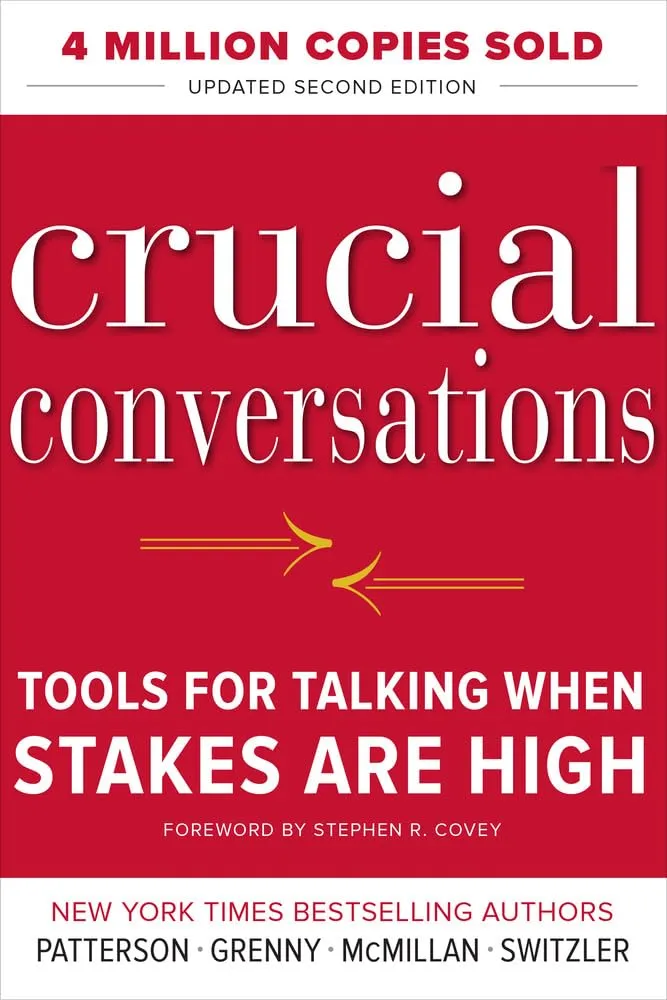
Some conversations become especially difficult because the stakes are high, opinions differ, and emotions are running strong. You may need to address a teammate who repeatedly misses commitments, discuss a sensitive issue with a family member, or explain a decision that others are likely to challenge. In these situations, staying silent can create problems, but speaking without considering your approach can make them worse.
Crucial Conversations focuses on handling high-stakes discussions in which people have opposing views or strong feelings. It explores how to create conditions where people can speak openly, listen to different perspectives, and keep the conversation focused on the issue rather than personal attacks. The book also emphasizes noticing when a discussion becomes unsafe or unproductive and adjusting your approach before the exchange deteriorates further.
This is a strong option for readers who struggle to stay constructive when a disagreement matters a great deal. Its concepts can be applied in professional settings, close relationships, and other situations where avoiding the subject is no longer a realistic solution.
Best for: Readers who need to handle high-pressure discussions, serious disagreements, or sensitive topics without escalating conflict.
4. Nonviolent Communication by Marshall B. Rosenberg
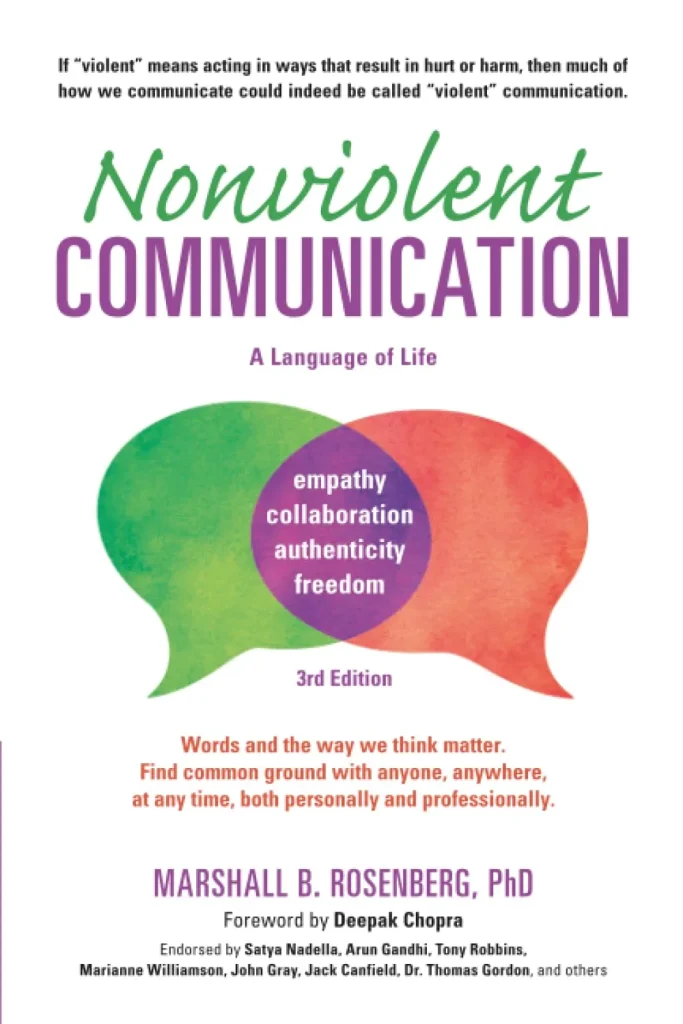
Have you ever started a conversation by saying, “You never listen to me,” only to find the other person immediately defending themselves? Even when your frustration is justified, broad accusations can make it harder for someone to understand the specific issue you want to address. Nonviolent Communication offers a different way to express concerns by paying attention to observations, feelings, needs, and requests.
Marshall B. Rosenberg’s approach encourages readers to separate what they have observed from the judgments they have attached to it. Rather than describing someone as inconsiderate, for example, you can explain what happened, how it affected you, and what you would like to change. This does not mean avoiding honest feedback or pretending that every disagreement can be solved easily. It means communicating the problem in a way that gives the other person a clearer opportunity to understand and respond.
The method can be especially useful in conversations where both people feel hurt or misunderstood. By identifying the needs beneath a disagreement, you may be able to move beyond arguing about whose feelings are justified and toward a more specific discussion about what needs to happen next.
Best for: Readers who want to express difficult feelings, make clear requests, and reduce blame in personal or professional conversations.
5. Thanks for the Feedback by Douglas Stone and Sheila Heen
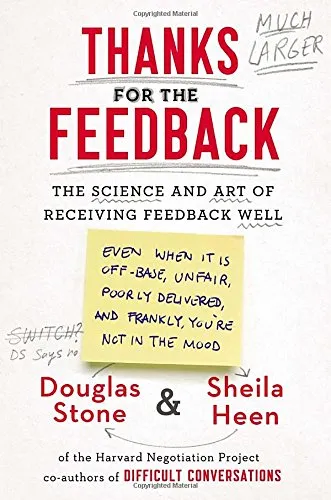
Not every difficult conversation starts with something you need to say. Sometimes, someone gives you criticism that feels unfair, questions your decisions, or points out a mistake in a way that makes you defensive. You may react immediately, spend hours thinking about the comment, or dismiss useful information because the delivery upset you.
Thanks for the Feedback explores how people receive and respond to feedback, including why even well-intended comments can be difficult to hear. The authors examine different triggers that can make feedback feel threatening and encourage readers to separate the content of a message from the way it is delivered. This can help you consider whether there is something useful to learn without automatically agreeing with every criticism.
The book is particularly relevant when difficult conversations involve performance reviews, disagreements about expectations, or recurring tension with someone whose opinion matters to you. Learning to listen without immediately becoming defensive can make it easier to ask clarifying questions, identify misunderstandings, and decide what feedback is worth acting on.
Best for: Readers who find criticism difficult to handle and want to respond thoughtfully rather than defensively.
How to Choose the Right Book for Difficult Conversations
The most useful book depends on the kind of conversation you find hardest. If you tend to get caught in misunderstandings, Difficult Conversations can help you examine the different perspectives involved. If you struggle to find the right words or speak up for yourself, Say It Right Every Time offers practical scripts and frameworks to help you communicate more clearly.
Here is a quick way to narrow down your choice:
- You avoid raising problems because you fear conflict: Start with Difficult Conversations.
- You struggle to say no or express disagreement: Try Say It Right Every Time.
- You need to address high-stakes issues at work or home: Crucial Conversations is a strong fit.
- Your discussions often turn into blame or defensiveness: Consider Nonviolent Communication.
- You find it hard to receive criticism calmly: Thanks for the Feedback may be the most relevant choice.
Better Conversations Start Before You Speak
You do not need to find perfect words or guarantee that the other person will agree with you. A more useful goal is to understand what you want to communicate, separate the issue from personal attacks, and leave room for the other person’s perspective. Before a difficult conversation, identify the main point you need to raise and what outcome you hope to reach. During the discussion, ask questions when something is unclear and pause if emotions make it difficult to listen.
If your biggest challenge is knowing how to phrase a request, express a boundary, or respond when someone pushes back, choose a book that gives you practical language to work with. Say It Right Every Time by Miles Carter is one option to consider for its communication scripts and frameworks. With practice, difficult conversations can become less about finding a flawless response and more about expressing yourself clearly, listening carefully, and dealing with disagreements in a way you can stand behind.
Did this article help you see things differently? Our books turn helpful ideas into practical tools you can return to anytime.


Imagine The Other Half
$24.99

