Daniel can spend an entire evening trying to decide whether a conversation went well. He remembers something he said at lunch, wonders whether his coworker’s response sounded unusually cold, and mentally rewrites what he could have said instead. By bedtime, he has replayed the exchange so many times that he feels exhausted, even though nothing new has happened and there is nothing left to do about it.

For chronic worriers and overthinkers, the subject changes but the pattern often stays the same. One day it is a conversation, the next it is a work deadline, a decision, or something that might happen next week. Thinking feels like a way to regain control, but the more time you spend searching for certainty, the harder it can become to recognize when you have already thought enough.
The right book depends on what keeps drawing you back into the same mental loop. Some focus on understanding the voice in your head, others offer practical tools for managing worry, and some examine the emotional habits that keep anxiety and self-doubt going.
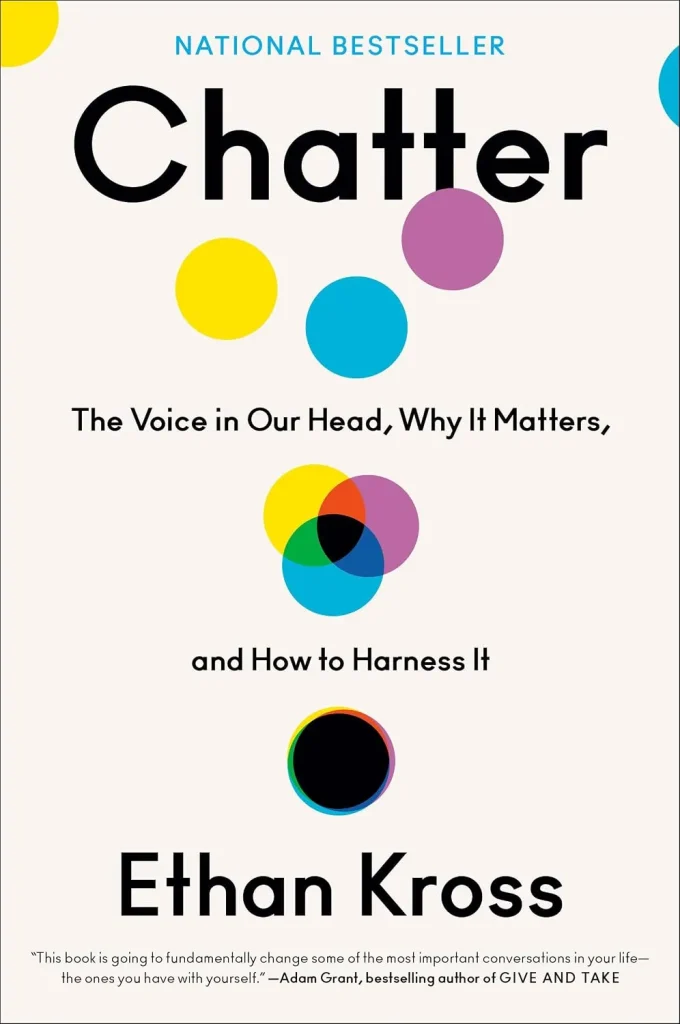
1. Chatter by Ethan Kross
Best for understanding repetitive inner dialogue
Ethan Kross’s Chatter explores the internal conversations people have with themselves and why those conversations can sometimes become more damaging than helpful. Drawing on psychological and behavioral research, Kross examines how repetitive self-talk affects emotions, decision-making, relationships, and performance under pressure.
The book is particularly useful for people who mentally replay conversations, criticize themselves after mistakes, or repeatedly imagine how a situation might go wrong. It explores ways to create psychological distance from difficult thoughts and use language, relationships, and environmental changes to shift perspective.
Rather than telling readers to simply stop thinking so much, Chatter helps explain why the mind gets stuck and offers practical ways to change the relationship with that inner voice.
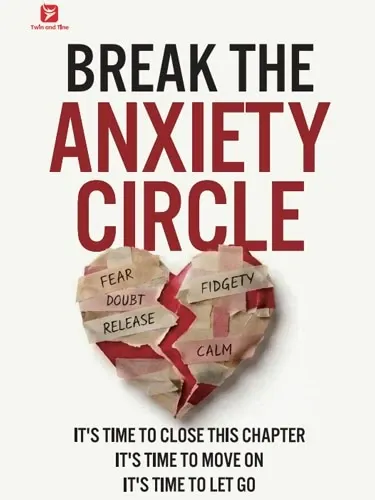
2. Break the Anxiety Circle by Miles Carter
Best for overthinking, self-doubt, and recurring worry patterns
Break the Anxiety Circle focuses on the cycle that develops when anxiety, self-doubt, and repetitive thinking keep feeding one another. A small mistake can lead to self-criticism, which triggers more analysis, which then creates additional worries about what other people think or what might happen next.
The book explores overthinking, decision-making, fear of judgment, people-pleasing, emotional regulation, and the difficulty of letting go of thoughts about the past. Instead of treating every worry as an isolated problem, it encourages readers to recognize the pattern behind recurring mental distress.

Break the Anxiety Circle
Miles CarterA mental reset for people trapped in the overthinking loop. Understand why your mind won’t stop racing — and how to break free from anxiety, people-pleasing, and emotional exhaustion.
This makes it a relevant choice for readers who are tired of understanding their problems intellectually but still find themselves returning to the same thoughts. Its focus is on recognizing the cycle, understanding what keeps it going, and finding ways to respond differently instead of repeatedly revisiting the same concerns.
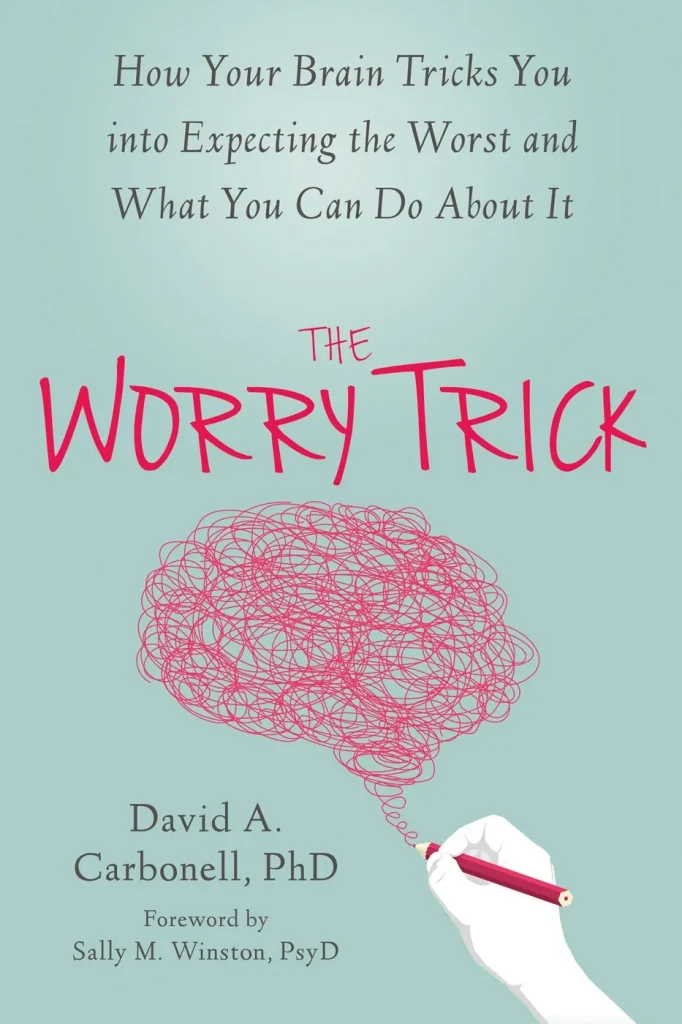
3. The Worry Trick by David A. Carbonell
Best for people who expect the worst
In The Worry Trick, psychologist David A. Carbonell examines how anxiety can convince people that worrying is necessary for staying safe. When an uncertain situation appears, the mind starts generating possible dangers, and the resulting discomfort can make those possibilities feel more urgent or more likely than they really are.
The book takes a practical approach to understanding this process. It explores how attempts to eliminate worry or achieve complete certainty can keep the cycle alive, and it introduces ways to respond differently when anxious thoughts appear.
This is especially relevant for people who continually prepare for worst-case scenarios or believe they must resolve every uncertainty before they can relax. The book offers a different perspective on worry without requiring readers to prove that every feared outcome is impossible.
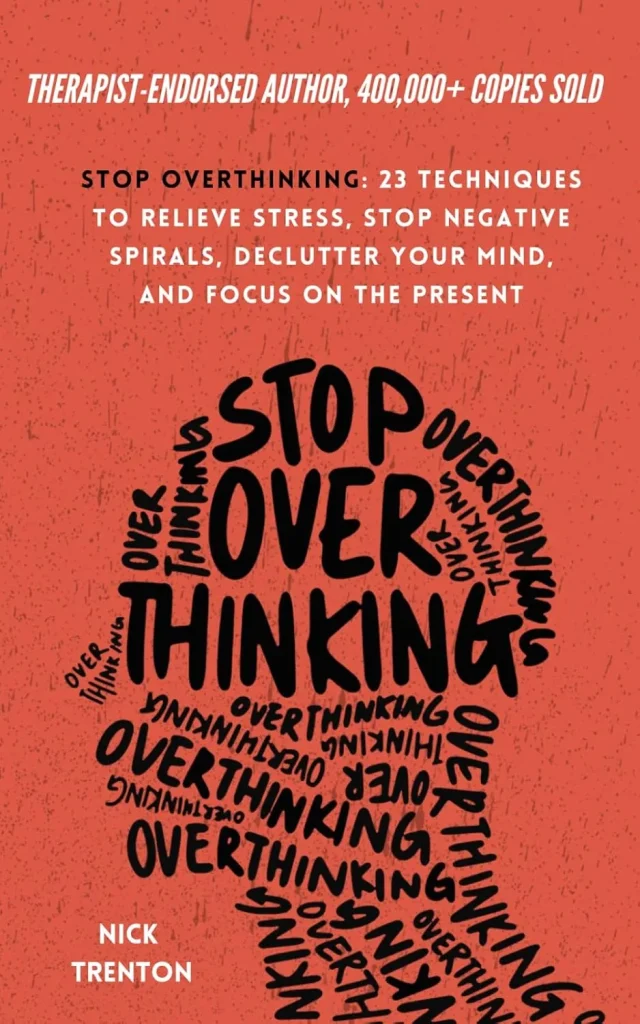
4. Stop Overthinking by Nick Trenton
Best for practical techniques and everyday mental habits
Nick Trenton’s Stop Overthinking: 23 Techniques to Relieve Stress, Stop Negative Spirals, Declutter Your Mind, and Focus on the Present takes a more direct, technique-oriented approach. It addresses patterns such as repetitive analysis, negative thinking, stress, and the habit of spending too much mental energy on situations that may not deserve it.
The book is suited to readers who prefer practical exercises and manageable strategies over a long theoretical explanation of why overthinking happens. Its focus on everyday habits makes it relevant to people who want to change how they approach decisions, uncertainty, and recurring negative thoughts.
If your main frustration is knowing that you overthink but not knowing what to do when it starts, this book offers a straightforward starting point for experimenting with different responses.
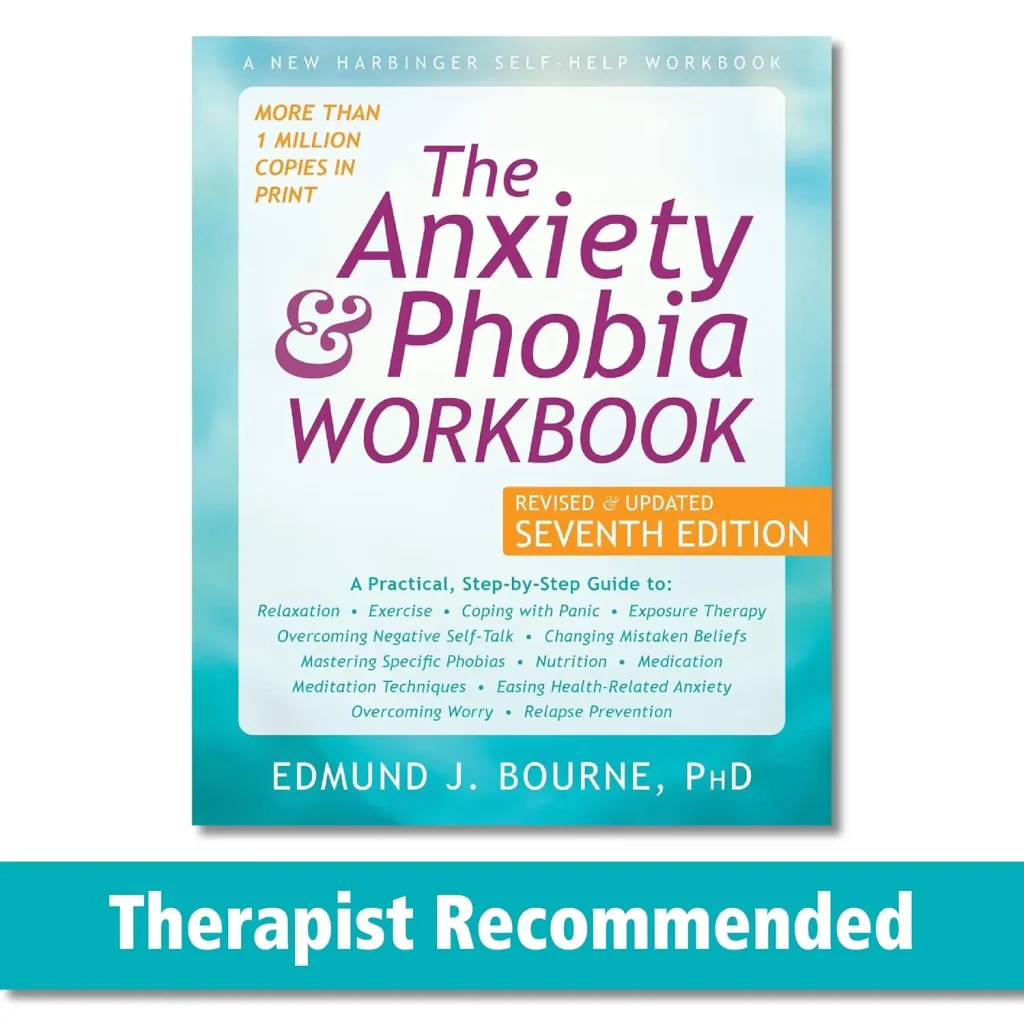
5. The Anxiety and Phobia Workbook by Edmund J. Bourne
Best for a structured, workbook-based approach to anxiety
Edmund J. Bourne’s The Anxiety and Phobia Workbook is a more comprehensive resource for people who want to explore anxiety management in a structured way. Its exercises and practical material cover topics such as anxious thinking, relaxation, negative self-talk, and strategies for coping with anxiety-related difficulties.
Unlike books that mainly explore the psychology of worry, this workbook provides a range of activities readers can work through at their own pace. That can be helpful for people who prefer to write things down, practice specific techniques, and work through an organized program rather than simply reading about their habits.
Its scope is broader than ordinary overthinking, making it a useful option for readers whose worries affect several areas of daily life. Those experiencing persistent or overwhelming anxiety may also benefit from discussing their symptoms and available treatment options with a qualified mental health professional.
Which Kind of Overthinking Is Wearing You Out?
Chronic worry does not always look like sitting alone and thinking about the same thing for hours. Sometimes it appears as constant checking, repeated reassurance-seeking, difficulty making decisions, or a feeling that you need to prepare for every possible outcome before you can move forward.
It can help to identify the pattern you experience most often:
- You replay conversations and criticize yourself afterward. Chatter offers a useful framework for understanding inner dialogue.
- You keep worrying about what could go wrong. The Worry Trick focuses on the relationship between worry and uncertainty.
- You understand your patterns but struggle to interrupt them. Break the Anxiety Circle explores how anxiety, self-doubt, and repetitive thinking reinforce one another.
- You want practical techniques to try. Stop Overthinking offers an accessible, technique-oriented approach.
- You prefer structured exercises. The Anxiety and Phobia Workbook provides a more comprehensive workbook format.
These approaches overlap, but they are not identical. Choosing a book that matches your own pattern is often more useful than choosing one simply because its title promises to stop overthinking.
Thinking Less Is Not the Same as Caring Less
You may keep revisiting a problem because you care about making the right decision, maintaining a relationship, or doing your job well. The intention is understandable, but repeated analysis does not always produce a better outcome.
Sometimes the useful part of thinking has already happened. You have considered your options, taken responsibility for a mistake, or prepared for a difficult conversation. What remains is the urge to keep checking because uncertainty still feels uncomfortable.
The five books above offer different ways to understand that experience and respond to it more deliberately. The goal is not to eliminate every uncomfortable thought, but to stop giving repetitive thoughts more time and energy than they can usefully return.
If you found this helpful, these books go deeper into the same themes.



Break the Anxiety Circle
$19.90

From Debt to Wealth
$19.90

