Your child pushes back on simple requests, ignores your directions, or melts down the second things do not go as they hoped. You talk calmly, set clear consequences, and hold onto your patience, yet the same fights keep popping up again and again. Over time, even tiny disagreements wear everyone in the family out.
Tough behaviour does not always mean your child is intentionally trying to upset you. Often, it comes from unspoken frustration, unmet needs, weak emotional regulation skills, or repeated habits that have taken shape at home. A thoughtful parenting book helps you uncover what triggers these outbursts and build more steady, thoughtful responses.
Here are five books with distinct strategies to guide you through these hard parenting moments.
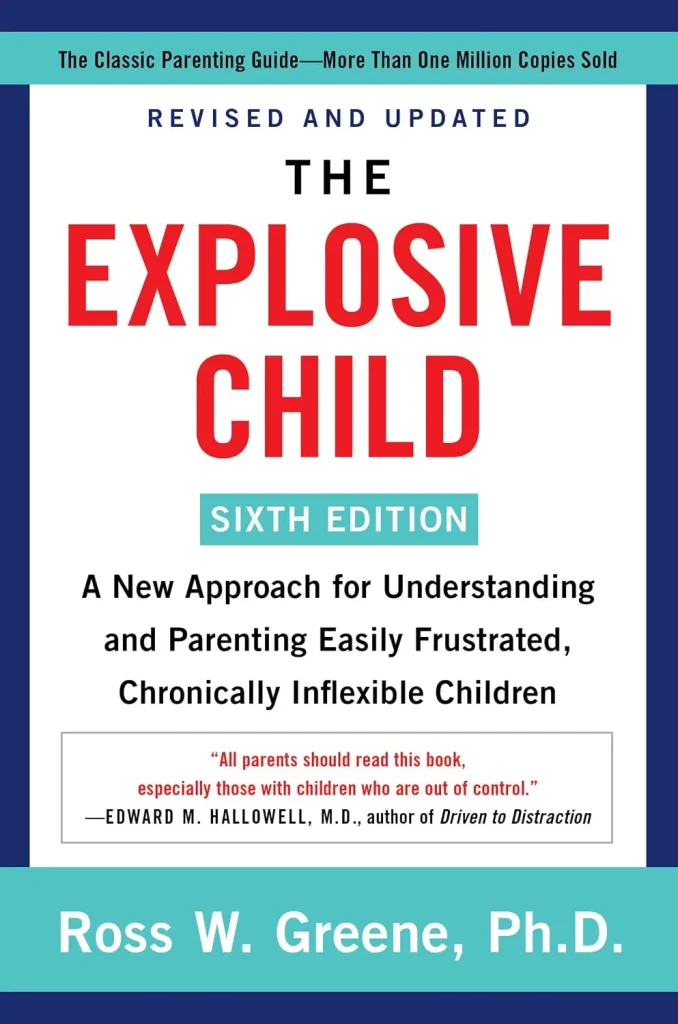
1. The Explosive Child by Ross W. Greene
Some children react to frustration with an intensity that seems disproportionate to the situation. A change in plans, a difficult assignment, or a request to stop an activity can trigger a major outburst.
In The Explosive Child, psychologist Ross W. Greene introduces the Collaborative and Proactive Solutions approach. Rather than relying only on punishment or rewards, the book encourages parents to identify the situations that repeatedly cause difficulty and work with their child to develop solutions.
This approach shifts the question from “How do I make my child comply?” to “What is making this situation difficult, and how can we solve it together?” It can help parents look for recurring triggers, communication problems, and skills the child may need to develop.
The book is especially relevant for families dealing with frequent explosive reactions, inflexibility, or recurring conflicts that do not improve with conventional discipline.
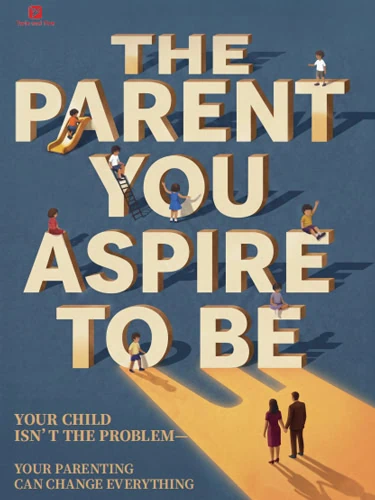
2. The Parent You Aspire to Be by Miles Carter
Parenting becomes particularly difficult when a child’s behavior pushes a parent’s emotional limits. You might raise your voice after repeating the same instruction ten times, react harshly to a lie, or struggle to stay calm when your child refuses to cooperate.
The Parent You Aspire to Be focuses on understanding children’s behavior, managing emotions, improving parent-child communication, and setting boundaries with both kindness and consistency.
Rather than treating every difficult moment as a discipline problem, the book encourages parents to consider how they respond, what their child may be communicating, and how everyday interactions shape behavior over time.
For example, when a child refuses to begin homework, repeatedly escalating the consequences may intensify the conflict. A calmer response can start by identifying the obstacle, clarifying expectations, and agreeing on a manageable first step.
The Parent You Aspire to Be
Miles CarterPractical guidance for tantrums, backtalk, lying, screen addiction, emotional outbursts, and everyday parenting struggles.
This book is a useful choice for parents who want practical guidance across common challenges, including defiance, dishonesty, procrastination, emotional outbursts, and struggles with cooperation.
3. No-Drama Discipline by Daniel J. Siegel and Tina Payne Bryson

When a child misbehaves, parents often feel pressure to respond immediately and firmly. But discipline delivered in the heat of the moment can become a cycle of yelling, resistance, and regret.
No-Drama Discipline explains how children’s developing brains influence their reactions and why connection matters when correcting behavior. The authors encourage parents to look beyond the immediate incident and consider what the child needs to learn from it.
This does not mean allowing unacceptable behavior. It means addressing the problem without turning correction into humiliation or a power struggle. Parents can acknowledge a child’s feelings while maintaining a clear limit and helping them understand a better way to respond.
The book is especially useful for parents who want to move away from repeated shouting and punishment toward more constructive conversations after conflict.
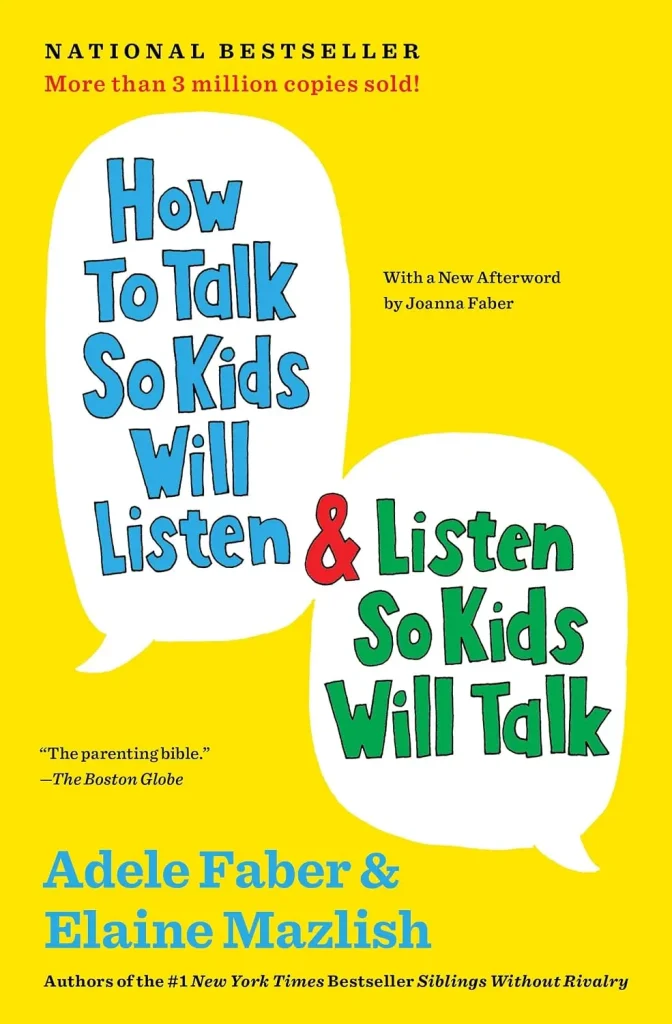
4. How to Talk So Kids Will Listen & Listen So Kids Will Talk by Adele Faber and Elaine Mazlish
Sometimes a conflict begins with a simple exchange: a parent gives an instruction, the child pushes back, and both become more frustrated with every sentence.
How to Talk So Kids Will Listen & Listen So Kids Will Talk offers practical communication techniques for reducing these everyday battles. The authors explore how parents can acknowledge feelings, describe problems without attacking a child’s character, and encourage cooperation.
Instead of saying, “You’re so lazy. You never do what you’re told,” a parent might say, “Your school things are still on the table, and we need them packed before dinner. What is your plan?”
The second approach keeps attention on the problem rather than turning it into a judgment about the child. That difference can help preserve trust while making expectations clearer.
This book is a strong choice for parents who frequently find themselves repeating instructions, arguing over responsibilities, or struggling to get their children to listen.
5. Raising Human Beings by Ross W. Greene
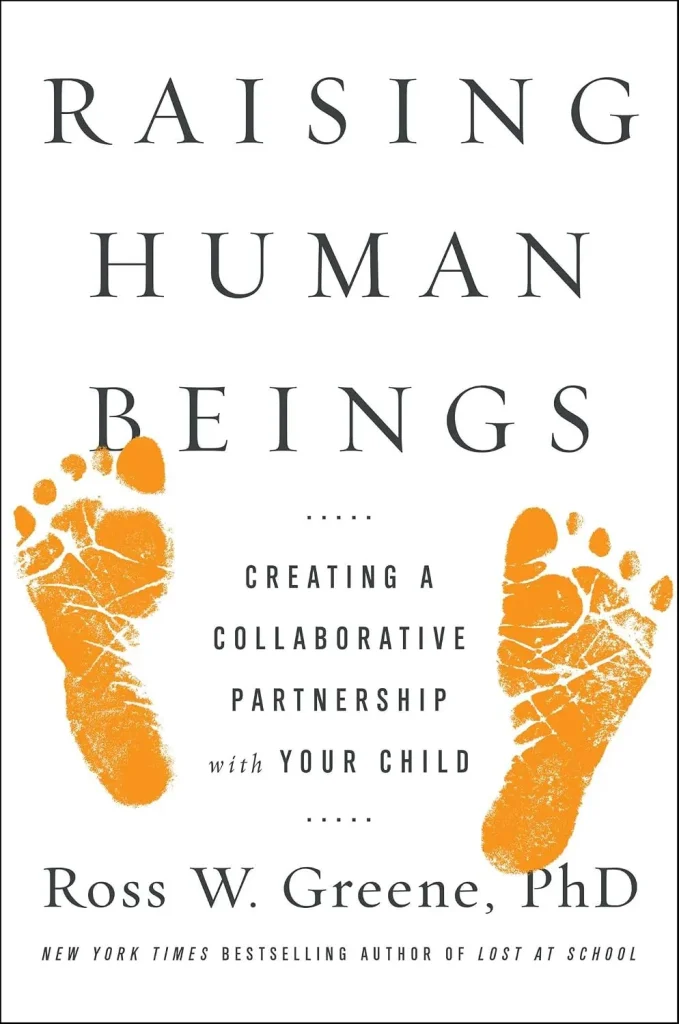
Some parenting conflicts keep returning because parents and children approach the same problem from completely different perspectives. A child refuses a particular routine, resists a household responsibility, or becomes upset about a rule the parent considers reasonable.
In Raising Human Beings, Ross W. Greene explores how parents can build collaborative relationships with their children while developing problem-solving skills. The emphasis is on understanding each other’s concerns and finding solutions that take both perspectives into account.
Collaboration does not mean that children make every decision. Parents still provide guidance and maintain appropriate boundaries, but they also make space for children to explain what is difficult and participate in solving recurring problems.
The book is particularly valuable for parents who want to reduce power struggles and help their children develop flexibility, communication, and responsibility.
How to Respond When Difficult Behavior Keeps Returning
Different books offer different methods, but a few practical principles can help parents respond more consistently.
- Look for patterns instead of isolated incidents. Notice whether conflicts tend to happen during transitions, homework, bedtime, or situations involving frustration.
- Keep expectations clear and realistic. Children are more likely to understand boundaries when instructions are specific and consequences are predictable.
- Separate the behavior from the child’s identity. Address lying, shouting, or refusing to cooperate without labeling the child as bad, selfish, or difficult.
- Teach skills alongside setting limits. A child may need help expressing frustration, tolerating disappointment, or breaking a task into manageable steps.
- Repair the relationship after conflict. Once everyone is calm, revisit what happened, acknowledge your own part when appropriate, and discuss what could work better next time.
If a child’s behavior is severe, persistent, or significantly affecting school, friendships, or family life, consider consulting a pediatrician or qualified child mental health professional. A book can offer helpful strategies, but some challenges benefit from individualized support.

Which Parenting Book Should You Choose?
| Your main challenge | Book to start with |
|---|---|
| Frequent explosive reactions and inflexibility | The Explosive Child |
| Multiple behavior challenges and parental emotional regulation | The Parent You Aspire to Be |
| Discipline that often turns into shouting or power struggles | No-Drama Discipline |
| Children who resist instructions or struggle to communicate | How to Talk So Kids Will Listen & Listen So Kids Will Talk |
| Repeated conflicts that need collaborative solutions | Raising Human Beings |
If your biggest difficulty is intense outbursts, start with The Explosive Child. If you want broader guidance on behavior, boundaries, and your own responses as a parent, The Parent You Aspire to Be is a practical starting point. For everyday communication struggles, Faber and Mazlish’s book offers techniques you can begin using in ordinary conversations.
Final Thoughts
Parenting a child whose behavior is difficult to manage can test your patience, especially when the same conflicts happen day after day. But a challenging pattern is not necessarily permanent, and one difficult interaction does not define your relationship with your child.
Start by choosing a book that addresses your most frequent struggle. Try one strategy consistently, observe how your child responds, and adjust when necessary. Progress often comes from understanding the problem more clearly and responding more deliberately, rather than finding a single discipline technique that works every time.

