You Want to Protect Your Child From Everything
You remind them to bring the right jacket, check whether the homework is finished, step in when another child upsets them, and quickly solve a problem when you think they are struggling. None of these actions seem unreasonable by themselves. The difficulty starts when helping becomes the default response to almost every challenge your child faces.
You may worry about what happens if you do not step in. What if they fail? What if another child treats them badly? What if they make the wrong decision? What if they are embarrassed? Those concerns are completely understandable, especially when you genuinely want to make life easier for your child. But protection can slowly become interference when the child is rarely given a chance to experience problems, make choices, or figure things out independently.
This is one of the hardest parts of parenting because stepping in often feels like love in the moment. Letting your child struggle a little can feel much less comfortable.

Helping Is Not the Same as Taking Over
Children need support, but they also need experience.
A child who forgets something at home may need help thinking through what to do next. A child who has a disagreement with a friend may need someone to listen and help them make sense of it. A child who is struggling with a task may need encouragement or a useful question rather than someone immediately doing the difficult part for them.
The difference can be small in the moment, but it matters over time. When adults regularly solve problems for children, children have fewer chances to develop their own judgment, patience, and ability to cope with frustration.

Let Your Child Experience Some Mistakes
Many parents say they want their children to become independent, but they also try very hard to prevent mistakes.
The problem is that independence is not built through instructions alone. Children need opportunities to make choices, discover consequences, correct themselves, and realize that a mistake is usually something they can survive and learn from.
The goal is not to deliberately let things go wrong. It is to resist the urge to remove every obstacle before your child has had a chance to deal with it.
The Parent You Aspire to Be
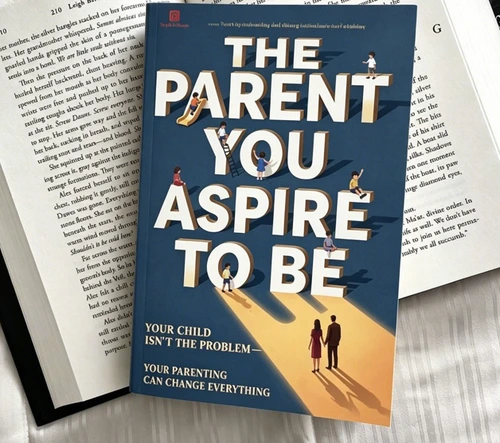
The Parent You Aspire to Be by Miles Carter speaks directly to this part of parenting. The book includes a section on overprotecting children, along with guidance about not stepping over a child’s right to solve problems and giving children enough space to grow.

Those ideas fit together closely. A parent who constantly protects may also be the parent who answers every question, steps into every conflict, or reminds a child of every responsibility because they are afraid something will go wrong. What looks like care can gradually send the message that the child cannot be trusted to handle ordinary difficulties alone.
The book encourages parents to step back without becoming absent. That distinction is important because giving a child space does not mean leaving them without support. It means learning when support should look like guidance rather than rescue.

The Parent You Aspire to Be
Miles CarterPractical guidance for tantrums, backtalk, lying, screen addiction, emotional outbursts, and everyday parenting struggles.
When Another Child Causes a Problem
This becomes especially difficult when your child has a conflict with another kid.
Your first instinct may be to call the other parent, intervene immediately, or tell your child exactly what they should say next. Sometimes adult intervention is necessary. But when every disagreement becomes an adult-managed situation, the child loses an opportunity to practice solving ordinary social problems.
The book’s emphasis on not stepping in every time a child is in conflict with another kid is useful here. Parents can still provide support while allowing children to try, make mistakes, ask for help, and develop their own ways of handling disagreements.
Give Them More Responsibility Than You Think They Are Ready For
Overprotective parenting often comes from underestimating what children can actually manage.
You may keep doing things for them because it is faster. You remind them because otherwise the task might be forgotten. You check everything because you know there is a chance they will make a mistake.
But if you always take responsibility first, they have less reason to develop responsibility themselves.
Independence grows when children gradually experience ownership. They need to know that some things are theirs to remember, solve, organize, and repair.

Space Does Not Mean Less Love
Some parents worry that stepping back will make them less involved.
In reality, giving space can strengthen the relationship when it is done thoughtfully. Your child learns that you trust them enough to try, while also knowing that you are available when a problem is genuinely too difficult to handle alone.
That kind of relationship feels different from either extreme. You are neither controlling every step nor leaving the child to figure out everything without guidance.
The Parent Has to Manage Their Own Anxiety Too
Overprotection is often connected to the parent’s own worry.
You imagine what could go wrong and feel a strong urge to prevent it. Your child sees that anxiety in the form of reminders, checking, warnings, and constant involvement. The child may then become more hesitant to act independently because they have learned that the adult will step in.
The Parent You Aspire to Be also addresses parental anxiety and emotional regulation, which makes the book especially useful here. The issue is not only whether a child needs more freedom. The parent may also need to become more comfortable watching a child struggle without immediately removing the struggle.
What You Can Gain From Reading the Book
The biggest change is not that you suddenly stop helping your child. It is that you become better at deciding when your help is actually useful.
You may begin pausing before stepping into a conflict. You may let your child handle a manageable mistake instead of correcting it immediately. You may replace some reminders with expectations and consequences, allowing your child to experience more ownership over everyday responsibilities.
That can be good for both sides. Your child gets more opportunities to develop confidence and problem-solving skills, while you spend less energy trying to control every possible outcome.
Protecting Your Child Also Means Preparing Them
You cannot remove every difficult experience from your child’s life. At some point, they will fail, make a bad decision, have an argument with a friend, forget something important, and feel embarrassed.
What matters is whether they gradually learn that these experiences can be handled.
The Parent You Aspire to Be is a useful parenting book for overprotective parents because it does not tell you to care less. It helps you rethink what protection should look like as your child grows: not removing every obstacle, but giving them enough support and space to become capable of handling more of life on their own.