I came home from a perfectly nice dinner with friends last Tuesday, closed the door, and felt the familiar pit in my stomach. Nothing bad happened. We laughed, we told stories, someone shared a rough week. But now, at 10pm, my brain was replaying everything. I said that thing about my job, did it sound like bragging? I interrupted her, didn’t I? That quiet moment when I asked about her ex, why did I ask that? The knot tightened. I was deep in it, anxiety after social interaction, right when I should have been brushing my teeth.
It’s a strange kind of anxiety. Before seeing people, I’m fine. During the conversation, I can be chatty, interested, a bit carried away maybe. But after, the mental playback starts. I pick apart my words, facial expressions, other people’s micro-reactions. It’s exhausting.
Why do some of us get this post-socializing anxiety while others just go to sleep?

Why Do I Feel Anxious After Hanging Out With People?
There’s a common description of social anxiety, the fear of being judged during the event. But for many, the real trouble starts later. It’s what researchers call post-event processing. Your brain tries to review social performance like it’s studying game footage, looking for mistakes. The problem is, you’re reviewing without a coach. You’re just a panicked player watching instant replays alone.
I got stuck on a saying once: “It’s not the words you said, it’s the way you made them feel.” It haunted me. Because I wondered, did I make her feel heard? I shared a lot of my own stories, I enjoyed telling them. But later I would question, could I have given her more spotlight? Did I make myself too vulnerable, too uncool? The meaning I attached to that quote turned every interaction into a test of how well I made the other person feel. And I could never know the answer. So my brain just assumed I failed.
What’s interesting is this: when I intentionally shared almost nothing, just asked questions and listened, I felt way less anxiety afterwards. But then a new worry appeared: did I ask deep enough questions? Did I play it safe and miss a real connection? A friend once told me, “I feel less connected to people when I only interview them.” That resonated. Maybe the anxiety isn’t about whether you talked too much or too little. Maybe it’s about how much of your real self you brought into the room. If you held back, you feel safe but empty. If you shared freely, you feel exposed and then spiral. That’s the trap.
How Can I Stop Ruminating After Social Events?
So there’s no perfect balance. But I’ve learned some things that make the post-socializing anxiety easier to ride out. They don’t stop the thoughts, they just make them less sticky.
A person once shared two tactics with me, and they changed how I recover. The first one: if I feel like I hogged the conversation, I try to remember the last three sentences said before I jumped in, and who said them. Then I make a point of re-anchoring. Next time I see them, I might say, “Hey, I wanted to ask more about what you were saying about your cousin’s move, I realize I kind of interrupted the other day.” That small act of returning the spotlight does two things. It shows I care, and it quiets my internal critic because I did something proactive.
The second trick: I learned to watch the type of questions I ask in the moment. If I ask about the person’s story, I stay connected. If my question is more about how they’re telling it or about myself in response, I check if I’m really present. And if I realize I’ve lost the thread, I give myself permission to hit a gentle reset. I excuse myself for a moment, get water, and when I come back I find a new thread. That prevents the post-event cringe of “why did I ask about that stupid thing for ten minutes?”
These aren’t perfect fixes. But they shift my role from passive ruminator to someone who can do a tiny repair. It turns abstract worry into a small, doable task.
The Spotlight Return Ritual: A 90-Second Reset
I named something for myself: The Spotlight Return. It’s a way to stop replaying conversations in bed. When the rumination starts, I don’t try to stop thinking. I instead ask two questions: “What’s one specific moment I genuinely enjoyed?” and “Who shared something vulnerable and could use a follow-up message tomorrow?” Then I type a note to myself: “Message Sarah about her mom.” That note replaces the mental loop. It’s like my brain now has a box to put the worry in.
There’s another part. If the anxiety is really loud, I call a friend, the one I was just with, and I say, “I’m doing that thing again. Can you remind me that our conversation was fine?” And almost always they laugh and say, “Of course, it was fun. Why are you like this?” That external reality check is powerful. It breaks the spell.
Why does this work? Post-event processing loves isolation. When I bring someone else into the moment, the shame dissolves a little. I’m not weird, I’m just someone who cares a lot and needs a bit of reassurance.
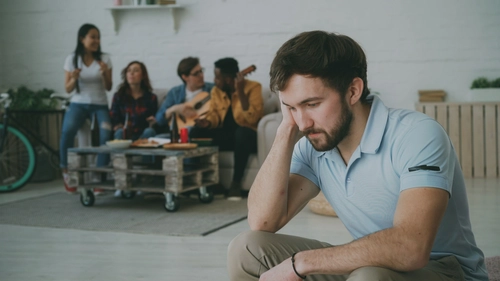
When You Share Less and Still Feel Anxious
A curious thing I noticed. When I shared very little about myself and only asked questions, post-social anxiety dropped, but so did my sense of connection. I’d leave feeling like a reporter who forgot to bring their own self. That isn’t better. It just traded one discomfort for another. Real connection involves risk, the risk of being seen and then replaying it later.
So maybe the anxiety after social interaction isn’t the problem to eliminate. Maybe it’s the price of showing up authentically. The goal isn’t to have zero rumination. It’s to learn to soothe myself after without shutting down the parts that make me human. Accepting that helped me more than any technique.
I still have nights where I cringe into my pillow. But I also have nights where I laugh at an old memory from the evening and the anxious thoughts feel softer. The difference is, now I know the anxious thoughts are just stories my tired mind writes. I don’t have to believe them.
One Last Thing
Some nights, the rumination still comes. I’ll lie there, twisting my engagement ring, replaying that one dumb joke. But I’ve learned to whisper to myself, “You connected. You were there. You can’t control how they felt, but you tried.” And then I picture closing a book and setting it on the nightstand. Tomorrow I can send that follow-up message. Tonight, I rest. The world will still turn.
References:
- Clark, D. M., & Wells, A. (1995). A cognitive model of social phobia. In R. G. Heimberg et al. (Eds.), Social phobia: Diagnosis, assessment, and treatment (pp. 69–93). Guilford Press. (Provides foundational understanding of post-event processing in social anxiety.)
- Hendriksen, E. (2018). How to Be Yourself: Quiet Your Inner Critic and Rise Above Social Anxiety. St. Martin’s Press. (Offers practical, non-clinical strategies for managing social anxiety after interactions.)
- Boyes, A. (2015). The Anxiety Toolkit: Strategies for Fine-Tuning Your Mind and Moving Past Your Stuck Points. TarcherPerigee. (Includes tools for breaking rumination cycles and building self-compassion.)
